Finding Nemo’s Clownfish, College
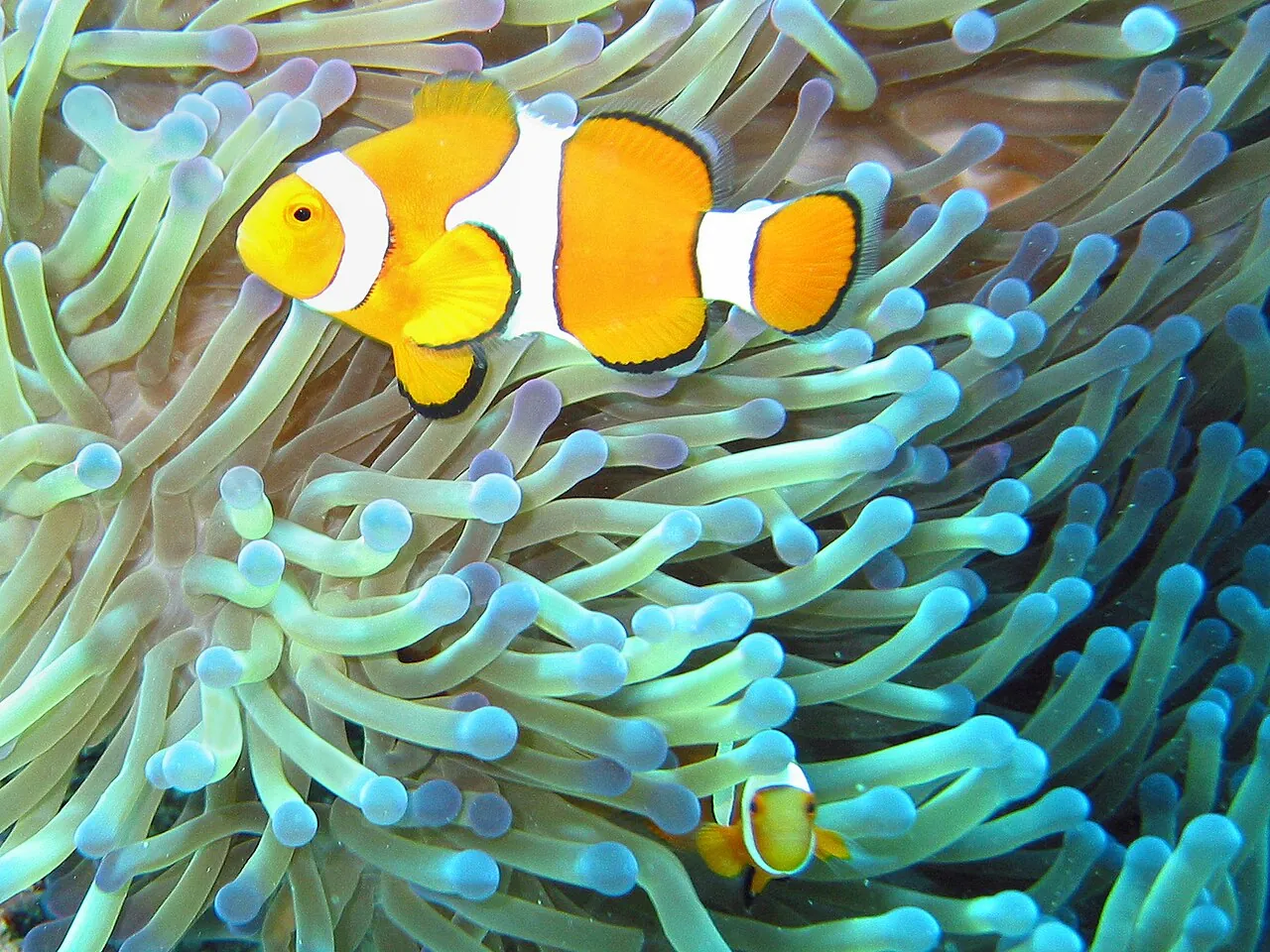
Your word of the day is
LAHR-vuh
A young animal that hatches from an egg and looks far different from the adult it will become.
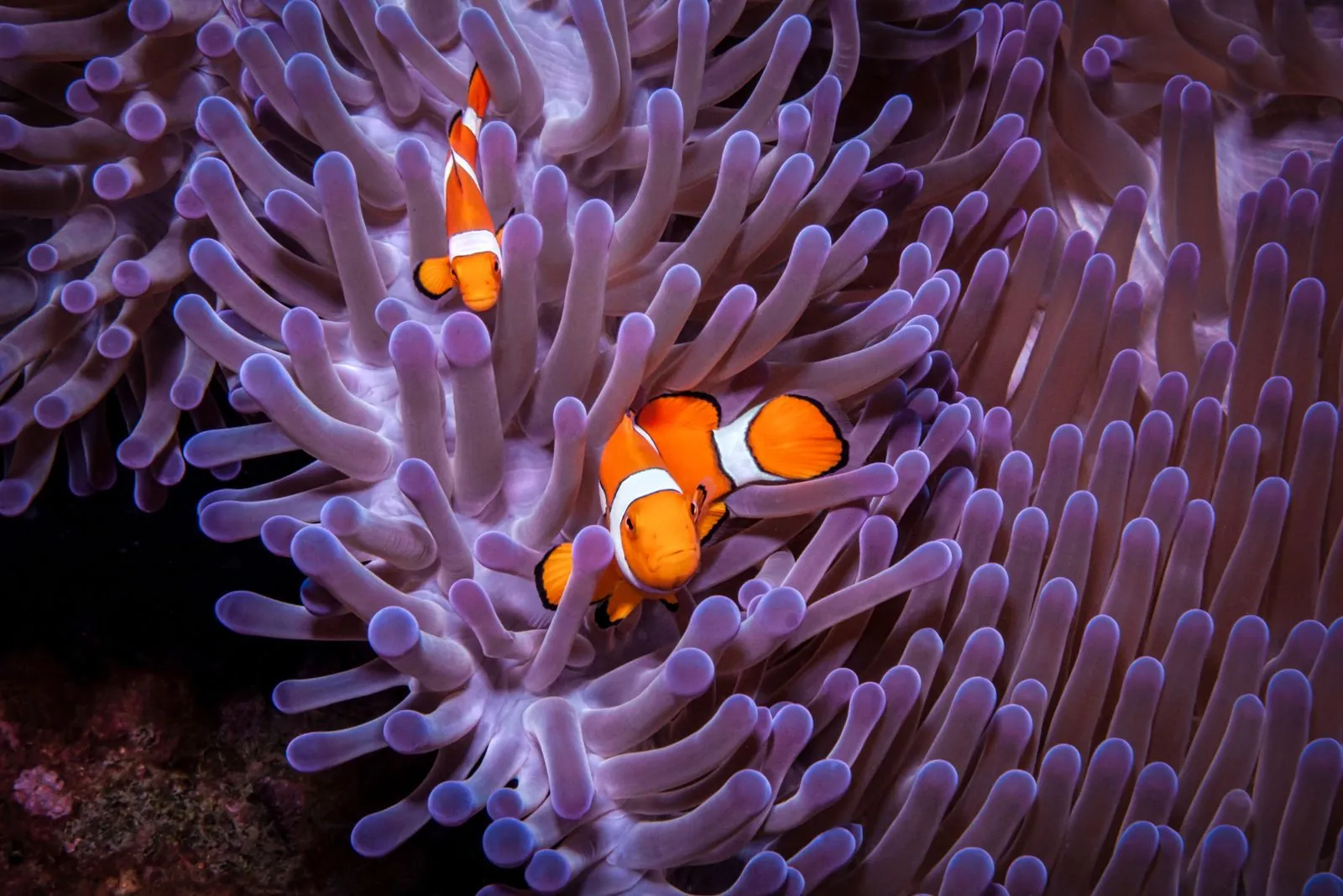
Océane Salles and the Kimbe Island team put together a family tree of 2,927 clownfish, then counted the parents and offspring living in the same anemone. Make a guess before you read the paper, and write one sentence on why you think so.
What percent of parent-and-offspring pairs in the Kimbe Island family tree do you predict shared an anemone?
Hint
In video 2, Raven gives a figure for relatives in general. Would parents and offspring share an anemone more often or less often than relatives in general?
Read the paper
Salles and others, “First genealogy for a wild marine fish population reveals multigenerational philopatry,” PNAS, 2016. The paper is free to read.
Divers on Océane Salles’s team sampled the orange clownfish on Kimbe Island in Papua New Guinea, home to 310 anemones, six times between 2003 and 2013. The team read 22 DNA markers from each fin clip and reconstructed a family tree of 2,927 fish. Table 1 of the paper counts the family links in that tree, then counts the related pairs living in the same anemone.
| Relationship | Family links in the tree | Related pairs in the same anemone | Percent in the same anemone |
|---|---|---|---|
| Parent and offspring | 987 maternal + 987 paternal | 9 | |
| Full siblings | 1,809 | 24, including 1 inbred mating | |
| Maternal half siblings | 412 | 2 | |
| Paternal half siblings | 248 | 5 | |
| Paternal grandparent and grandchild | 278 grandmother + 278 grandfather | 3, including 1 inbred mating | |
| Uncle or aunt and nephew or niece | 308 | 10 | |
| Half uncle or half aunt and nephew or niece | 165 | 2 | |
| Cousins | 218 | 1 | |
| Grand cousins | 17 | 1 |
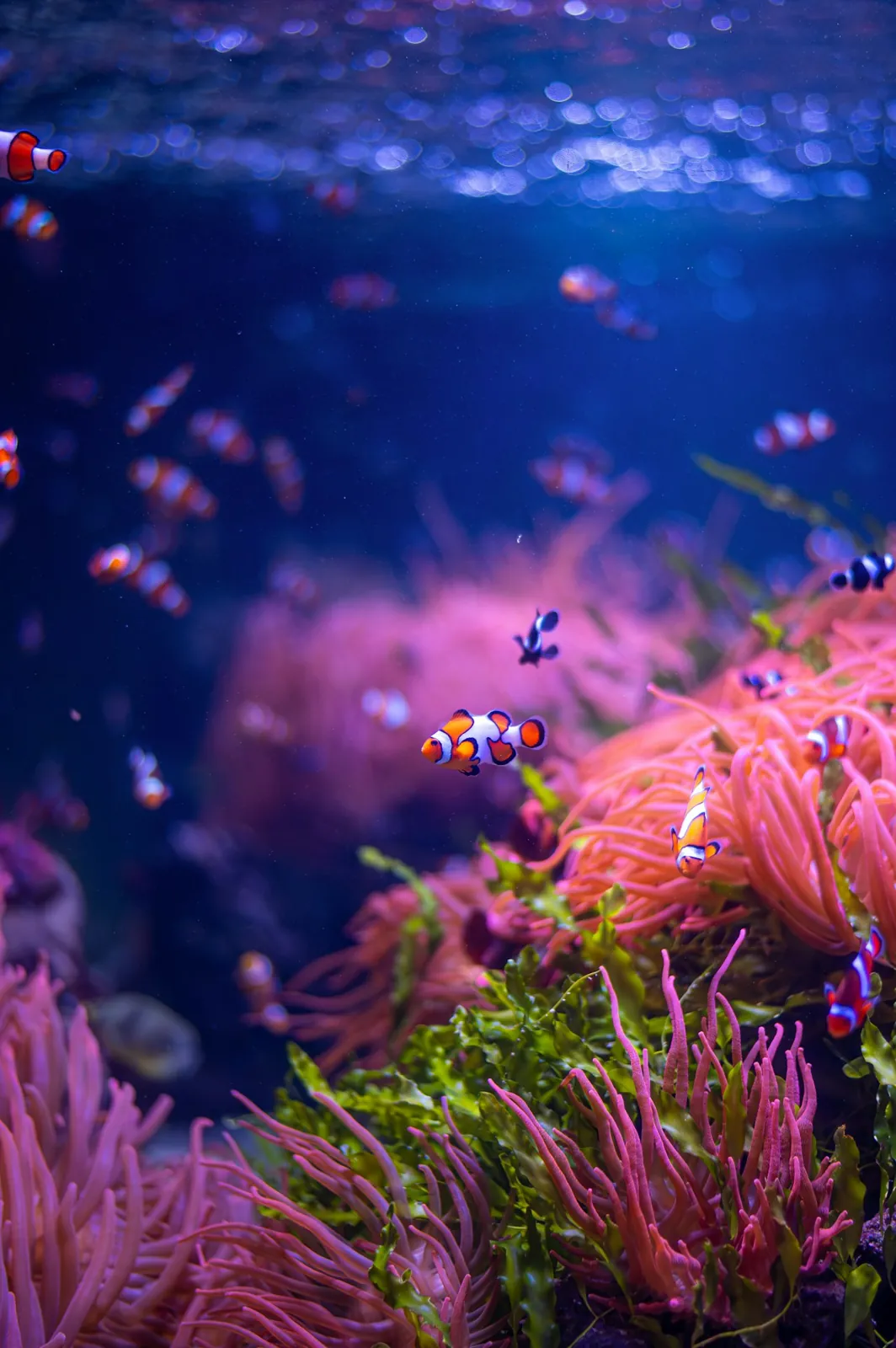
Table 1 lists 987 maternal and 987 paternal parent-and-offspring links, and 9 of those pairs shared an anemone.
About ____ of parent-and-offspring links in Table 1 shared an anemone.
See the table
| Relationship | Family links in the tree | Related pairs in the same anemone | Percent in the same anemone |
|---|---|---|---|
| Parent and offspring | 987 maternal + 987 paternal | 9 | |
| Full siblings | 1,809 | 24, including 1 inbred mating | |
| Maternal half siblings | 412 | 2 | |
| Paternal half siblings | 248 | 5 | |
| Paternal grandparent and grandchild | 278 grandmother + 278 grandfather | 3, including 1 inbred mating | |
| Uncle or aunt and nephew or niece | 308 | 10 | |
| Half uncle or half aunt and nephew or niece | 165 | 2 | |
| Cousins | 218 | 1 | |
| Grand cousins | 17 | 1 |
Among Table 1 rows with hundreds of family links, which relationship shared an anemone most often?
See the table
| Relationship | Family links in the tree | Related pairs in the same anemone | Percent in the same anemone |
|---|---|---|---|
| Parent and offspring | 987 maternal + 987 paternal | 9 | |
| Full siblings | 1,809 | 24, including 1 inbred mating | |
| Maternal half siblings | 412 | 2 | |
| Paternal half siblings | 248 | 5 | |
| Paternal grandparent and grandchild | 278 grandmother + 278 grandfather | 3, including 1 inbred mating | |
| Uncle or aunt and nephew or niece | 308 | 10 | |
| Half uncle or half aunt and nephew or niece | 165 | 2 | |
| Cousins | 218 | 1 | |
| Grand cousins | 17 | 1 |
Grand cousins top Table 1 at 5.9%, from 1 related pair out of 17 links.
How much weight should the 5.9% for grand cousins in Table 1 carry?
See the table
| Relationship | Family links in the tree | Related pairs in the same anemone | Percent in the same anemone |
|---|---|---|---|
| Parent and offspring | 987 maternal + 987 paternal | 9 | |
| Full siblings | 1,809 | 24, including 1 inbred mating | |
| Maternal half siblings | 412 | 2 | |
| Paternal half siblings | 248 | 5 | |
| Paternal grandparent and grandchild | 278 grandmother + 278 grandfather | 3, including 1 inbred mating | |
| Uncle or aunt and nephew or niece | 308 | 10 | |
| Half uncle or half aunt and nephew or niece | 165 | 2 | |
| Cousins | 218 | 1 | |
| Grand cousins | 17 | 1 |
Lesson complete
Today’s word
larva
LAHR-vuh
An immature, free-living form of an animal that changes into a different adult form through metamorphosis.
Look at these again
You got every question right the first time.
Sources
- Océane Salles, Benoit Pujol, Serge Planes and seven co-authors, led from the Université de Perpignan Via Domitia in France, PNAS, 2016
- Madison Pacaro, Tina Barbasch, Michaela Rogers, Juan Chavez, Peter Buston and John Majoris, Boston University, Ethology, 2023
- Peter Buston, Steven Bogdanowicz, Alex Wong and Richard Harrison, Molecular Ecology, 2007
- Peter Buston, Proceedings of the Royal Society B, 2004
- Theresa Rueger, Peter Buston and colleagues at Boston University and James Cook University, Proceedings of the Royal Society B, 2018
- Laura Casas, Xabier Irigoien and colleagues at King Abdullah University of Science and Technology in Saudi Arabia, Scientific Reports, 2016
- John Pearce, The Auk, 2007
- Vision and Change core concepts and competencies, as summarized in Brownell and others, CBE Life Sciences Education, 2014
- Word origins from Dictionary.com: larva, Lares, larvicide, philo-, patri-, proto-, proton, andro-, protandrous
- Spanish and French spellings from Wiktionary
- Instagram originals of video 1 and video 2, not linked because Instagram needs a login