Finding Nemo’s Clownfish, High school
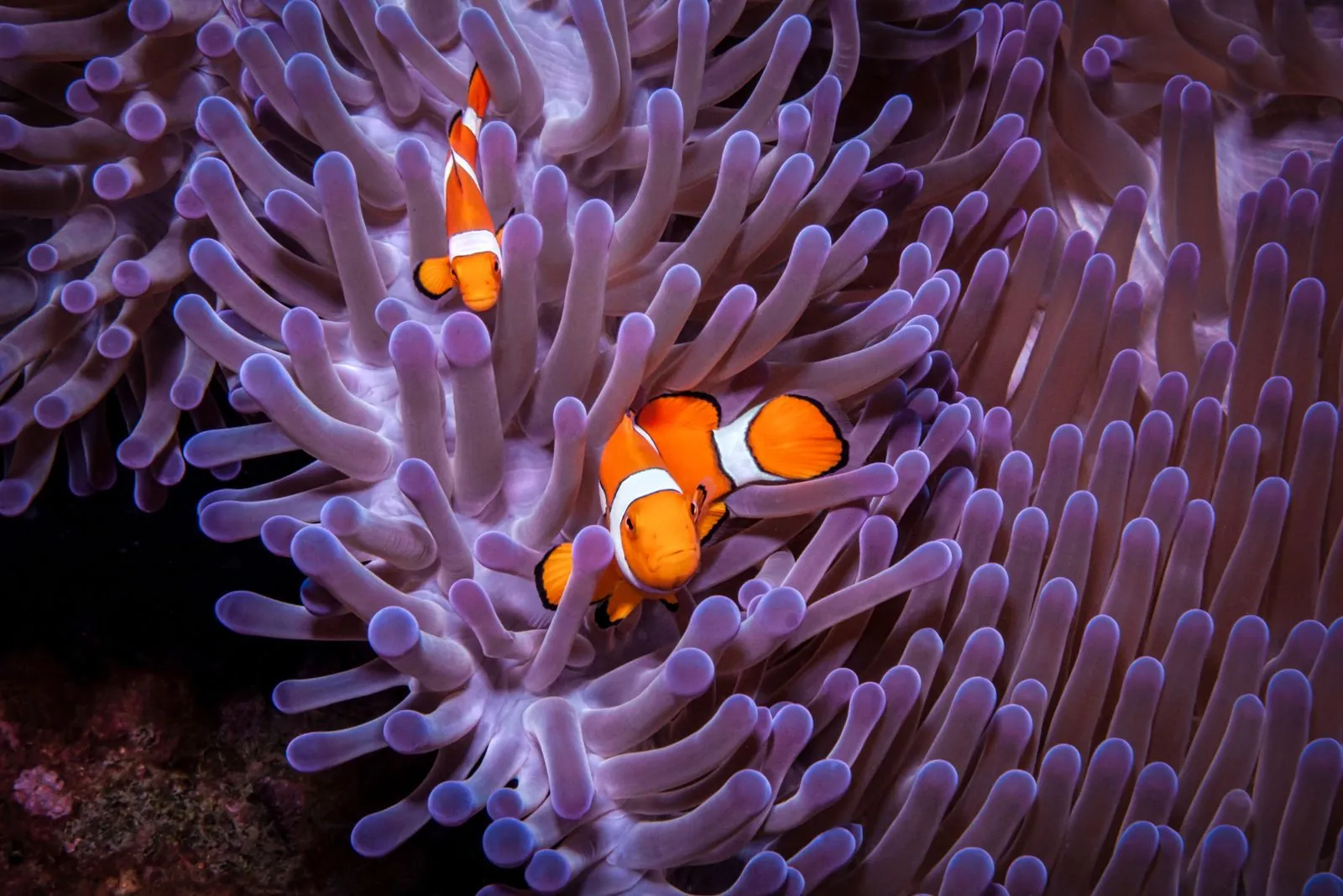
In Finding Nemo, Nemo’s mom is lost at the start of the movie, and his dad, Marlin, raises him alone.
In a wild clownfish family, could a dad like Marlin become the mom?
Your word of the day is
LAHR-vuh
A young animal that hatches from an egg and looks far different from the adult it will become.
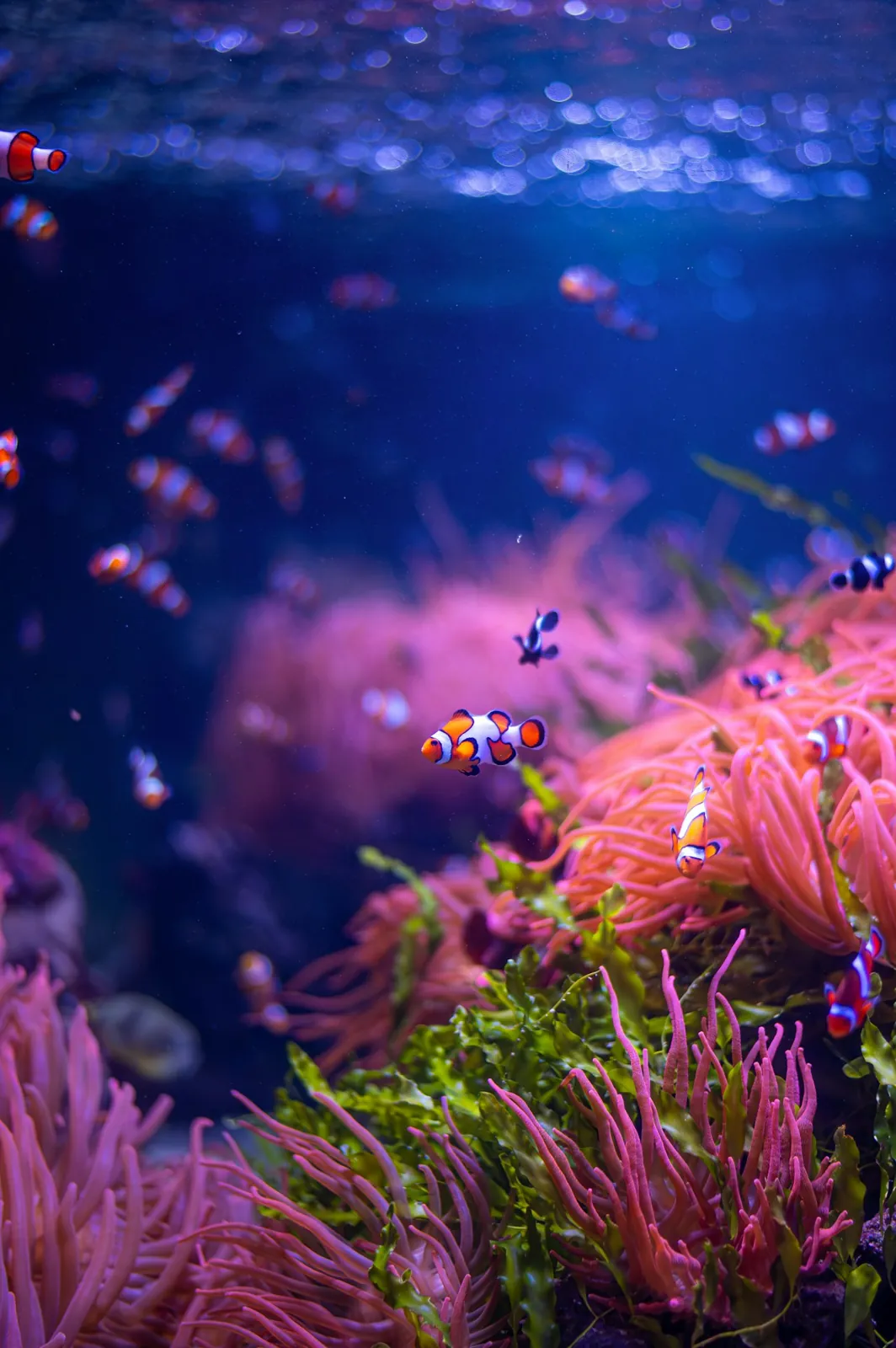
Wild breeding male clownfish carry testis tissue and immature ovary tissue at the same time.
How does a breeding male clownfish become the new breeding female?
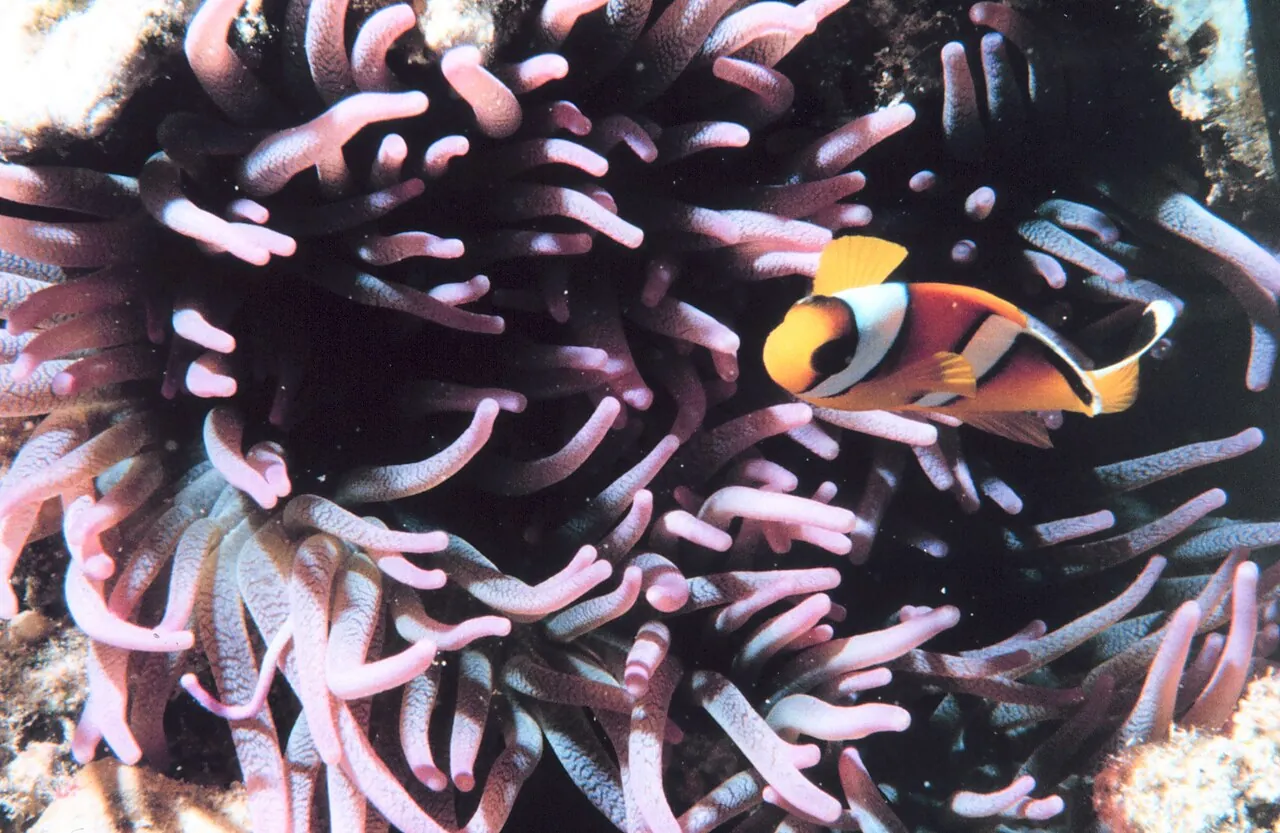
After a breeding male clownfish becomes the breeding female, what happens to the largest non-breeder and the smaller fish in line?
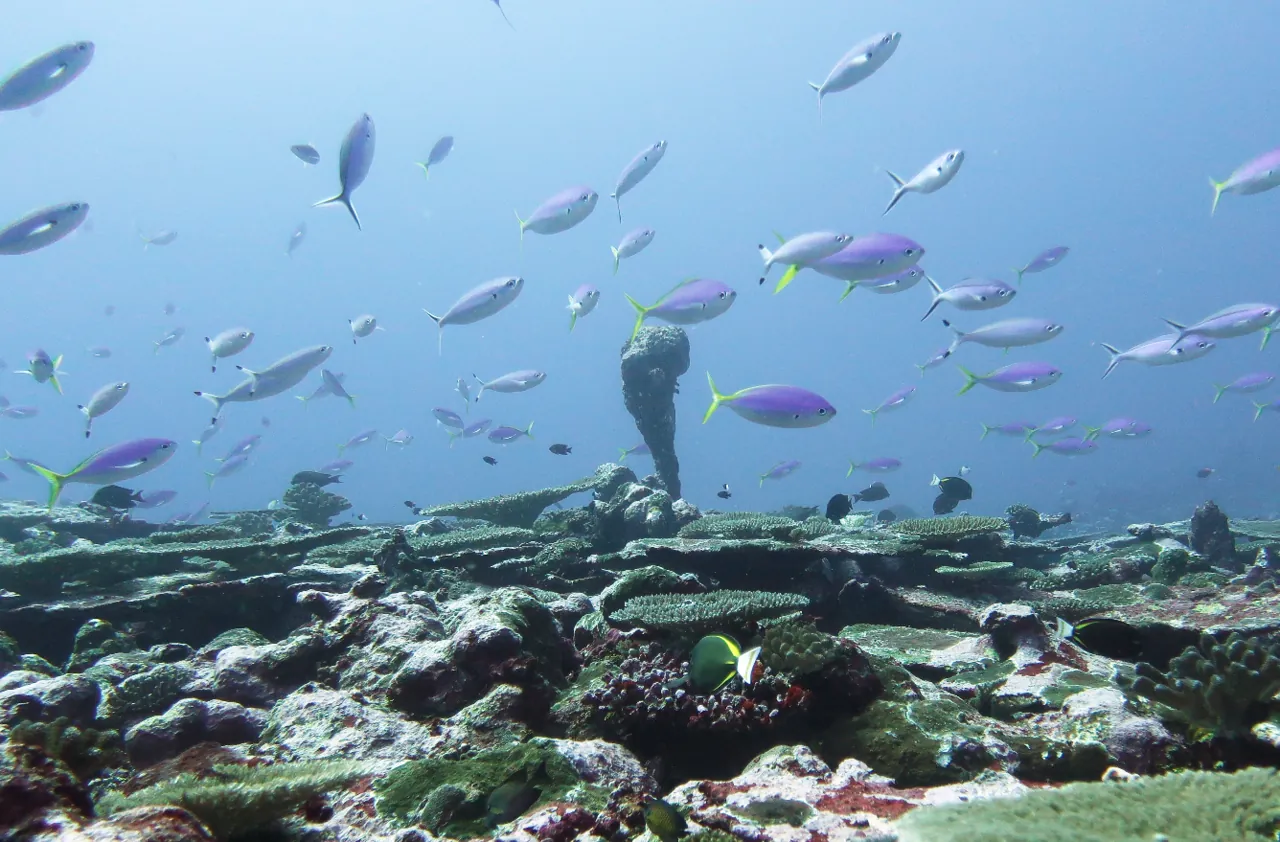
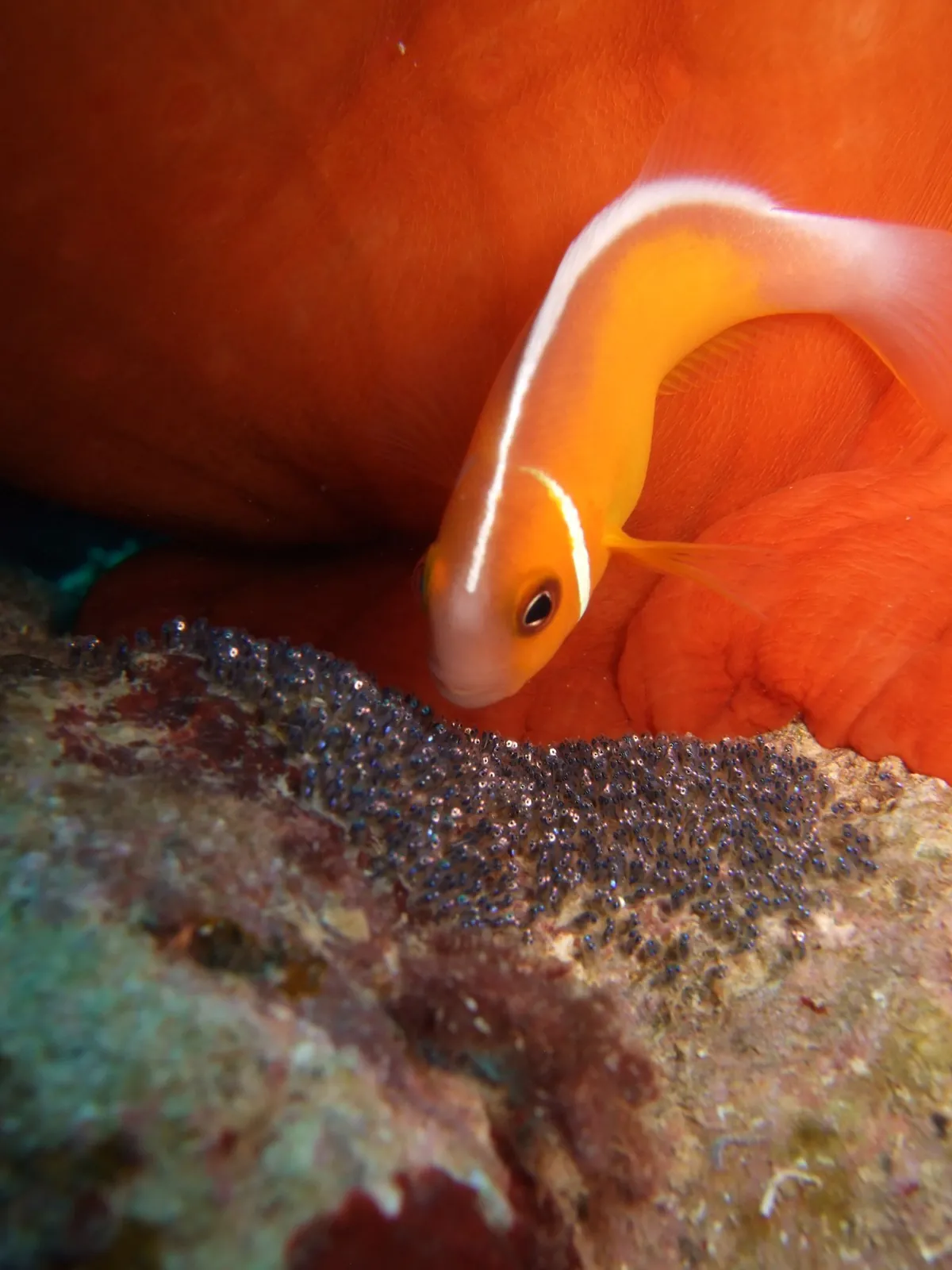
Clownfish parents tend their eggs for about a week, but the larvae drift away on hatching night.
How could egg care raise the number of offspring clownfish parents produce?
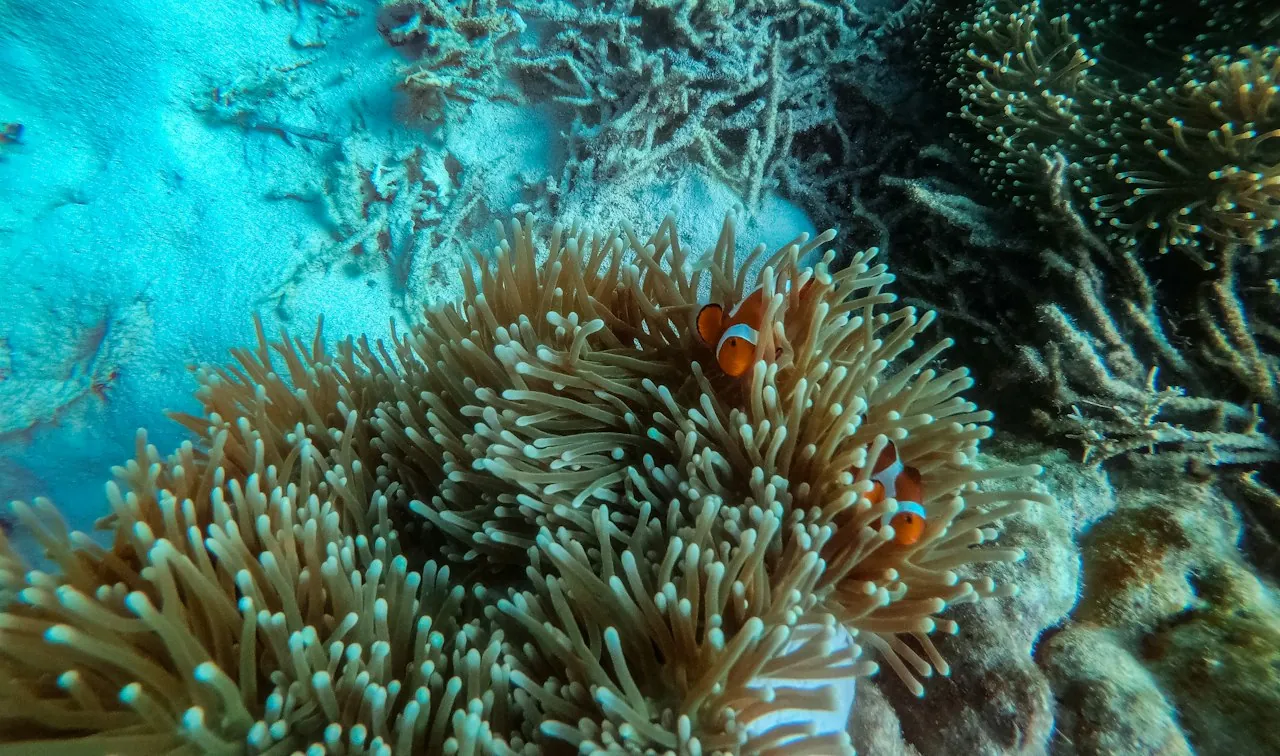
Which experiment would best test whether clownfish egg care raises the number of eggs that hatch?
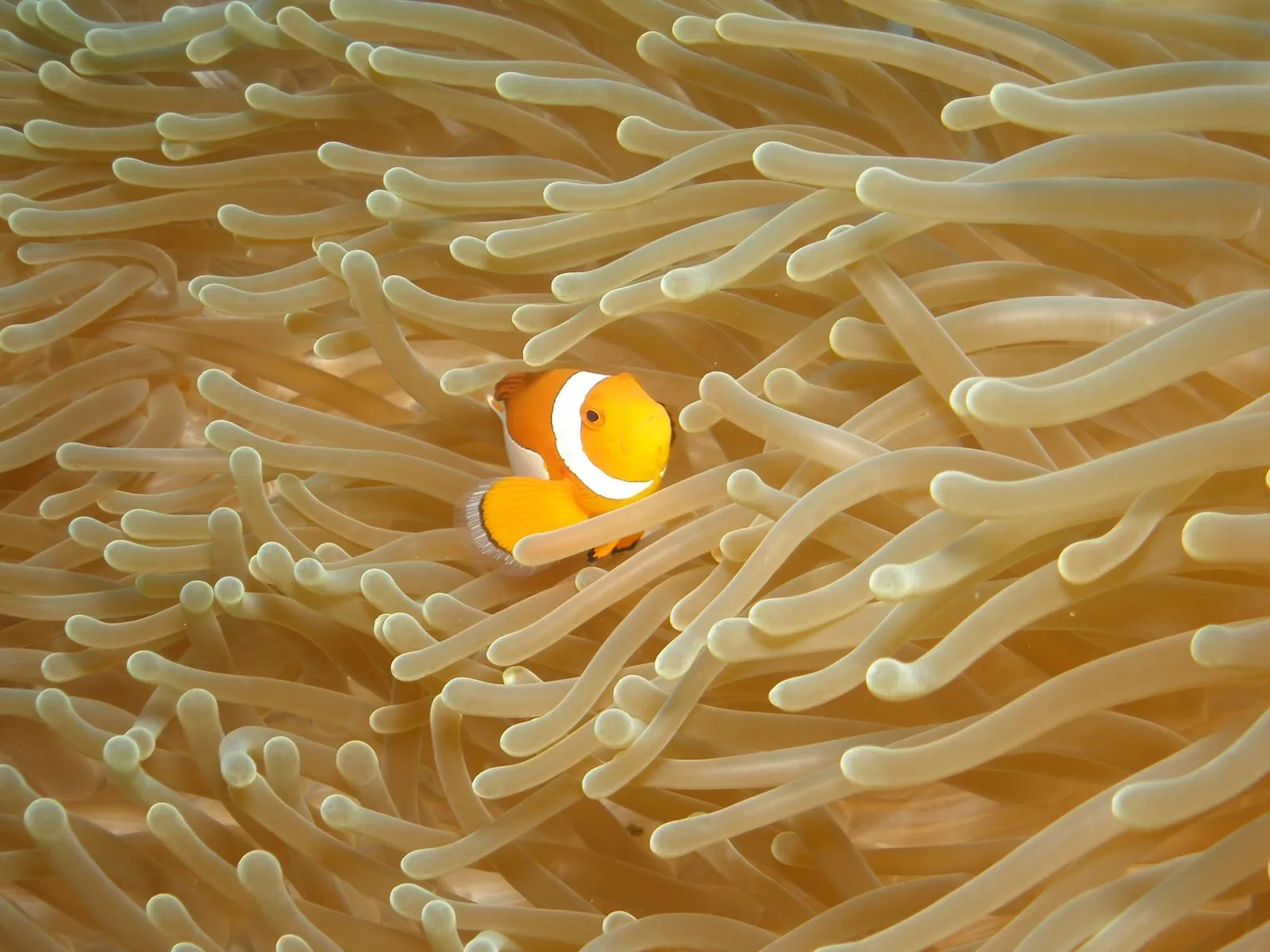
Kimbe Island has 310 anemones. Each anemone holds one breeding pair and up to four non-breeders.
What’s the most clownfish Kimbe Island could hold at one time?
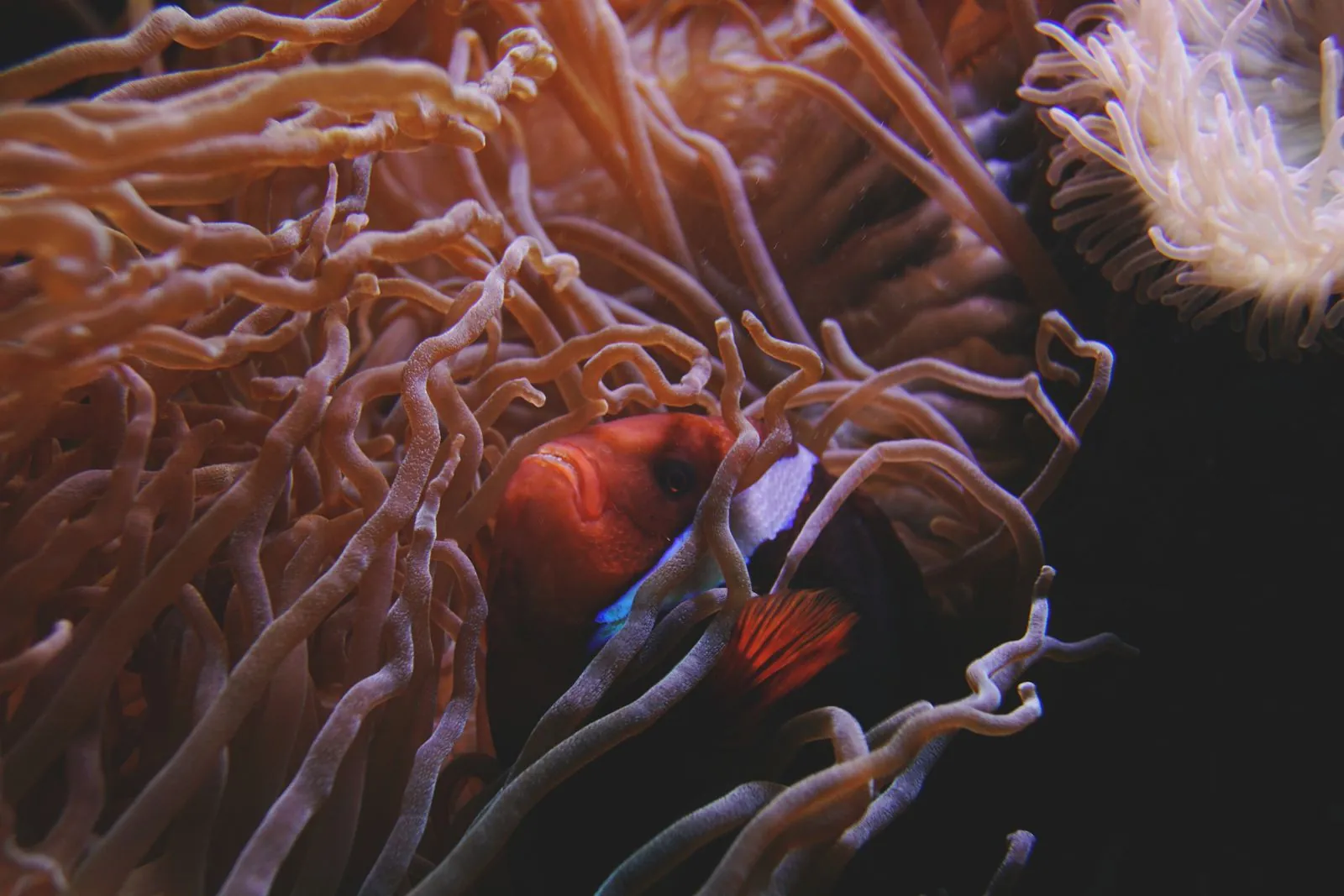
Kimbe Island’s 310 anemones hold a limited number of clownfish at one time, but scientists identified 2,927 different fish over ten years.
Why could the Kimbe Island scientists identify more clownfish over ten years than the island holds at one time?
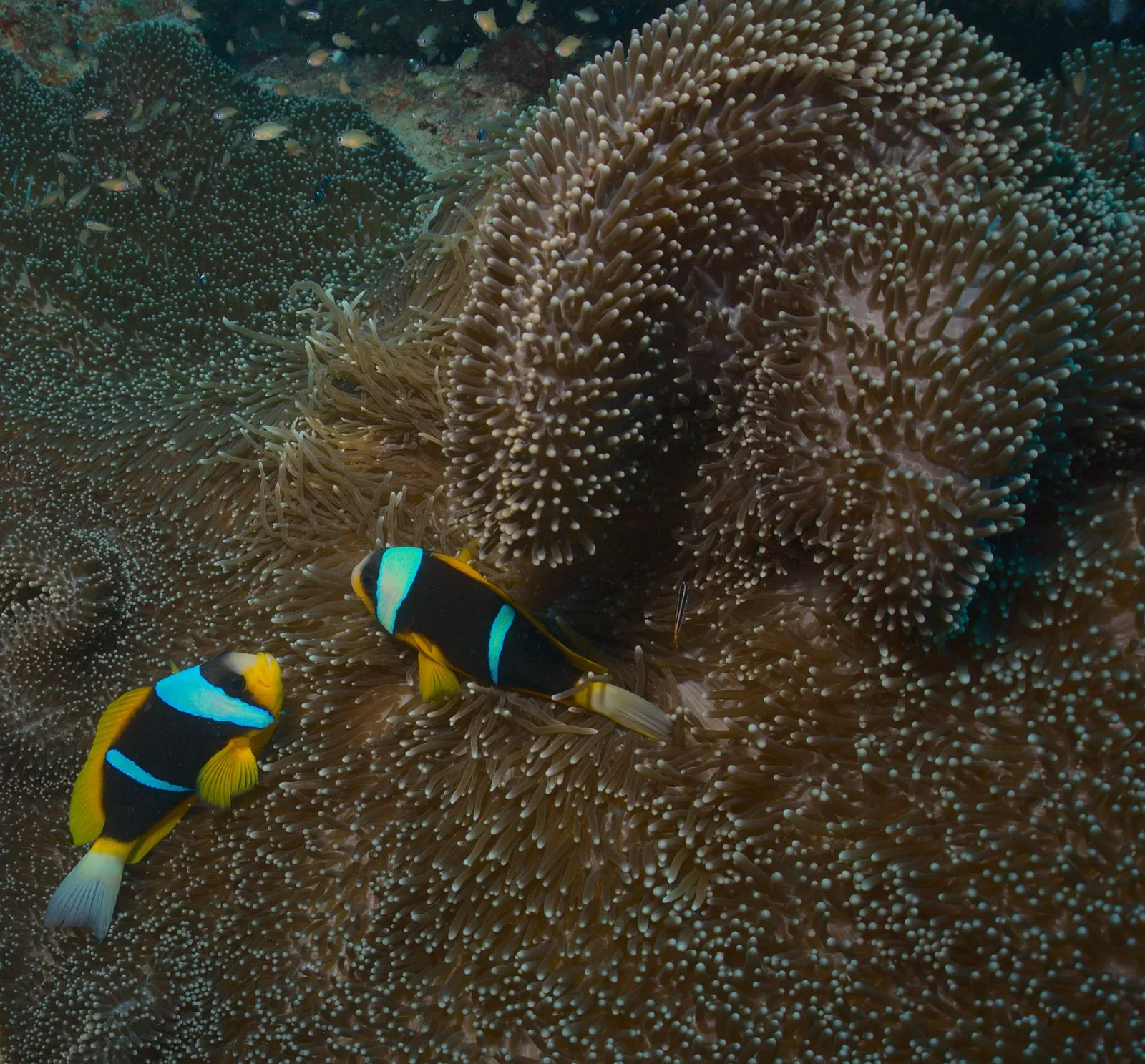
Each Kimbe Island anemone holds one breeding pair, and the island has 310 anemones.
What limits how many clownfish can breed on Kimbe Island at once?
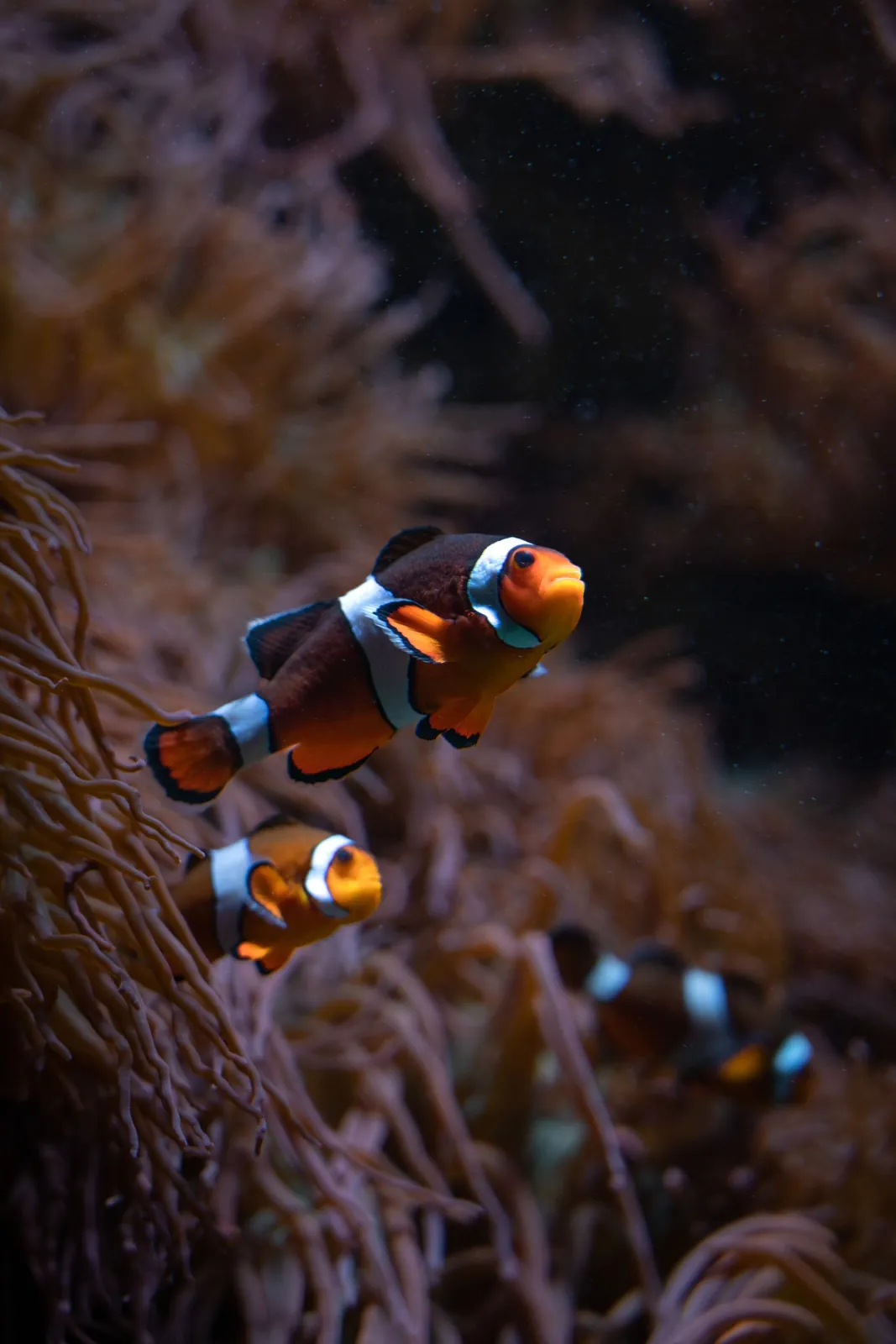
In Finding Nemo, Marlin stays a dad after Nemo’s mom is gone, and Nemo grows up in Marlin’s anemone.
Which finding shows protandry in wild clownfish?
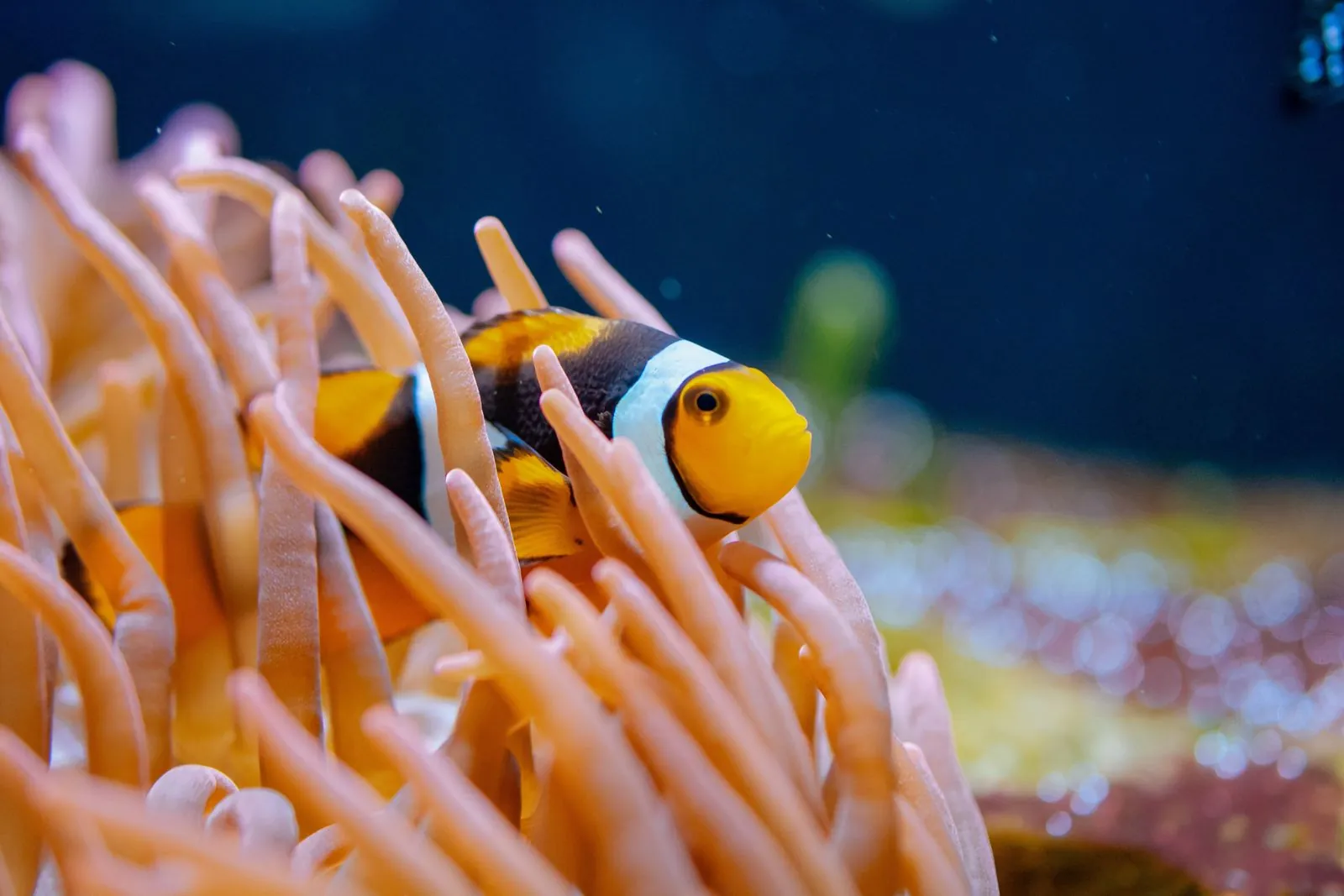
Which Kimbe Island finding best describes clownfish philopatry?
Lesson complete
Today’s word
larva
LAHR-vuh
A young animal that hatches from an egg and looks unlike the adult it will become.
Look at these again
You got every question right the first time.
Sources
- Océane Salles, Benoit Pujol, Serge Planes and seven co-authors, led from the Université de Perpignan Via Domitia in France, PNAS, 2016
- Madison Pacaro, Tina Barbasch, Michaela Rogers, Juan Chavez, Peter Buston and John Majoris, Boston University, Ethology, 2023
- Peter Buston, Steven Bogdanowicz, Alex Wong and Richard Harrison, Molecular Ecology, 2007
- Peter Buston, Proceedings of the Royal Society B, 2004
- Theresa Rueger, Peter Buston and colleagues at Boston University and James Cook University, Proceedings of the Royal Society B, 2018
- Laura Casas, Xabier Irigoien and colleagues at King Abdullah University of Science and Technology in Saudi Arabia, Scientific Reports, 2016
- John Pearce, The Auk, 2007
- Vision and Change core concepts and competencies, as summarized in Brownell and others, CBE Life Sciences Education, 2014
- Word origins from Dictionary.com: larva, Lares, larvicide, philo-, patri-, proto-, proton, andro-, protandrous
- Spanish and French spellings from Wiktionary
- Instagram originals of video 1 and video 2, not linked because Instagram needs a login