Nerdy Jobs: Beekeeping, High school
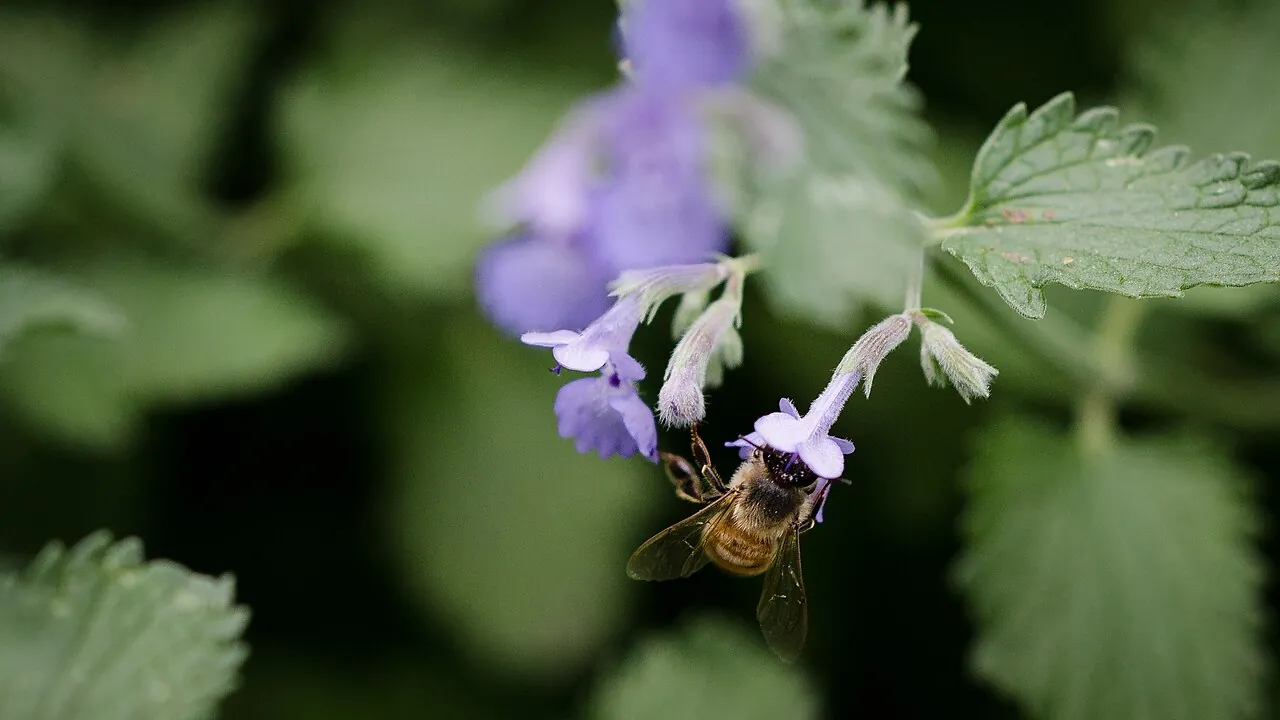
Honey bees make honey from nectar, the sugary water inside flowers. Each honey bee carries nectar home inside her body.
Is honey a kind of bee vomit?
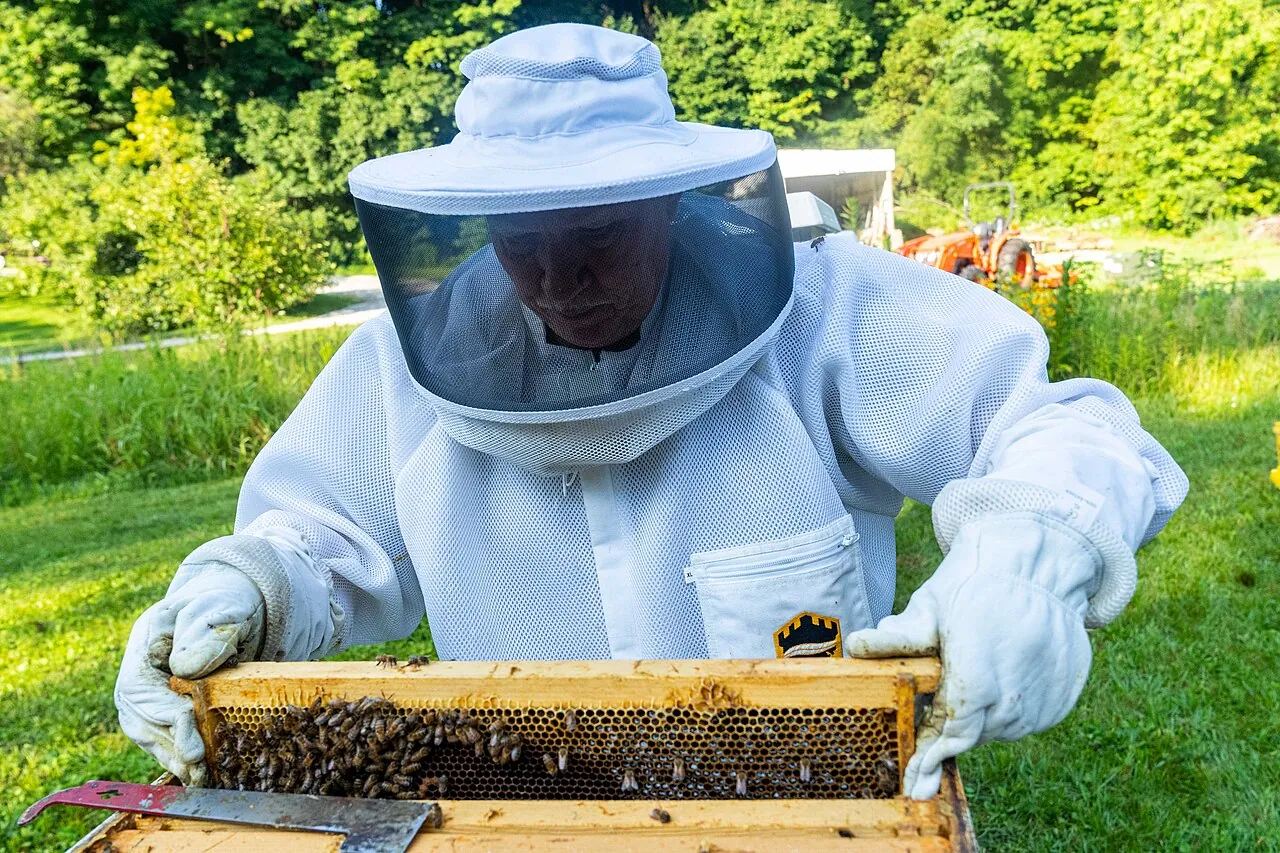
Meet the scientist
The beekeepers at Bee Country
- JobBeekeeper, also called an apiarist (AY-pee-uh-rist).
- A workdayBee Country is a family-owned bee farm in Darien Center, New York. Its beekeepers graft and raise their own queens and make hundreds of nucleus colonies, or nucs, each spring. A nuc is a starter colony with two frames of honey and pollen and three frames of brood, the growing young bees. The farm also harvests raw honey. Its bees stay in New York year-round and are not trucked south.
- TrainingBeekeepers learn on the job and in courses. Cornell University offers a beginner program for people with 0 to 2 years of beekeeping. Its Master Beekeeping Program takes 15 months, asks for at least 3 years of experience and ends with exams at Cornell’s Dyce Lab for Honey Bee Studies.
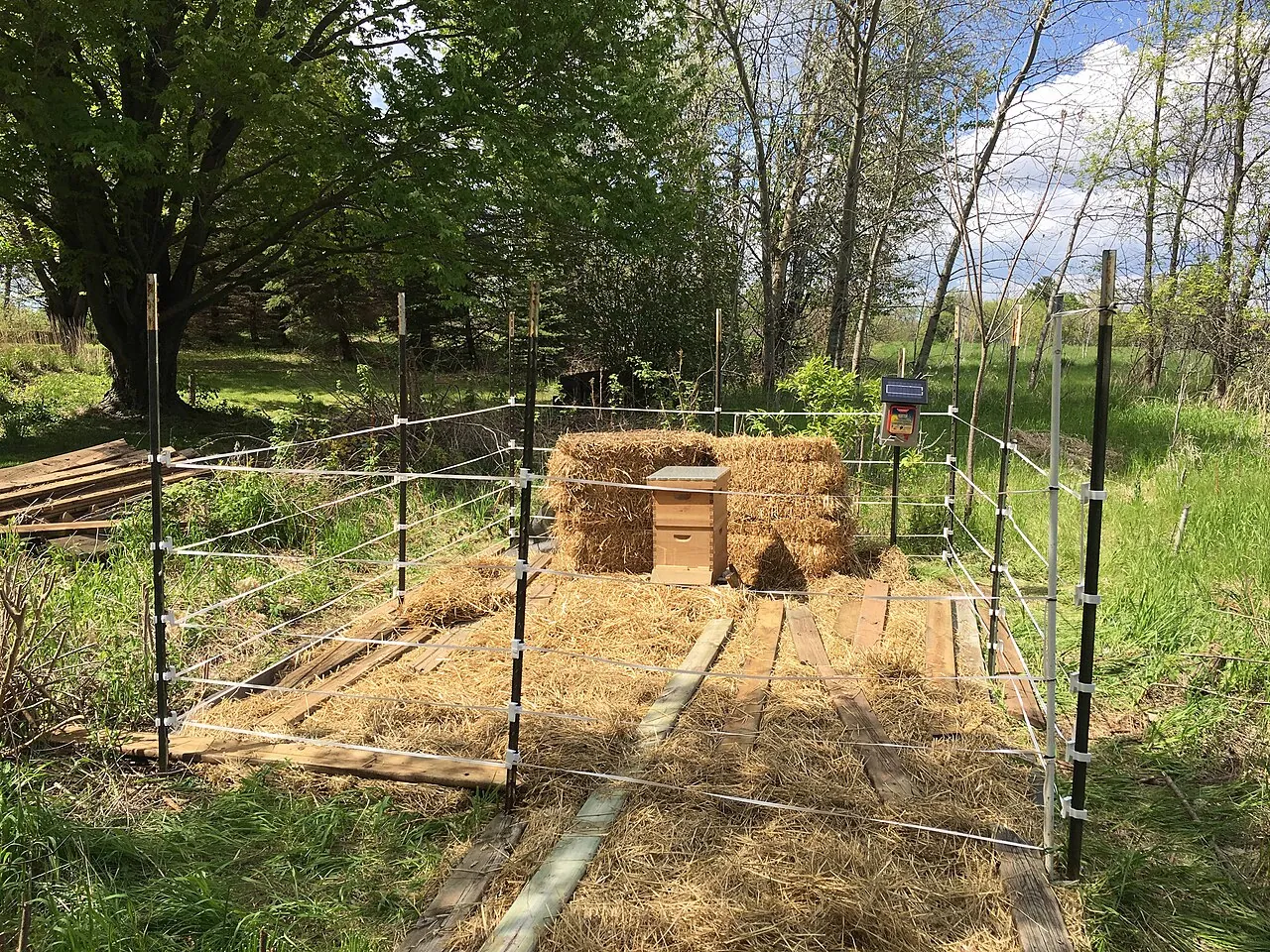
Your word of the day is
AY-pee-er-ee
A place where bees are kept in hives.
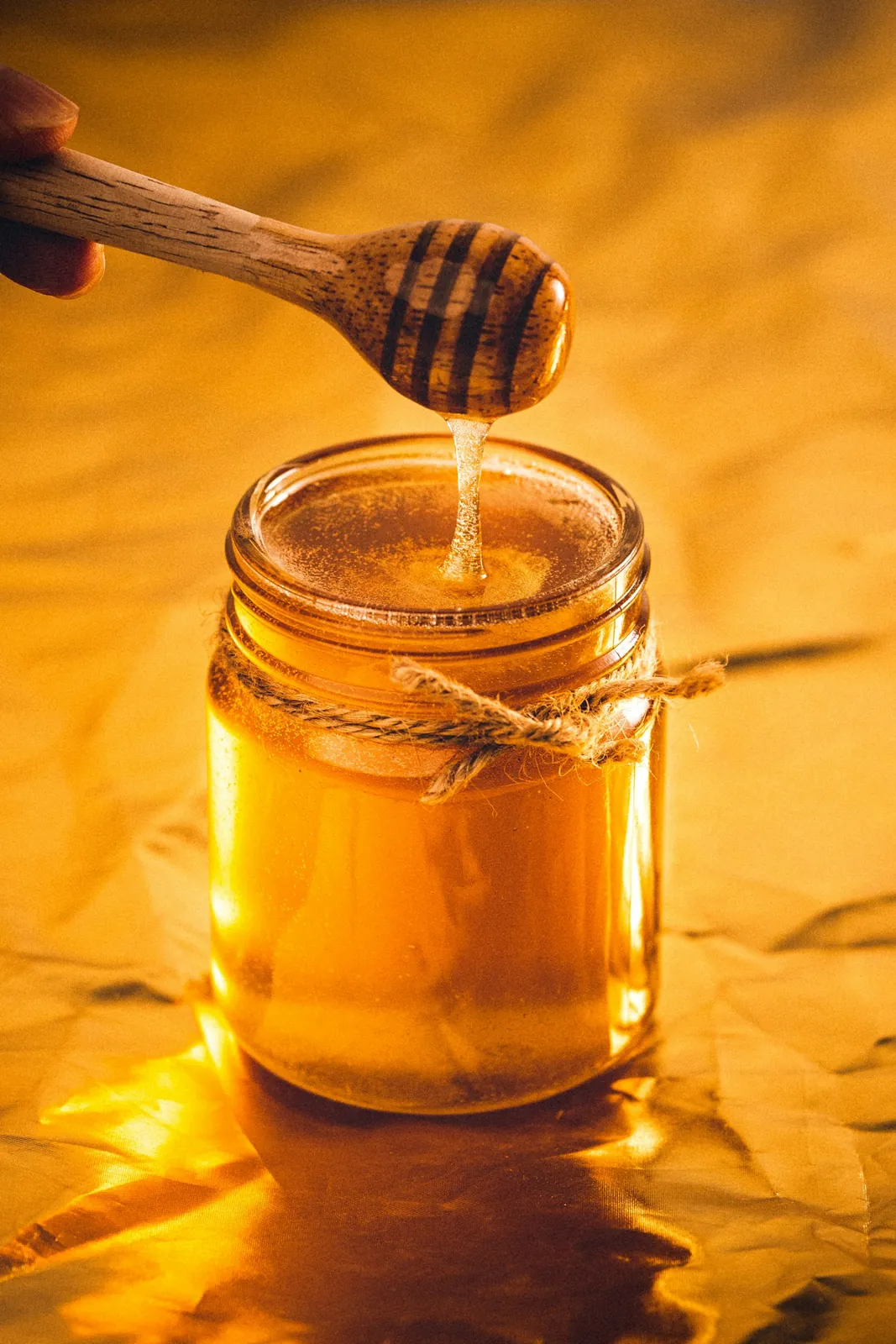
Rice syrup costs about 0.40 to 0.60 euros per kilogram, and imported honey averaged about 2.17 euros per kilogram in 2021.
How does syrup sold as honey hurt beekeepers who sell pure honey?
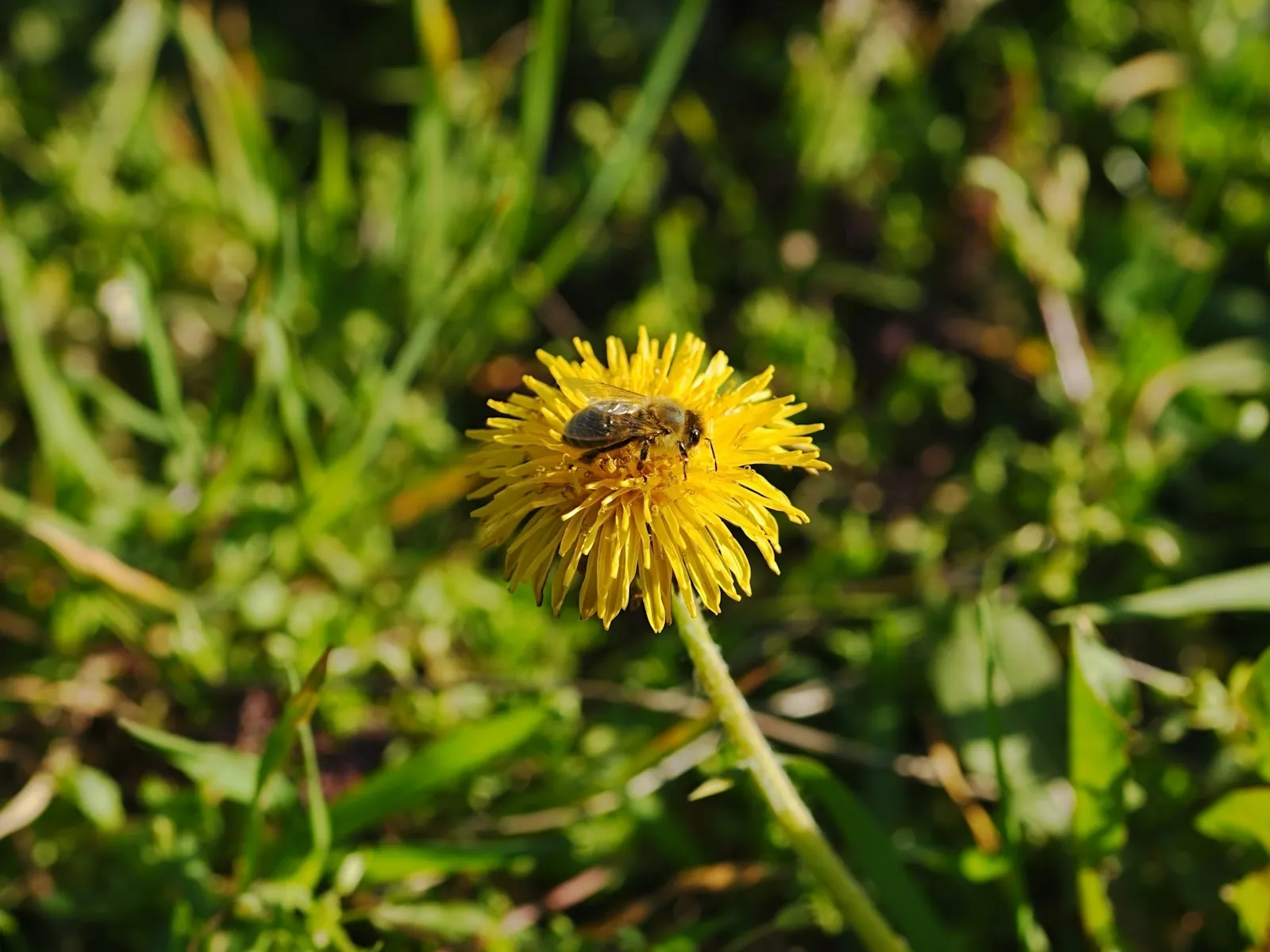
A nuc holds two frames of honey and pollen and three frames of brood.
Why does a new honey bee colony need both stored food and young bees to survive?
Claim, evidence, reasoning
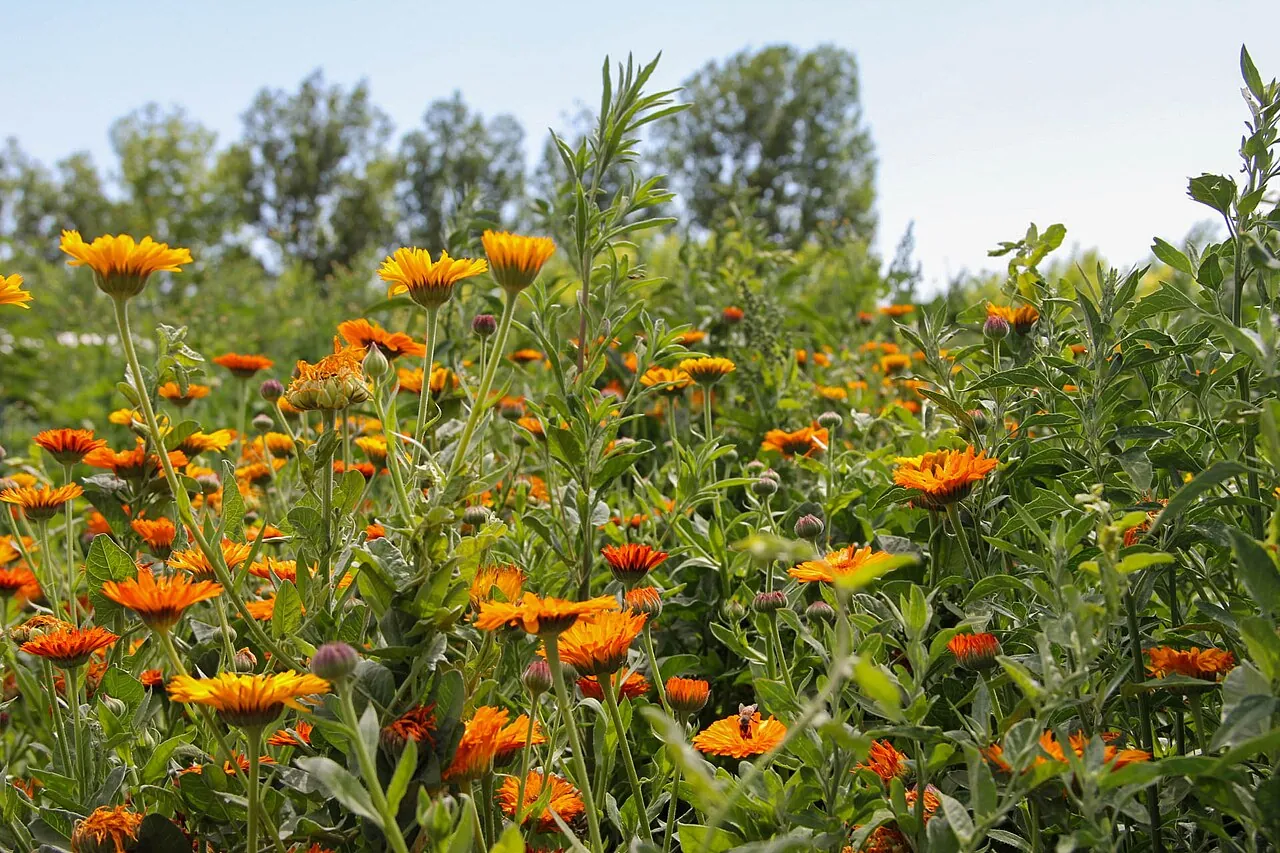
A beginner’s nuc of about 6,000 bees has to grow toward a full colony of about 60,000 and store honey for winter.
Which evidence from the episode shows that a growing honey bee colony needs many flowers?
Claim, evidence, reasoning
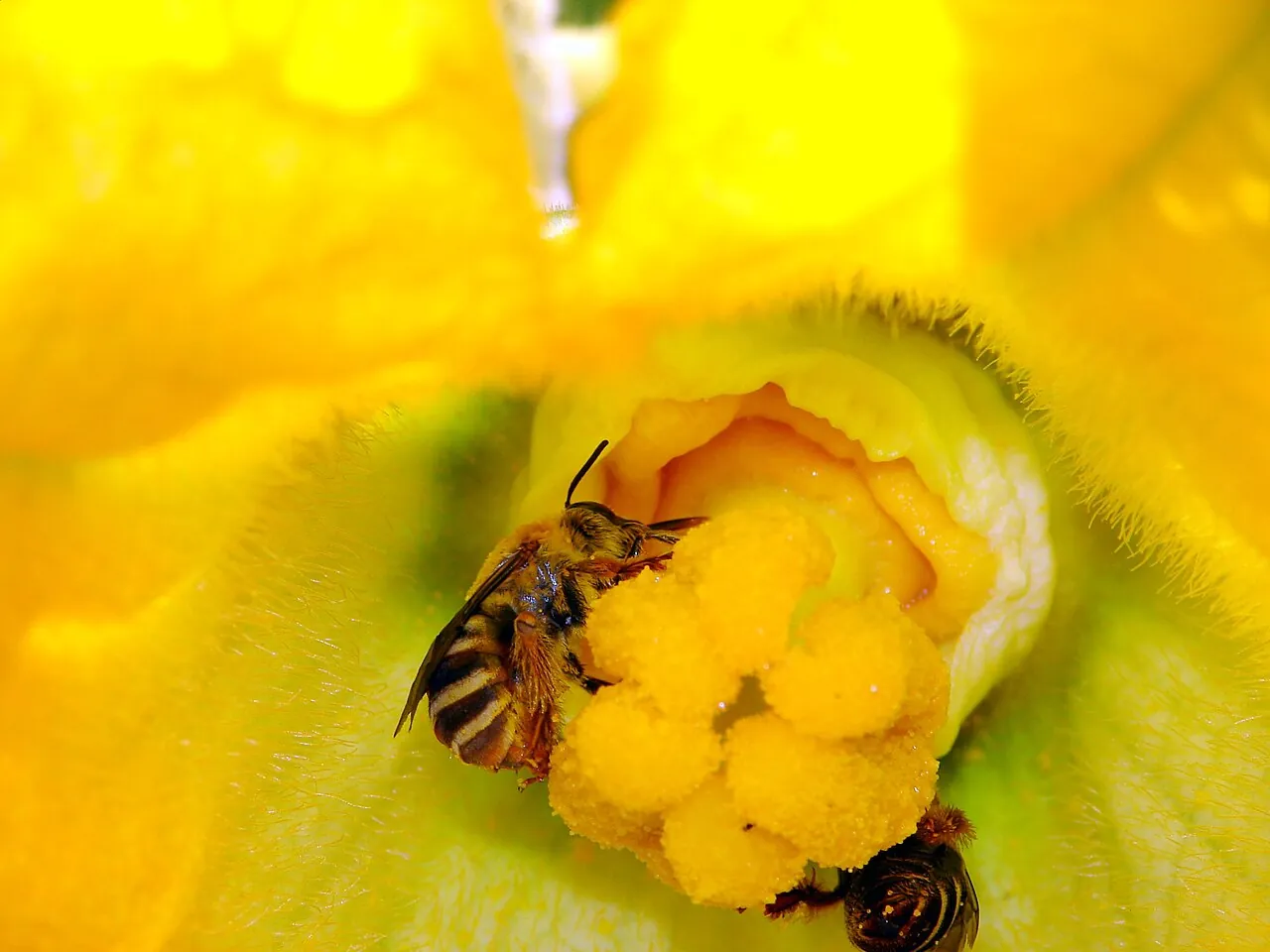
In the episode, Annika says honey bees aren’t native to the US. New York State has over 400 species of native bees.
Which evidence from the episode shows that a wildflower strip helps more bees than honey bees?
Claim, evidence, reasoning
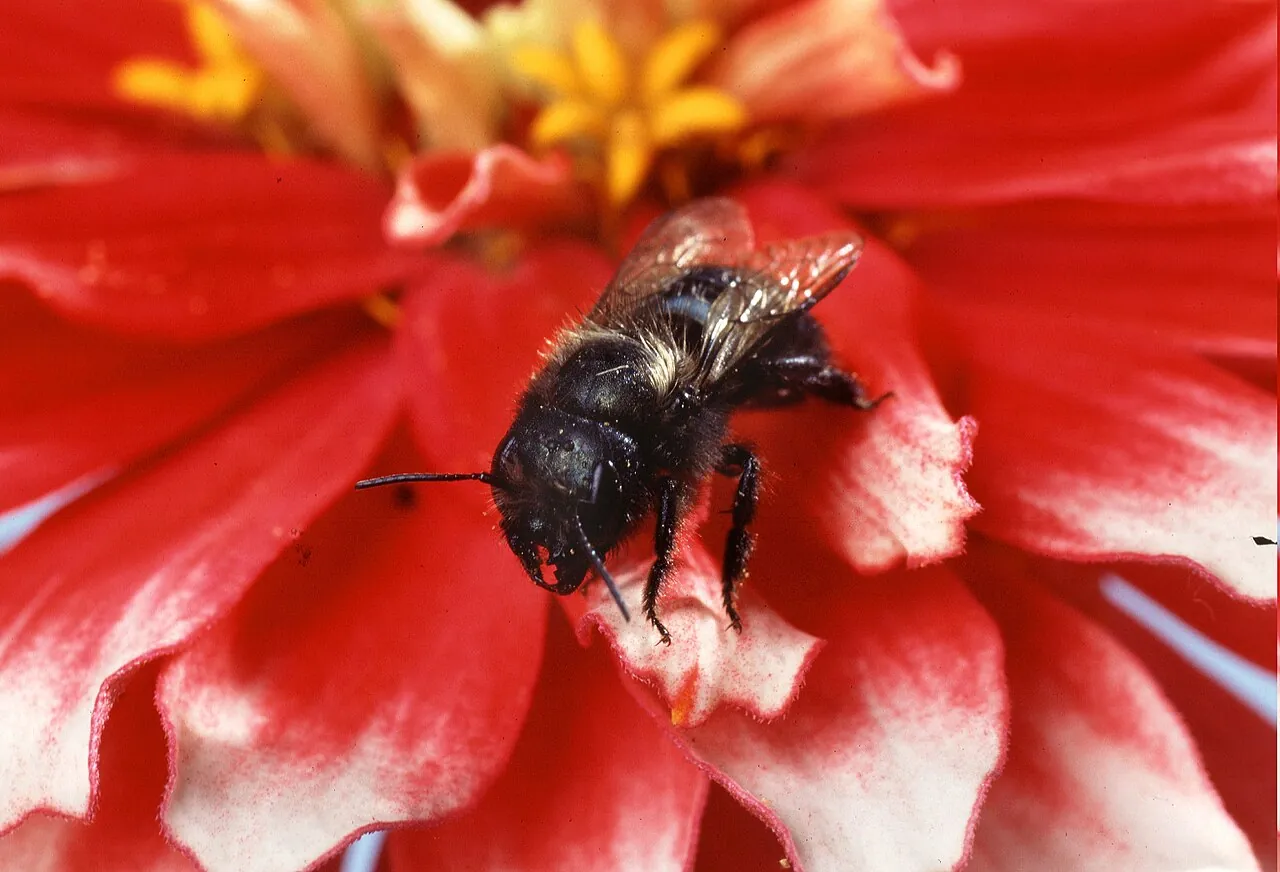
Which reasoning links the evidence to the claim about the wildflower strip?
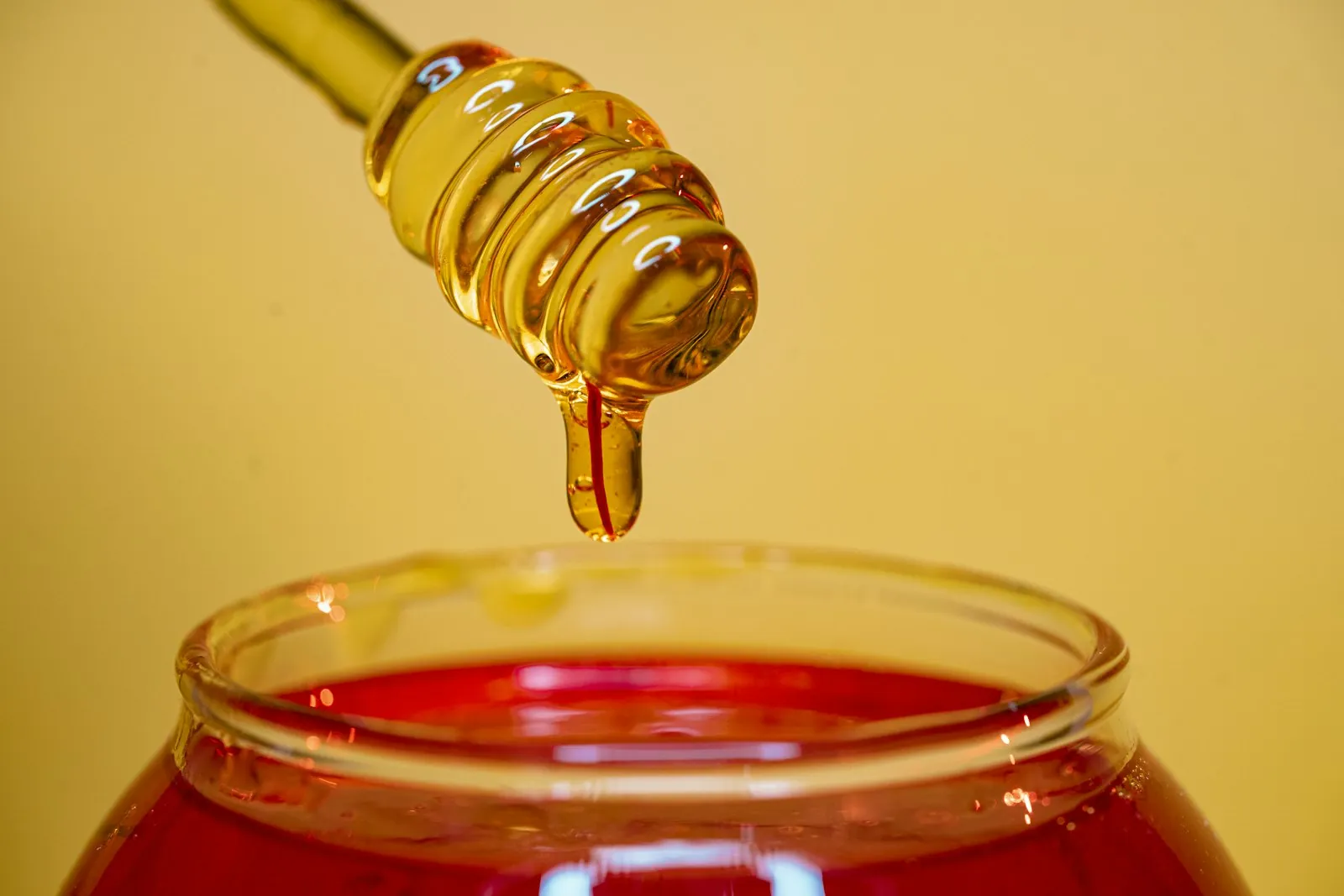
Going further: honey fraud
In 2021 and 2022, European Union inspectors tested 320 shipments of imported honey at the border. They flagged 147 shipments as suspected of having added sugar syrup.
| Where the honey came from | Shipments flagged | Shipments tested | Percent flagged |
|---|---|---|---|
| China | 66 | 89 | |
| Turkey | 14 | 15 | |
| United Kingdom | 10 | 10 | |
| All shipments | 147 | 320 |

European Union inspectors flagged 147 of 320 imported honey shipments.
In the European Union honey check, ____ of all 320 shipments were flagged.
See the table
| Where the honey came from | Shipments flagged | Shipments tested | Percent flagged |
|---|---|---|---|
| China | 66 | 89 | |
| Turkey | 14 | 15 | |
| United Kingdom | 10 | 10 | |
| All shipments | 147 | 320 |
In the European Union honey check, which place had the highest percent of shipments flagged?
See the table
| Where the honey came from | Shipments flagged | Shipments tested | Percent flagged |
|---|---|---|---|
| China | 66 | 89 | |
| Turkey | 14 | 15 | |
| United Kingdom | 10 | 10 | |
| All shipments | 147 | 320 |
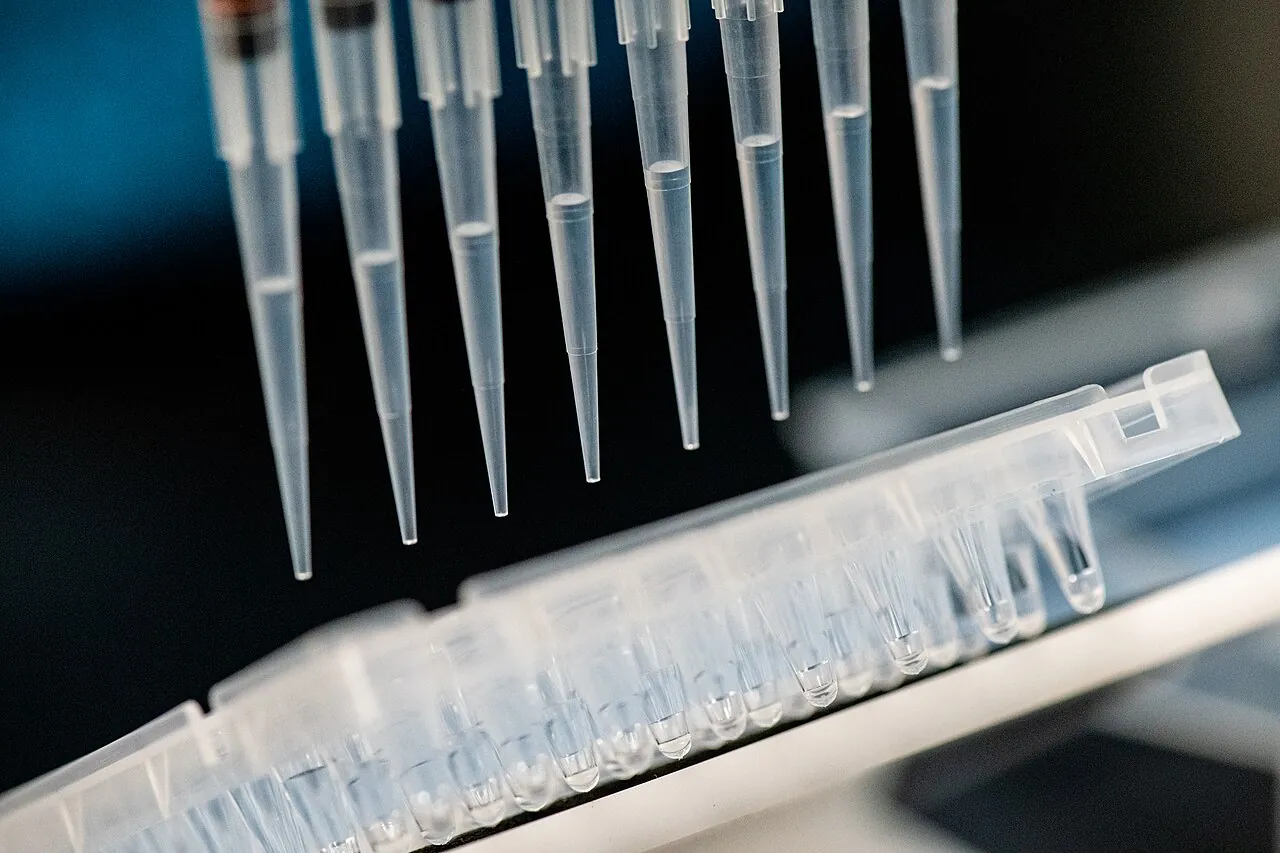
The tests found chemical markers of added sugar but could not measure how much syrup was in the honey.
Why do European Union inspectors call the flagged honey shipments “suspected” instead of “fake”?
See the table
| Where the honey came from | Shipments flagged | Shipments tested | Percent flagged |
|---|---|---|---|
| China | 66 | 89 | |
| Turkey | 14 | 15 | |
| United Kingdom | 10 | 10 | |
| All shipments | 147 | 320 |
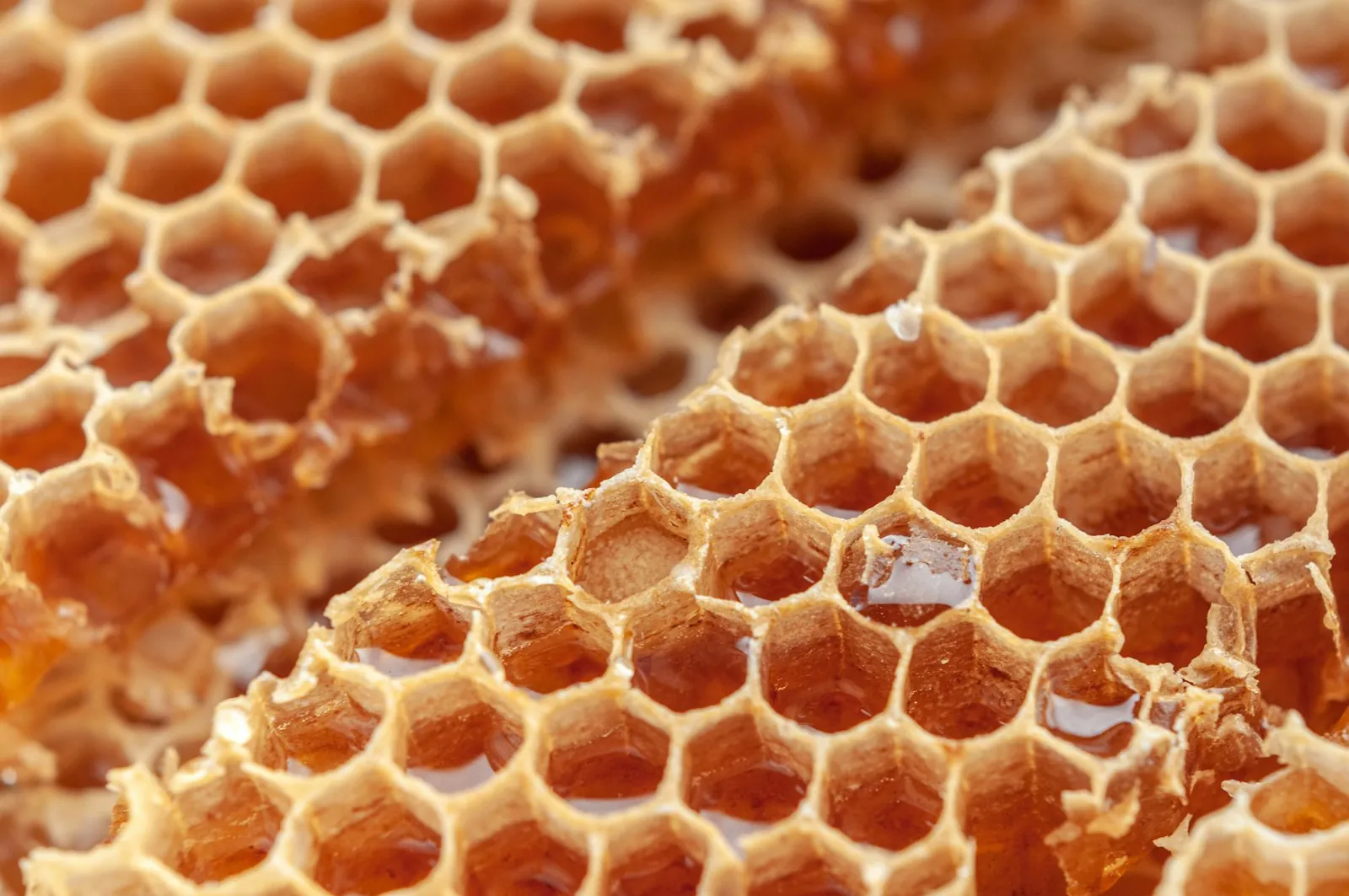
A Bee Country beekeeper explains that bees make beeswax from honey they eat.
Which path traces beeswax back to the flowers the bees visited?
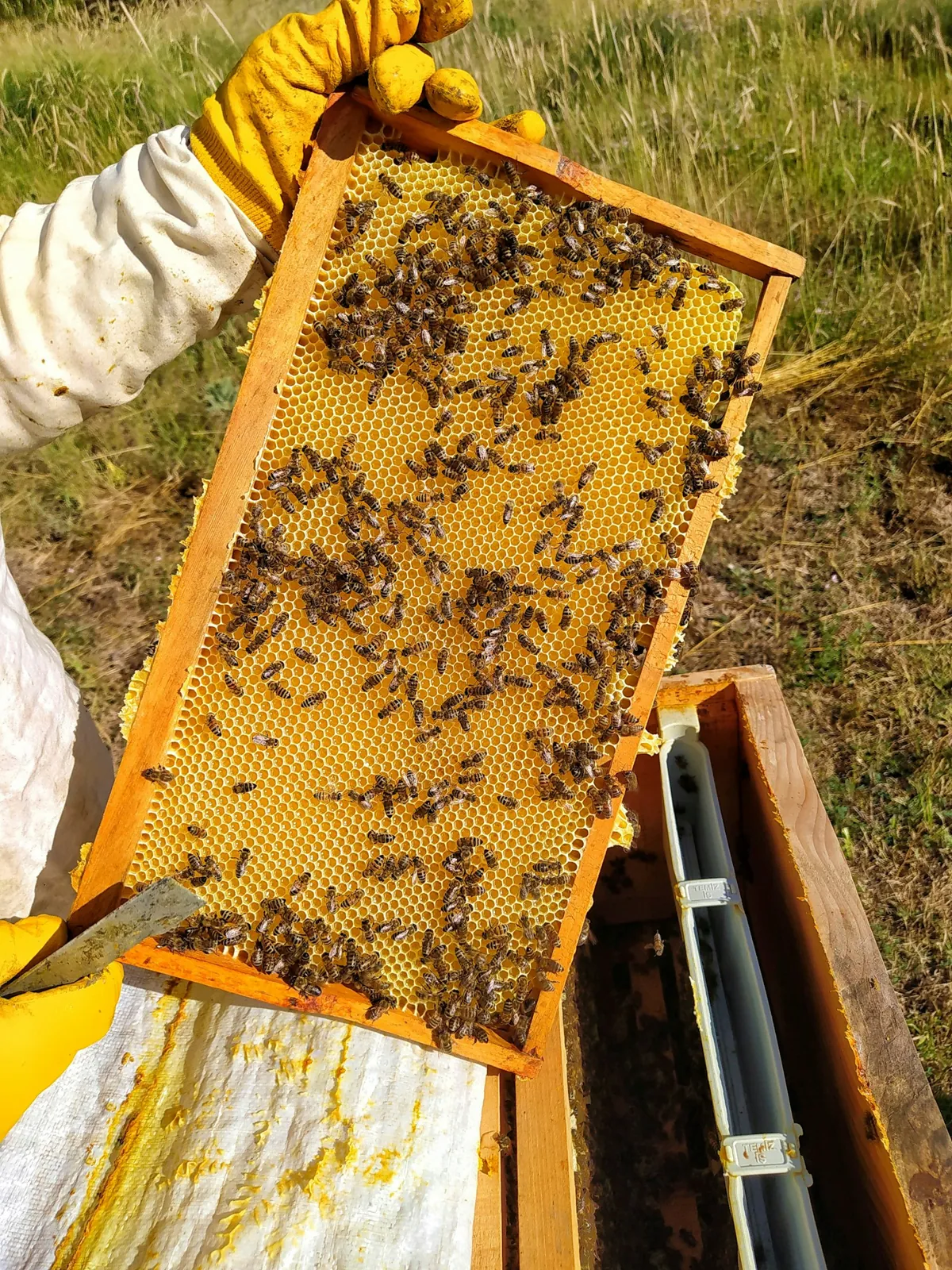
The beekeeper and a University of Nebraska beekeeping guide both say bees eat about 8 pounds of honey to make 1 pound of wax.
To build 2.5 pounds of new wax comb, bees would eat about ____ of honey.
Lesson complete
Today’s word
apiary
AY-pee-er-ee
A place where bees are kept in hives.
Look at these again
You got every question right the first time.
Sources
- Alexandra-Maria Klein, Bernard Vaissière, James Cane, Ingolf Steffan-Dewenter, Saul Cunningham, Claire Kremen and Teja Tscharntke, led from the University of Göttingen in Germany, Proceedings of the Royal Society B, 2007
- Ashley Mortensen, Daniel Schmehl and Jamie Ellis, University of Florida Institute of Food and Agricultural Sciences (UF/IFAS), “European Honey Bee, Apis mellifera Linnaeus and subspecies,” EDIS fact sheet EENY568
- The Mid-Atlantic Apiculture Research and Extension Consortium (MAAREC), a group of university beekeeping extension programs hosted by the University of Delaware, “The Colony and Its Organization”
- Shelby Kittle, Louise Lynch-O’Brien, Autumn Smart and Judy Wu-Smart, University of Nebraska–Lincoln Department of Entomology, “Beekeepers’ Guide to Comb Honey Production,” Nebraska Extension NebGuide G2362, March 2025
- Susan Nicolson, Hannelie Human and Christian Pirk, University of Pretoria in South Africa, Scientific Reports, 2022
- Kenya Fernandes, Dee Carter and four co-authors, University of Sydney in Australia, Frontiers in Nutrition, 2022
- Adam Siegel, Kim Fondrk, Gro Amdam and Robert Page, Arizona State University, Behavioral Ecology and Sociobiology, 2013
- The European Commission’s food fraud team and its Joint Research Centre, EU coordinated action “From the hives”, results published 2023
- The 6-to-8-pound range for honey per pound of wax: Kevin Palmer and Paula Rogers Huff, “Hand-Rolled Beeswax Candle,” University of Wisconsin-Extension, 2012
- Vision and Change core concepts and competencies, as summarized in Brownell and others, CBE Life Sciences Education, 2014
- Bee Country pages: home, About Us, contact, why a guarantee
- Beekeeper training from Cornell CALS, Beekeeping Courses & Certifications
- Word origins from Dictionary.com: apiary, apiarist, -ary, nucleus, library, binary, melliferous, mellifluous
- Spanish and French words from Wiktionary: abeja, abeille, apicula