← Nerdy Jobs: Protein Crystallization
Teacher guide
Raven spends a day growing protein crystals with structural biologist Dr. Sarah Bowman, and some crystals show up within hours. Students watch the episode and work out why a protein’s shape is so useful for medicine. Nerdy Jobs is Raven’s science career series.
At a glance
- Middle school
- Grades 6 to 8 · About 43 minutes
- High school
- Grades 9 to 12 · About 58 minutes
- College
- College · About 55 minutes
- Materials
- The worksheet for your level and a screen for the episode.
- Grouping
- Students work alone. For partners, pair students for Questions.
- Phenomenon
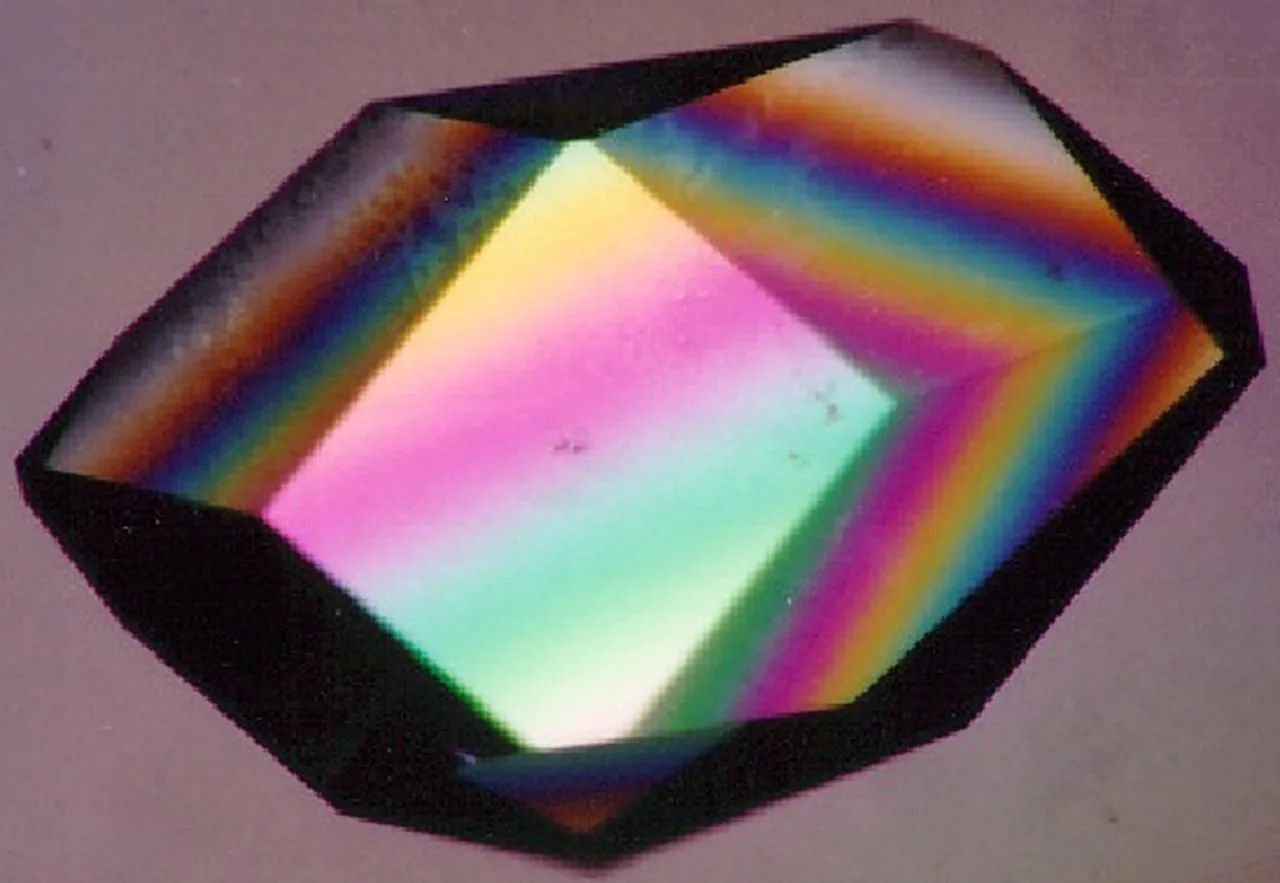
- A robot sets out protein drops too small to see. Within hours, crystals start growing in some of the drops. Aim X-rays at a protein crystal, and scientists can work out the protein’s shape.
- Topics
- Proteins and their shapes, crystals, X-ray crystallography, lab robots, hemoglobin, the virus that causes COVID-19, drug design, science careers.
Preview the episode before sharing it with your class.
Video and transcripts
- 1
Nerdy Jobs S1E1, Exploring the Magic of Protein Crystallization
Nerdy Jobs season 1, episode 1, 11:53. Dr. Raven grows protein crystals with structural biologist Dr. Sarah Bowman at the Hauptman-Woodward Medical Research Institute. The video is unlisted on YouTube. The link works, but the video does not show up in YouTube search.
Watch on YouTubeTranscript
From the episode transcript. Times come from the matching YouTube captions.
[0:00] (upbeat soul music)
[0:14] They say that diamonds are a girl’s best friend, but crystals are everybody’s best friend today. Because today, we are at the Hauptman-Woodward Medical Research Institute working with Dr. Sarah Bowman and learning all about crystallography. And you know, we never do science alone and that’s why I found a perfect partner for today. Say hello to Sydney.
[0:40] How... Where did you come from? How long have you been back there? Is it... Girl, is this Nerdy Jobs?
[0:48] Yes, you’re on Nerdy Jobs!
[0:50] Girl, I’m on Nerdy Jobs!
[0:52] You’re on Nerdy Jobs. Girl, you wanna be my co-host?
[0:54] Yes!
[0:55] Let’s go!
[0:56] (upbeat music)
[1:01] Hi, Dr. Bowman.
[1:02] Thank you so much for coming, Dr. Baxter. I’m thrilled to have you here and thrilled to have you as well, soon-to-be Dr. Sydney. My name’s Dr. Sarah Bowman. I work here at Hauptman-Woodward Medical Research Institute and I’m a structural biologist. I do macro-molecular X-ray crystallography. So we’re gonna talk about crystals.
[1:21] [Raven] Okay, so Dr. Bowman is kind of a big deal. She’s the director of the National Crystallization Center that opened in 2000, and since then, they’ve set up over 25 million crystallization experiments on more than 18,000 biomolecules, advancing medical research to almost 2,000 labs around the world.
[1:39] Why is it important that we learn about crystallography today and what is the bigger picture about all of this?
[1:44] When we’re thinking about structural biology, what we’re really looking at is what do proteins look like? And so, proteins are the different molecular machines in our bodies that kind of make everything happen. So you can imagine that if we wanna figure out how to design a vaccine and how to design drugs to treat diseases, we need to know what these pieces and parts actually look like. So, structural biology is really the kind of way that we look at these three-dimensional structures to be able to understand what the three-dimensional shapes of these proteins look like. To do X-ray crystallography, what we have to do is take our protein sample, coax it into being in a crystal form, and then take that crystal and shoot X-rays at it to collect diffraction patterns, and then we use a bunch of math and computation to actually solve the structures to be able to look at what these things look like.
[2:40] Okay, so we’re making non-edible crystals in the lab.
[2:43] [Sarah] Non-edible crystals being made in the lab.
[2:47] But safety first! We’ve got our close-toed shoes, our lab coats, our goggles, and of course I had to ice Sydney out (laughs). Who said scientists can’t have fun?
[3:01] Great, so what we’re gonna do is crystallize some of this lysozyme protein that we’ve already got prep-prepared. So the first thing we need to do is put some into one of these little tubes. What we need is 150 microliters. Wanna do that, Raven?
[3:13] Yeah, let’s do it!
[3:14] Cool.
[3:15] [Raven] What we’re doing is taking a small amount of lysozyme protein, putting it into a tube, putting that tube in a machine that’s then gonna put that small amount into a 96-well plate where we’ll grow crystals in.
[3:26] So we’ve got everything already all set up here. So it’s gonna wash the syringes, it’s gonna wash the special syringe that the protein goes into, and then it’s gonna pull stuff out of here, deliver it into the 96-well tray, and then it’s gonna pull the protein out and deliver that in really tiny volumes, which is why we use robots. So, let’s go ahead and use that. So we’re just washing with water right now. So, and what this is doing is putting water up and pushing it back down just to make sure that it’s nice and clean for getting the protein in there.
[4:00] Okay.
[4:01] So. This is where the protein’s being dispensed, into each of those little drops.
[4:07] [Raven] The drop is tiny.
[4:13] [Sydney] My eyes can’t see that.
[4:14] You may have to wait ’til we look at it under the microscope, or in the imager, to be able to really see it.
[4:19] That is incredible.
[4:21] But you’ll be able to see it’s really there. It’s really dispensing stuff out.
[4:24] I didn’t really see. It looks like a tiny, little sneeze from this angle.
[4:28] (laughs) Essentially, everything in these pipets is gonna come out with a lot of precision and every time you actually put your syringes down and dispense into something where you’re touching other things, you may kind of get contamination or interaction between things so that fact that we are able to kind of essentially dispense stuff down and then kind of shoot the protein out, it means that you’re never gonna have contamination.
[4:56] Okay so robots.
[4:57] Robots.
[4:58] Not taking our jobs, but making our jobs easier.
[5:00] Making our jobs better.
[5:01] Better. A protein’s shape is important because its shape determines its function, but how do proteins get their shapes?
[5:10] If you think about it, a protein is a set of different amino acids that are all formed together, and if we just thought about it as one long, linear chain, they’d just be not shaped at all, but in reality, as the protein is actually coming off of the ribosome it is folding into a three-dimensional compact shape and so, how exactly the protein folding kind of occurs is a question that people still are researching, but the actual shape of proteins, that’s really what we do as structural biologists is try to understand how the different shapes come together for the different proteins and for the different biomolecules.
[5:53] [Raven] And our protein crystals are already growing.
[5:56] So we’re gonna just look really quickly, and in fact, you can see that in the one we just set up, we’ve got a couple.
[6:03] Those are pretty!
[6:05] Those are pretty, aren’t they?
[6:06] I love the colors! I see pink, there’s blue.
[6:08] [Sarah] There’s blue, there’s a little yellow.
[6:10] [Sydney] There’s a little purple moment over there in the corner.
[6:12] Yeah. So these are crystals that are forming off the protein that we literally just set up. This one’s a smaller drop, and maybe has some crystals that’ll show up like maybe tomorrow.
[6:22] So what are those darker circles?
[6:24] In here?
[6:25] Yeah.
[6:26] Those are precipitates. So this is the protein has precipitated out. Now here’s one of the really interesting things. It has precipitated out, but it is crystallizing out of the precipitate. This is an ugly crystal, okay? So this tray has been in since yesterday and so there’s some...
[6:48] Wow!
[6:49] That form really pretty crystals.
[6:51] (Raven and Sydney exclaim)
[6:52] But it took a while. What you’re seeing at the bottom here is actually a time course. So this is maybe after about four hours, you’ve got these little dots, and then you’re gonna watch those dots just kind of pop in.
[7:04] [Sydney] Is there any information that you can get from these timelapse?
[7:06] So in some experiments, you need super tiny crystals, and so for those, you could actually stop the crystallization process right here by kind of adding some additional stuff. There’s some that you need massive crystals for and so for those, you wanna just kind of keep letting them go, and so there’s just, it’s kind of dependent on what kind of experiment you’re doing and what you need to do, and sometimes you form crystals and then you go back and you’re like okay, these are pretty good, but I’m gonna optimize around them and stuff like that.
[7:35] Why would we wanna know what the shape of those proteins inside the crystals are?
[7:39] Okay, so one example that we can think about. Hemoglobin. Hemoglobin is what makes your blood red. It’s got a haem cofactor in it, which has iron, and that particular protein is what binds oxygen and it circulates through your body to kind of deliver oxygen to your muscles and you know, your brain and all the pieces that need oxygen. And it has a particular three-dimensional shape when oxygen’s bound, and a slightly different shape when oxygen isn’t bound. So understanding what those, what hemoglobin, the protein, looks like helps us to kind of better understand how that process is even happening. One of the cool things is to think about, for instance, when we’re looking at something like SARS-CoV-2, so the main protease is a major drug target for SARS-CoV-2, and we’re trying to kind of understand what this looks like in different kinds of conditions, as well as when we got different drugs bound. Because it actually looks different. That helps us to design better drugs to treat COVID-19. There’s all kinds of diseases like this that if we know what the proteins look like that are maybe different in the disease state relative to the kind of natural state, the healthy state, that would help us to better design drugs or treatments or things like that.
[9:09] So for the folks at home who are not structural biologists, what is the main thing that you want them to know?
[9:17] Well, that’s a great question (laughs). So, I think that... So, here’s some things to kind of know about structural biology. That the more we know about what things look like, the better we’re able to understand how they work. And so, if we know what the different pieces and parts say of the virus, of the SARS-CoV-2 virus, look like, we can better understand, for instance, why variants are causing changes to how infections are happening and transmission. So the pandemic in some ways have given us a lot of things to think about in terms of how we talk about science, in terms of how we communicate science, which of course you’re familiar with, and you know, how we talk about what we’re doing, because I think that, again, if we know what things look like we can make things to kind of treat diseases. But the other thing we’ve learned is, you know, how scientists can work together and how we can all really come together and talk about the really important things and share data and kind of communicate with just not each other, although that’s really important, but also with the public about, okay, here’s why all of these different pieces of science are really important, and here’s why we really need to kind of make these things happen.
[10:44] I couldn’t agree more. It sounds like structural biology is a really important part of science and medicine. And you know what? I think that this Nerdy Job is done. Wow, that was fun. Thank you, Sydney. Thank you, Dr. Bowman, for having us at HWI. We’re already on to our next Nerdy Job. I’ll see you in the next episode.
[11:08] Raven! Raven!
[11:10] [Raven] It was so much fun having Sydney with me today to learn about structural biology and to make protein crystals. Be sure to share this episode and what you learned with everyone you know. Also, be sure to hit that Subscribe button on YouTube and follow me, @DrRaventheScienceMaven, on all socials so that you don’t miss a Nerdy Job. Can you tell what my next nerdy job is? Leave a comment and guess. Oh, here’s a hint. Look at what I’m wearing. And oh, one more thing (laughs). One more thing. This show was made possibly by generous donations from awesome supporters. Visit my website to learn more about the show and help us do these nerdy jobs.
[11:50] (soul music)
Your word of the day is
kris-tuh-LOG-ruh-fee
Crystallography. The science of crystals and how they form.
| Word part | Comes from | Meaning |
|---|---|---|
| crystallo- | Greek krýstallos | clear ice, rock crystal |
| -graphy | Greek -graphía | drawing, writing, representing, recording, describing |
| prot- in protein (bonus word) | Greek prōteîos | primary |
| dif- in diffraction (bonus word, high school and college) | Latin dis- | apart |
| -fract- in diffraction (bonus word, high school and college) | Latin frangere | to break |
Same roots, other subjects
- History and artCalligraphy, the art of decorative handwriting, comes from the Greek for “beautiful writing.” Photography means “drawing with light.”
- BiologyCrystal is related to the Greek krýos, “cold, frost,” the root of cryo-. Cryo-electron microscopy, another way to see protein shapes, images proteins frozen in a thin layer of ice.
- ChemistryChromatography separates the parts of a mixture. Its name joins chromato-, “color,” with the same -graphy ending.
- MathGraph is short for “graphic formula.” Graphic traces back to the Greek gráphein, “to draw, write.”
- MusicThomas Edison’s “talking phonograph” of 1877 took its name from Greek roots for “sound” and “instrument for recording.”
- World languagesSpanish says cristalografía and French says cristallographie.
Word hunt. Ask students to find three more words that end in -graph or -graphy and guess what each one draws, writes or records.
The worksheets carry a short version. Use these for discussion or a word hunt.
Lesson flow
- 3 minPredictStudents answer the question and write one sentence.
- About 20 minEpisodePlay the 11:53 episode and stop at the pause points below for a quick question aloud.
- 2 minMeet the scientistStudents read the box about Dr. Bowman on their worksheet.
- 4 minWord of the dayBreak the word into its parts together.
- 8 minQuestionsStudents answer on their own, then share out. With partners, pairs discuss first.
- 5 minExit ticket
- 3 minPredictStudents answer the question and write one sentence.
- About 20 minEpisodePlay the 11:53 episode and stop at the pause points below for a quick question aloud.
- 2 minMeet the scientistStudents read the box about Dr. Bowman on their worksheet.
- 4 minWord of the dayBreak the word into its parts together.
- 8 minQuestionsStudents answer on their own, then share out. With partners, pairs discuss first.
- About 10 minClaim, evidence, reasoning
- About 5 minGoing further
- 5 minExit ticket
- About 20 minEpisodePlay the 11:53 episode and stop at the pause points below for a quick question aloud.
- 2 minMeet the scientistStudents read the box about Dr. Bowman on their worksheet.
- 4 minWord of the dayBreak the word into its parts together.
- 3 minPredict
- About 20 minRead the paperStudents read Table 1 of the paper and answer the questions. The paper reading works as homework or a discussion section. Table 1’s printed Total row does not match its yearly rows. The yearly rows sum to 4,380 structural genomics samples and 585 structures (13.4%), while the printed totals are 3,876 samples and 485 structures (12.5%). The worksheet asks for the printed totals, but accept 12.5% from the printed totals or 13.4% from the row sums. The screen version checks only 12.5% and tells students who typed 13.4% why the two differ.
- 5 minExit ticket
Pause points
Stop the episode at these seven times for a quick question aloud. Times come from the episode’s YouTube captions.
| Time | Scene | Question | Answer |
|---|---|---|---|
| 2:40 | Dr. Bowman explains structural biology and X-ray crystallography. | What do structural biologists study, and why? | The shapes of proteins, the molecular machines in the body. Knowing those shapes helps scientists design vaccines and drugs. |
| 3:26 | Dr. Raven loads protein for the robot. | What protein is Dr. Raven putting into the robot? | Lysozyme, an enzyme found in tears and egg whites. |
| 5:01 | The robot sets up the drops. | Why does the lab use a robot to set up the drops? | The drops are tiny. The robot dispenses them with precision and without touching other things. Less touching means less contamination. |
| 5:53 | Dr. Bowman explains protein folding. | How does a chain of amino acids become a protein with a shape? | The chain folds into a compact three-dimensional shape as it comes off the ribosome. How folding happens is still being researched. |
| 7:35 | The team looks at crystals and a time-lapse. | What were the darker circles in the drop, and how did the team see crystals too small for their eyes? | Precipitate, protein that came out of solution without forming neat crystals. In one drop, a crystal grew out of the precipitate. The team used a microscope and an imager. |
| 9:09 | Dr. Bowman explains hemoglobin and the COVID-19 virus. | Why do scientists want to see hemoglobin with oxygen and without oxygen? | Hemoglobin has one shape with oxygen bound and a slightly different shape without oxygen. Seeing both shapes helps explain how hemoglobin carries oxygen. |
| 10:44 | Dr. Bowman shares her main message. | What did the pandemic teach scientists, according to Dr. Bowman? | Scientists can work together, share data and explain to the public why the science is important. |
Video simplifications
- Lysozyme, not lysosome
- The protein in the episode is lysozyme (LY-suh-zime), an enzyme found in tears, mucus and egg whites that breaks down the cell walls of bacteria. A lysosome is a cell organelle that holds digestive enzymes.
- Center numbers
- Dr. Raven says the center opened in 2000 and has set up over 25 million experiments on more than 18,000 biomolecules for almost 2,000 labs. The center’s 2023 paper gives over 27 million screening experiments, over 18,000 samples and over 2,000 user labs since early 2000. The episode was filmed in 2021, and the count kept growing.
- “You’re never gonna have contamination”
- Robots cut contamination a great deal. The center’s 2023 paper sets a goal of less than 1% error across all steps of its pipeline, which admits that some errors still happen.
- “Its shape determines its function”
- Shape and function go together, and the hemoglobin example shows one protein switching between two shapes. A crystal structure works best for well-ordered proteins. Flexible parts often don’t show up in crystal data, and NMR and cryo-electron microscopy can study proteins outside a crystal.
- Drugs for COVID-19
- Dr. Bowman says knowing the main protease’s shape helps design drugs. Nirmatrelvir, an FDA-approved drug given with ritonavir as Paxlovid, blocks the main protease. Its designers started from X-ray structures of the protease.
- Pronunciation
- Crystallography is kris-tuh-LOG-ruh-fee. Lysozyme is LY-suh-zime.
Worksheet
Predict
Proteins are tiny parts that do jobs inside your body, and one protein is much too small to see with your eyes. Could scientists grow a crystal, the kind you can see, out of a protein?
Circle one. Yes / No
Watch
- Nerdy Jobs S1E1, Exploring the Magic of Protein Crystallizationyoutu.be/siFfzoFv61I
Meet the scientist
Dr. Sarah Bowman
Job title. Structural biologist. A structural biologist figures out the shapes of proteins and other molecules in living things. Dr. Bowman runs a crystallization center at the Hauptman-Woodward Medical Research Institute in Buffalo, New York.
A workday. Labs from around the world send proteins to her center. Robots set up tiny drops of each protein, and cameras take pictures of the drops for six weeks to spot crystals as they grow. Dr. Bowman also aims X-rays at protein crystals and uses math and computers to work out each protein’s shape.
Training. Dr. Bowman first earned a college degree in English literature and women’s studies. Years later, she went back to college for chemistry. She earned a Ph.D. in chemistry five years after her chemistry degree. A Ph.D. is the highest degree in a subject. Then she did more research at MIT and Los Alamos National Laboratory.
Word of the day
Crystallography (kris-tuh-LOG-ruh-fee). The science of crystals and how they form.
| Word part | Comes from | Meaning |
|---|---|---|
| crystallo- | Greek krýstallos | clear ice, rock crystal |
| -graphy | Greek -graphía | drawing, writing, recording |
- Photography means “drawing with light.”
- Cryo- means icy cold. It comes from a Greek word related to krýstallos. Cryogenics is the study of extreme cold.
Bonus word. Protein (PROH-teen). Prot- comes from the Greek prōteîos, “primary” or “first.” A protein is a chain of amino acids folded into a shape, and a protein’s job depends on its shape.
Questions
Dr. Bowman calls proteins the molecular machines in your body. Her job as a structural biologist is figuring out what those machines look like. Why would scientists want to know a protein’s shape?
Hint. Dr. Bowman talks about making vaccines and medicines. What would scientists need to see before they design a medicine?
Hemoglobin is the protein in your blood that carries oxygen to your muscles and your brain. Dr. Bowman says hemoglobin has one shape when oxygen is attached and a slightly different shape when oxygen isn’t attached. Why would scientists want to see both shapes of hemoglobin?
Hint. Hemoglobin picks up oxygen in your lungs and lets go of oxygen in the rest of your body. How could two shapes help explain that job?
In the episode, a robot puts drops of protein into a plate with 96 tiny wells. The drops are too small to see with your eyes. Why does the lab use a robot to set up the drops?
Circle one. The robot measures tiny drops exactly without touching other things / The robot makes the drops big enough to see / The robot turns the protein into crystals
Hint. Dr. Bowman talks about precision and contamination. Contamination means something unwanted gets mixed in.
The virus that causes COVID-19 makes a protein called the main protease. The main protease cuts the virus’s other proteins into working pieces. A medicine that blocks the main protease can treat COVID-19. How can knowing the shape of a virus protein help scientists make a medicine?
Hint. A medicine has to fit onto the protein like a puzzle piece.
Exit ticket
Dr. Bowman’s team grows crystals out of proteins, then aims X-rays at the crystals. Why do structural biologists like Dr. Bowman grow crystals out of proteins?
Hint. What do the X-rays, math and computers let scientists see?
Predict
Proteins are tiny parts that do jobs inside your body, and one protein is much too small to see with your eyes. Could scientists grow a crystal, the kind you can see, out of a protein?
Circle one. Yes / No
Watch
- Nerdy Jobs S1E1, Exploring the Magic of Protein Crystallizationyoutu.be/siFfzoFv61I
Meet the scientist
Dr. Sarah Bowman
Job title. Structural biologist. Dr. Bowman directs the National High-Throughput Crystallization Center at the Hauptman-Woodward Medical Research Institute (HWI) in Buffalo, New York.
A workday. The center screens proteins for over 2,000 labs. Robots set each protein sample against 1,536 different chemical mixtures, and imagers photograph the drops for six weeks. Dr. Bowman’s own lab works on ways to grow and find tiny crystals, and uses X-ray crystallography to study proteins that hold metals.
Training. A bachelor’s degree in English literature and women’s studies, then a second bachelor’s degree in chemistry. A Ph.D. in chemistry from the University of Rochester in 2010. Seven years of research at MIT and Los Alamos National Laboratory after her Ph.D.
Word of the day
Crystallography (kris-tuh-LOG-ruh-fee). The science of crystals, how they form and how their parts are arranged.
| Word part | Comes from | Meaning |
|---|---|---|
| crystallo- | Greek krýstallos | clear ice, rock crystal |
| -graphy | Greek -graphía | drawing, writing, recording |
- Photography means “drawing with light.”
- Cryo-, “icy cold,” comes from a Greek word related to krýstallos. Cryogenics is the study of extreme cold.
Bonus words. Protein (PROH-teen) comes from the Greek prōteîos, “primary.” Diffraction (dih-FRAK-shun) comes from the Latin diffringere, “to break into pieces.” In X-ray crystallography, the proteins in a crystal diffract X-rays into a pattern of spots.
Questions
Dr. Bowman says a protein starts out as a long chain of amino acids. As the chain comes off the ribosome, it folds into a compact three-dimensional shape. The order of amino acids in the chain comes from a gene. How does a gene connect to the job a protein does?
Hint. Trace the steps from the gene, to the order of amino acids, to the folded shape, to the job.
Hemoglobin carries oxygen on iron atoms, one inside each of its four heme groups. Dr. Bowman says hemoglobin has one shape with oxygen bound and a slightly different shape without oxygen. Why would a structural biologist want structures of hemoglobin both with and without oxygen?
Hint. One structure shows one shape. What could comparing two shapes reveal about how hemoglobin loads and unloads oxygen?
X-ray crystallography relies on many copies of a protein lined up in the same direction inside a crystal. Some proteins have floppy, flexible parts. Why would a flexible protein be hard to study with X-ray crystallography?
Hint. Picture thousands of copies of the protein packed in a crystal. What happens if the flexible parts point a different way in each copy?
The main protease of SARS-CoV-2, the virus that causes COVID-19, cuts the virus’s other proteins into working pieces. Dr. Bowman says the main protease looks different when a drug is bound. Nirmatrelvir, a COVID-19 drug that blocks the main protease, was designed from X-ray structures of the protease with another drug bound. Why would drug designers want structures of the protease with a drug bound, instead of the empty protease alone?
Hint. What does a drug-bound structure show that an empty one can’t?
Claim, evidence, reasoning
In sickle cell hemoglobin, a change in the hemoglobin gene swaps one amino acid. Glutamate at position 6 of hemoglobin’s beta chain becomes valine. When the changed hemoglobin has no oxygen bound, the molecules stick together into stiff fibers inside red blood cells and bend the cells into a sickle shape. How can a change in one gene change the job hemoglobin does? Make a claim, back it with evidence and explain your reasoning.
Hint. Follow the chain from gene, to amino acid, to protein shape, to what the protein does.
Going further
Dr. Bowman’s center runs lysozyme, the same protein from the episode, as a control in its monthly screening runs. Scientists already know lysozyme grows crystals. Why would a crystallization center test lysozyme each month when scientists already know lysozyme grows crystals?
Hint. Imagine the lysozyme drops stopped growing crystals one month. What would that tell the center?
Exit ticket
Dr. Bowman says the more scientists know about what things look like, the better they understand how they work. What steps lead from a protein in a drop to a medicine that blocks the protein?
Hint. Start with the crystal in the drop. End with a drug designed to fit the protein.
Watch
- Nerdy Jobs S1E1, Exploring the Magic of Protein Crystallizationyoutu.be/siFfzoFv61I
Meet the scientist
Dr. Sarah E. J. Bowman
Job title. Structural biologist. Associate Investigator and Director of the National High-Throughput Crystallization Center at the Hauptman-Woodward Medical Research Institute (HWI) in Buffalo, New York, as listed in her 2023 American Crystallographic Association bio.
A workday. The center has run crystallization screens since early 2000, for over 2,000 user labs and over 18,000 samples. Each sample is tested against 1,536 cocktails in 400-nanoliter drops under oil. Imagers photograph each drop at day 1 and at weeks 1, 2, 3, 4 and 6, with brightfield, UV fluorescence and second harmonic generation imaging. Her research group develops methods to crystallize macromolecules and detect tiny crystals. The group also pairs crystallography with spectroscopy to study metal-binding proteins tied to bacterial infections and neurological diseases.
Training. B.A. in English literature and women’s studies, Cornell College, 1996. B.S. in chemistry, Metropolitan State College of Denver, 2005. Ph.D. in chemistry, University of Rochester, 2010. Postdoctoral research at MIT (2010 to 2016) and Los Alamos National Laboratory (2016 to 2017).
Word of the day
Crystallography (kris-tuh-LOG-ruh-fee). The science of how crystals form and of their forms and internal structure.
| Word part | Comes from | Meaning |
|---|---|---|
| crystallo- | Greek krýstallos | clear ice, rock crystal |
| -graphy | Greek -graphía | drawing, writing, recording |
- Photography means “drawing with light.”
- Cryo-, “icy cold,” comes from a Greek word related to krýstallos. Cryo-electron microscopy images proteins frozen in a thin layer of ice.
Bonus words. Protein (PROH-teen) comes from the Greek prōteîos, “primary.” Diffraction (dih-FRAK-shun) comes from the Latin diffringere, “to break into pieces.” The proteins in a crystal diffract an X-ray beam into a pattern of spots.
Predict
Hauptman-Woodward’s screening lab tests each protein sample against 1,536 crystallization cocktails. From 2000 to 2010, the lab tracked the samples it screened for structural genomics groups, large projects that set out to solve structures for many proteins. Make a guess before you read the paper. What percent of those samples led to a structure deposited in the Protein Data Bank (PDB)? Give your reasoning in one sentence.
Hint. List the steps between a purified protein and a solved structure. Each step can fail.
Read the paper
Luft, Snell and DeTitta, “Lessons from high-throughput protein crystallization screening: 10 years of practical experience,” Expert Opinion on Drug Discovery, 2011. The paper is free to read.
Joseph Luft, Edward Snell and George DeTitta ran HWI’s high-throughput screening lab, the center Dr. Bowman directs today. Each sample gets 1,536 cocktails in drops of 200 nanoliters of protein plus 200 nanoliters of cocktail under oil, photographed at day 1 and at weeks 1, 2, 3, 4 and 6. Table 1 of the paper counts the samples the lab received each year. For the structural genomics samples, Table 1 also counts the structures later deposited in the PDB. The authors note that structures reach the PDB some time after a sample passes through the lab.
| Year | All samples | Structural genomics samples | Structures deposited in the PDB | Percent of structural genomics samples that became structures |
|---|---|---|---|---|
| 2000 | 227 | 13 | 0 | |
| 2001 | 426 | 28 | 1 | |
| 2002 | 749 | 105 | 12 | |
| 2003 | 1,268 | 225 | 20 | |
| 2004 | 1,833 | 703 | 59 | |
| 2005 | 1,784 | 776 | 86 | |
| 2006 | 1,886 | 418 | 68 | |
| 2007 | 1,505 | 637 | 82 | |
| 2008 | 1,185 | 568 | 86 | |
| 2009 | 748 | 403 | 96 | |
| 2010 | 910 | 504 | 75 | |
| Total | 11,581 | 3,876 | 485 |
Table 1 gives the structural genomics samples and the structures they led to for each year from 2000 to 2010. The yearly rows add up to more than the paper’s printed Total row. For the total percent, use the printed Total row, 3,876 samples and 485 structures. What percent of structural genomics samples led to a structure in each year, and in total? Which year had the highest percent?
Hint. Fill in the last column of the table first. Divide structures by structural genomics samples.
The authors note that structures reach the PDB some time after a sample passes through the lab, and they wrote the paper in 2011. Why might the percent for 2010 run lower than the percent those 2010 samples would reach in later years?
Hint. List what still has to happen after a crystal hit before a structure reaches the PDB.
The paper reports that 269 of 823 structural genomics targets, or 32.7%, grew crystals somewhere in the screen. For those 269 targets, an average of 3.58% of the 1,536 conditions showed a crystal hit, about 55 conditions per sample. If a protein hits in only about 55 of 1,536 conditions, why does the lab test all 1,536 instead of a smaller set?
Hint. Would the same 55 conditions work for a different protein? And what do the clear and precipitated drops tell scientists?
In Table 1, about one structural genomics sample in eight became a structure. In the episode, Dr. Bowman explains how structures of hemoglobin and of the main protease of SARS-CoV-2 help scientists. Given how often the path from sample to structure fails, why do scientists keep using crystallography to learn how proteins work?
Hint. Think about what structures showed for hemoglobin’s two shapes and for drugs that block the main protease.
Exit ticket
Table 1 tracks HWI’s structural genomics samples and structures from 2000 to 2010. What does Table 1 show? And what’s one question Table 1 can’t answer?
Hint. Start with the overall percent. Then think about the general biomedical samples and the years after 2010.
Standards
The lesson builds toward two Next Generation Science Standards (NGSS), the most widely used US science standards. Some states, like Texas and Virginia, write their own. NGSS covers kindergarten through grade 12. The college worksheet uses the AAAS Vision and Change framework for undergraduate biology.
| Level | Standard | Lesson part | Practice | Crosscutting concept |
|---|---|---|---|---|
| Middle school | MS-PS1-1. Model the atoms that make up simple molecules and extended structures, such as crystals (core idea PS1.A) | Middle school worksheet, exit ticket | Developing and Using Models | Scale, Proportion, and Quantity |
| High school | HS-LS1-1. Explain with evidence how the structure of DNA determines the structure of proteins, which carry out the essential functions of life (core idea LS1.A) | High school worksheet, Questions and claim, evidence, reasoning | Constructing Explanations and Designing Solutions | Structure and Function |
| College | Structure and function. AAAS Vision and Change core concept | College worksheet | Core competencies: quantitative reasoning; process of science | Core concept: structure and function |
Sources
Dr. Sarah Bowman, a structural biologist, hosted the episode in her crystallography lab at the Hauptman-Woodward Medical Research Institute (HWI) in Buffalo, New York. She directs HWI’s National High-Throughput Crystallization Center. She earned a bachelor’s degree in English literature and women’s studies, then a chemistry degree and a Ph.D. in chemistry, followed by research at MIT and Los Alamos National Laboratory. HWI announced her hiring to lead the screening center in 2017.
The college worksheet reads Table 1 of “Lessons from high-throughput protein crystallization screening: 10 years of practical experience” by Joseph Luft, Edward Snell and George DeTitta of HWI, in Expert Opinion on Drug Discovery (2011). They ran the screening lab from its start in early 2000. The paper is a review, and Table 1 reports the lab’s own records.
Two newer papers from Dr. Bowman’s center support the episode’s details. “20 years of crystal hits” by Miranda Lynch, Elizabeth Snell, Stephen Potter, Edward Snell and Sarah Bowman, in Acta Crystallographica Section D (2023), gives the center’s counts, imaging schedule and lysozyme controls. “High-Throughput Screening to Obtain Crystal Hits for Protein Crystallography” by Gabrielle Budziszewski, Elizabeth Snell, Tiffany Wright, Miranda Lynch and Sarah Bowman, in the Journal of Visualized Experiments (2023), shows the screen step by step, including how drop images get scored. All three papers are free to read.
- Raven Baxter, #NerdyJobs S1E1: Exploring the Magic of Protein Crystallization, YouTube, unlisted
- Episode transcript, with times from the episode’s YouTube captions
- Luft and others, Expert Opinion on Drug Discovery, 2011
- Lynch and others, Acta Crystallographica Section D, 2023
- Budziszewski and others, Journal of Visualized Experiments, 2023
- Ghosh and others, European Journal of Medicinal Chemistry, 2024 (nirmatrelvir and the main protease)
- RCSB PDB-101 Molecule of the Month: Hemoglobin (Dutta and Goodsell, 2003), Lysozyme (Goodsell, 2000), Coronavirus Proteases (Goodsell, 2020)
- RCSB PDB-101, Methods for Determining Atomic Structures
- American Crystallographic Association, Sarah Bowman candidate bio, 2023
- Hauptman-Woodward Medical Research Institute, news release on Dr. Bowman, 2017
- Vision and Change core concepts and competencies, as summarized in Brownell and others, CBE Life Sciences Education, 2014
- Word origins from Dictionary.com: crystallography, crystal, -graphy, protein, diffraction, calligraphy, photography, cryo-, chromatography, chromato-, graph, graphic, phonograph, lysozyme, lysosome
- Spanish and French spellings from Wiktionary
- NGSS MS-PS1-1, HS-LS1-1