← Sterile flies vs. the screwworm
Teacher guide
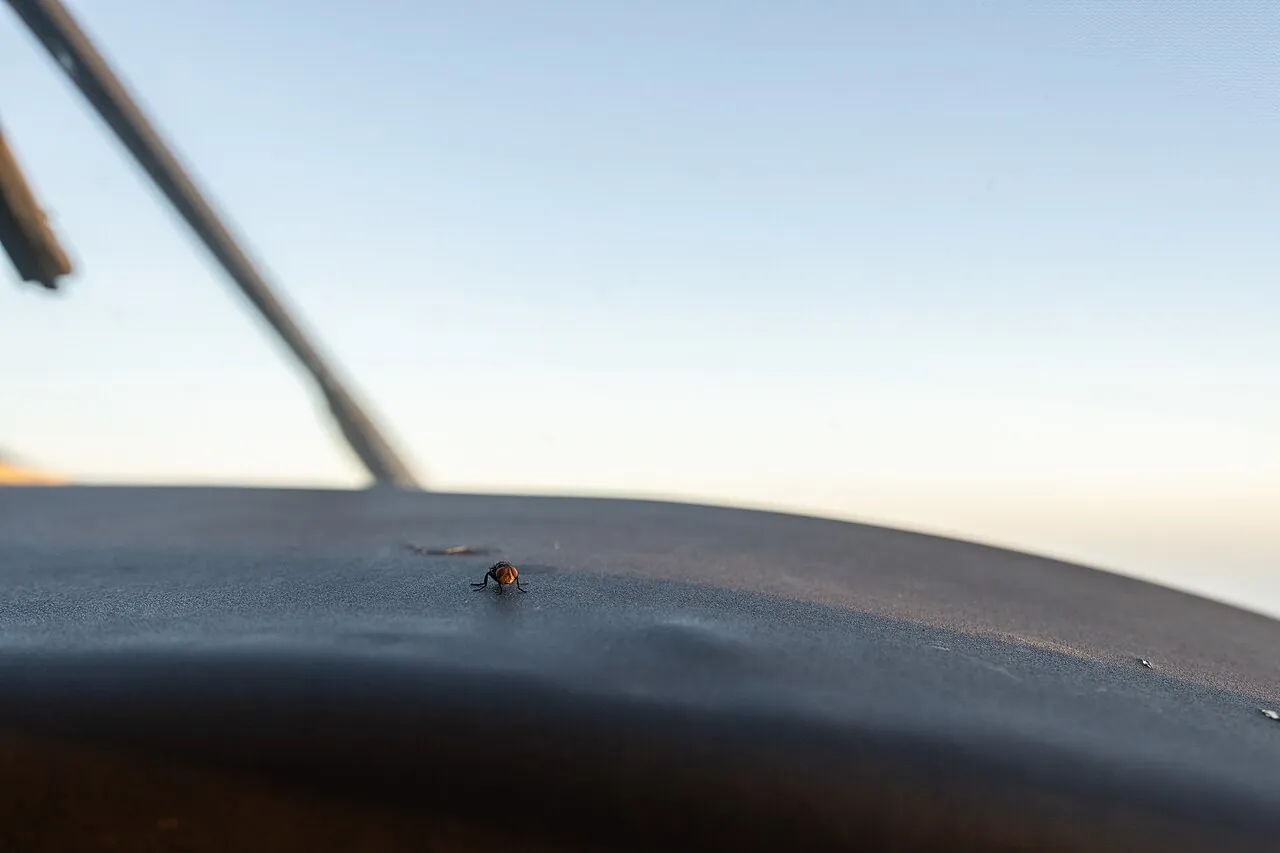
A flesh-eating fly is back in Texas, and the plan to stop the fly is to release millions more flies. Students watch Raven’s video and work out why sterile flies can wipe out a wild screwworm population.
At a glance
- Middle school
- Grades 7 to 8 · About 25 minutes
- High school
- Grades 9 to 12 · About 35 minutes
- College
- College · About 40 minutes
- Materials
- The worksheet for your level, a screen for the video.
- Grouping
- Students work alone. For partners, pair students for Questions.
- Phenomenon
- A flesh-eating fly that the United States wiped out by 1966 is back in Texas. USDA confirmed the fly in a calf in Zavala County, Texas, in June 2026. The plan to stop the fly is to release millions more flies.
- Topics
- Insects, parasites, maggots feeding on living animals, wounds on newborn calves, mating, radiation, pest control, farming and food prices.
Preview the video before sharing it with your class.
Video and transcripts
- 1
A flesh-eating fly is back in Texas, and the plan to stop it is millions of sterile flies
Explains the screwworm’s return to Texas and how USDA scientists wiped the fly out of the United States with sterile flies.
Watch on YouTubeTranscript
Transcribed from the posted video on YouTube.
A flesh-eating fly is back in Texas this year for the first time in decades since scientists at the US Department of Agriculture eradicated it in 1966. Its scientific name means man-eater, and that’s because screwworm larvae eat living flesh. The females lay their eggs in open wounds, and then the larvae hatch and eat animal alive.
In the 1950s, this fly was costing American ranchers about 200 million dollars every year, and that’s about 1.8 billion dollars in today’s money.
With the screwworm, the only real scalable solution is to interrupt their reproduction. Scientists spent many years figuring out how these flies reproduce. What they found was that the females mate just once in their life.
What scientists did was treat millions of male flies with radiation so that they couldn’t reproduce. They were sterile, and then they released them into the wild. So you can imagine then, when the females would go and mate with these sterile males, they would not be able to reproduce. So what happened to the population? The population crashed, and then by 1966 the screwworm was considered eradicated.
This research cost about two hundred and fifty thousand dollars, and since then it’s saved ranchers about two hundred million dollars annually, and sources estimate that our beef prices are about five percent lower because of this.
And today the government is doing it all over again. This year the USDA is releasing millions of sterile flies into the air in Texas using that same science that worked 60 years ago. Federal science protects the food on your table even when you don’t see it.
So I want to know, do you think that our government should continue investing in science? Let me know in the poll and in the comments. I’m Dr. Raven Baxter, your favorite scientist, and follow me for more science. Bye.
Your word of the day is
ih-RAD-ih-kayt
Eradicate. To get rid of something completely.
| Word part | Comes from | Meaning |
|---|---|---|
| e- | Latin ē- | out |
| radic- | Latin rādīx | root |
| -ate | Latin -ātus | verb ending |
| homini- (bonus word) | Latin hominis | man |
| -vorax (bonus word) | Latin vorax | consuming |
Same roots, other subjects
- MathA radical is a root, such as √2, written with the radical sign (√).
- BiologyA radish is the edible root of the plant Raphanus sativus. A plant embryo’s first root is the radicle, from Latin rādīcula, “small root.”
- ChemistryA radical is an atom or group of atoms with at least one electron free to form a chemical bond. The word comes from Late Latin rādīcālis, “having roots.”
- HistoryA political radical demands substantial or extreme changes in the existing system. The label comes from the same Latin rādīx.
- Biology, bonus wordA carnivore feeds on the flesh of other animals, and Dictionary.com notes that vore means eat. Homo sapiens, the name of the human species, is Latin for “the wise human,” from the same homo behind hominis.
- English, bonus wordVoracious, meaning craving or eating large amounts of food, comes from Latin vorāre, “to devour.”
- World languagesSpanish says erradicar and French says éradiquer. Spanish raíz, “root,” comes from Latin rādīx. French déraciner means to pull up by the roots.
Word hunt. Ask students to find three more words ending in -vore or -vorous and say what each animal eats.
Dictionary.com traces eradicate to Latin ērādīcātus, “rooted out.” The bonus word, hominivorax, is the second half of the screwworm’s scientific name, Cochliomyia hominivorax. The worksheets carry a short version. Use these for discussion or a word hunt.
Lesson flow
- 3 minPredictStudents answer the question and write one sentence.
- About 2 minVideo
- 4 minWord of the dayBreak the word into its parts together.
- 8 minQuestionsStudents answer on their own, then share out. With partners, pairs discuss first.
- 5 minExit ticket
- 3 minPredictStudents answer the question and write one sentence.
- About 2 minVideo
- 4 minWord of the dayBreak the word into its parts together.
- 8 minQuestionsStudents answer on their own, then share out. With partners, pairs discuss first.
- About 10 minClaim, evidence, reasoning
- HomeworkGoing further
- 5 minExit ticket
- About 2 minVideo
- 4 minWord of the dayBreak the word into its parts together.
- 3 minPredict
- Read the paperStudents read Table 1 of the paper and answer the questions. The paper reading works as homework or a discussion section.
- 5 minExit ticket
Video simplifications
- “Eradicated it in 1966”
- USDA declared the United States free of native screwworms in 1966, but a severe US outbreak followed in 1972, according to the National Agricultural Library. An outbreak in the Florida Keys ended in 2017.
- “The only real scalable solution is to interrupt their reproduction”
- Sterile flies did most of the work, but Baumhover reports that eradication in Florida also needed ranchers to inspect and treat wounds. When screwworms returned to Curaçao in the 1970s, a lure and insecticide system cut the flies by 65 to 85% before sterile releases finished the job.
- “Treat millions of male flies with radiation”
- The programs irradiated pupae and released sterile flies of both sexes, at a dose that sterilizes both. The sterile males do the work by mating with wild females. Early tests used X-rays, and mass sterilization used gamma rays from cobalt-60.
- “And then they released them into the wild”
- Planes carry most releases, and ground release chambers add targeted releases. In June 2026, USDA used 24 ground release chambers in Texas alongside aerial releases.
- “They would not be able to reproduce”
- The female lays her eggs normally. The embryos start to develop but die before hatching.
- “About 200 million dollars every year, and that’s about 1.8 billion dollars in today’s money”
- The Golden Goose Award profile gives over $200 million a year as savings in the 1950s, not losses. The $1.8 billion figure doesn’t appear in the sources checked for this lesson. USDA estimates the yearly benefit to the US livestock industry at more than $900 million.
- “About two hundred and fifty thousand dollars” and “our beef prices are about five percent lower”
- Both come from the Golden Goose Award profile and are estimates. No USDA or peer-reviewed source checked for this lesson repeats those figures.
- “Its scientific name means man-eater”
- Correct. Hominivorax joins Latin hominis, “man,” and vorax, “consuming.”
- Pronunciation
- Curaçao is KYOOR-uh-sow.
Worksheet
Predict
The screwworm is a fly. Its babies, called larvae, eat the living flesh of animals like cows and deer. Scientists want to get rid of every screwworm fly in the United States. Could releasing millions more screwworm flies help get rid of screwworm flies?
Circle one. Yes / No
Watch
- Sterile flies beat a flesh-eating flyyoutube.com/shorts/1-vnaUjSylQ
Word of the day
Eradicate (ih-RAD-ih-kayt). To get rid of something completely, roots and all.
| Word part | Comes from | Meaning |
|---|---|---|
| e- | Latin ē- | out |
| radic- | Latin rādīx | root |
| -ate | Latin -ātus | makes the word an action |
- A radish is a root you can eat. Radish comes from the same Latin word rādīx.
- In math, the radical sign (√) stands for a root, as in √9 = 3.
Bonus word. Hominivorax (hom-ih-nih-VOR-ax). The screwworm’s scientific name is Cochliomyia hominivorax. Homini- comes from the Latin word for man, and -vorax means consuming, or eating up. Put together, the name means man-eater.
Questions
A female screwworm fly mates only once in her life. Scientists released male flies that can’t make babies. Scientists call these males sterile. How does mating only once help the sterile males wipe out the screwworm?
Hint. If her one mate is sterile, can her eggs hatch? Does she get to mate again?
Scientists released far more sterile males than there were wild males, millions of them. Why did scientists need so many more sterile males than wild males?
Hint. Picture 1 sterile male for every 1 wild male. About how many females would still find a wild male?
The United States got rid of screwworms by 1966. Then, in 2026, a calf in Texas had screwworms. Screwworms still live in Mexico, Central America and South America. How could screwworms get back into Texas after decades away?
Hint. Flies can fly a long way, and people move animals from place to place.
The early screwworm research cost about $250,000. Getting rid of the screwworm saved ranchers over $200 million a year in the 1950s. The Golden Goose Award honors science that sounded odd but paid off. The award’s write-up says some members of Congress made fun of the screwworm research as a waste of money. Was the screwworm research worth the money? Use the cost and the savings to back up your answer.
Hint. Compare what the research cost with what it saved.
Exit ticket
Spraying and sterile flies can both cut the number of screwworm flies. Scientists release the same number of sterile males every generation, even as the wild flies get fewer. Why do sterile flies work better and better as the wild flies get fewer?
Hint. If the sterile males stay the same and the wild males drop, what happens to a female’s chance of finding a wild male?
Predict
The screwworm is a fly. Its babies, called larvae, eat the living flesh of animals like cows and deer. Scientists want to get rid of every screwworm fly in the United States. Could releasing millions more screwworm flies help get rid of screwworm flies?
Circle one. Yes / No
Watch
- Sterile flies beat a flesh-eating flyyoutube.com/shorts/1-vnaUjSylQ
Word of the day
Eradicate (ih-RAD-ih-kayt). To remove or destroy completely.
| Word part | Comes from | Meaning |
|---|---|---|
| e- | Latin ē- | out |
| radic- | Latin rādīx | root |
| -ate | Latin -ātus | makes the word a verb |
- A radish is a root you can eat. Radish comes from the same Latin word rādīx.
- In math, a radical is a root, such as √2, written with the radical sign (√).
Bonus word. Hominivorax (hom-ih-nih-VOR-ax) is the second half of the screwworm’s scientific name, Cochliomyia hominivorax. It joins Latin hominis, “man,” and vorax, “consuming.” Voracious shares the root, from Latin vorāre, “to devour.”
Questions
Female screwworm flies mate only once in their lives. Males can mate many times. Why would releasing sterile males work less well against an insect whose females mate many times?
Hint. Picture a female who mates first with a sterile male and then with a wild male.
In 1954, scientists tested sterile flies on the island of Curaçao at two release rates. Three weeks in, 28% of egg masses were sterile where they released 200 sterile flies per square mile, and 53% were sterile where they released 800. Why do more sterile flies per square mile mean a larger share of sterile screwworm egg masses?
Hint. Think about the share of males a wild female could meet that are sterile.
The US Department of Agriculture (USDA) sterilizes screwworms by exposing the pupae, the stage between larva and adult, to gamma radiation. The sterile flies can still mate, but eggs from those matings never hatch. Why does the radiation dose have to sterilize screwworms without leaving the males too weak to fly and mate?
Hint. A sterile male helps only if a wild female mates with him instead of a wild male.
Since 2006, sterile flies released at a barrier in Panama kept screwworms from moving north out of South America. In 2026, the fly reached Texas after spreading north through Central America and Mexico. Why does a sterile fly barrier have to keep running every week, even in years when no screwworms live north of the barrier?
Hint. Think about flies and infested animals that cross the barrier from the south.
Claim, evidence, reasoning
In a model valley, Plan A sprays the flies and Plan B releases 18,000 sterile males every generation. Both plans start with 2,000 wild females and drop to 1,000 in generation 2. By generation 5, Plan A still has 125 females and Plan B has 0. In Plan B, a female’s chance of finding a wild male falls from 1 in 10 to 1 in 901. Which plan works better once a screwworm population gets small, spraying or sterile flies? Make a claim, back it with evidence from the model and explain your reasoning.
Hint. Compare what happens to a female’s chance of finding a wild male in Plan B with what the spray does each generation in Plan A.
Going further: paying for the barrier
A sterile fly plant in Panama makes about 100 million sterile flies a week. USDA is building a plant in Texas planned to make 300 million a week. The early screwworm research cost about $250,000, and getting rid of the screwworm saved ranchers over $200 million a year in the 1950s. Should the United States keep paying to release sterile flies every week, even in years with no screwworm cases? Weigh the cost, the safety of the flies and the risk of the screwworm coming back.
Hint. Think about what happened in 2026 when screwworms spread north. Then think about what a sterile fly can and can’t do to animals and people.
Exit ticket
The sterile insect technique depends on two things. Each female screwworm mates once, and sterile males far outnumber wild males. How do the female’s single mating and the ratio of sterile males to wild males work together to wipe out a screwworm population?
Hint. As the wild males drop and the sterile release stays the same, what happens to a female’s chance of finding a wild male?
Watch
- Sterile flies beat a flesh-eating flyyoutube.com/shorts/1-vnaUjSylQ
Word of the day
Eradicate (ih-RAD-ih-kayt). To remove or destroy utterly.
| Word part | Comes from | Meaning |
|---|---|---|
| e- | Latin ē- | out |
| radic- | Latin rādīx | root |
| -ate | Latin -ātus | verb ending |
- A radish is a root you can eat. Radish comes from the same Latin word rādīx.
- In math, a radical is a root, such as √2, written with the radical sign (√).
Bonus word. Hominivorax, from Latin hominis, “man,” and vorax, “consuming,” names the screwworm, Cochliomyia hominivorax. Voracious shares the root, from Latin vorāre, “to devour.”
Predict
An egg mass is the cluster of eggs a female screwworm lays on a wound. A sterile egg mass never hatches. Before you read the paper, take a guess. What’s the lowest percent of sterile egg masses that would make screwworm cases in a county start to fall? Give your reason in one sentence.
Hint. Think about how many young flies one fertile egg mass can make.
Read the paper
Baumhover, “A personal account of developing the sterile insect technique to eradicate the screwworm from Curacao, Florida and the southeastern United States,” Florida Entomologist, 2002. The paper is free to read.
Alfred Baumhover, a USDA scientist, worked on the first screwworm eradication programs. His paper tells the story of the 1954 test on the island of Curaçao and the 1957 to 1959 program in Florida. Late in 1958, cases flared up in Broward County, Florida, even while sterile flies were being released there. Table 1 of the paper tracks that outbreak in four-week periods. Notes from the paper. Every period is 4 weeks except the last, which is 2 weeks. Cases are weekly averages and include confirmed and reported cases. Inspectors are the people collecting larvae from wounds. The egg masses for Jan 18 to Feb 14 come only from Jan 18 to 26, 1959. The one egg mass in the last period was fertile, the last sign of wild screwworms in the county.
| Period | Cases per week | Egg masses collected | Sterile egg masses | Percent sterile | Sterile males released per square mile per week | Inspectors |
|---|---|---|---|---|---|---|
| Aug 30 to Sep 27, 1958 | 4.75 | no data | no data | no data | 400 | 1.0 |
| Sep 28 to Oct 25, 1958 | 8.00 | no data | no data | no data | 1,150 | 1.0 |
| Oct 26 to Nov 22, 1958 | 20.50 | no data | no data | no data | 1,875 | 1.0 |
| Nov 23 to Dec 20, 1958 | 22.00 | 55 | 41 | 3,600 | 5.5 | |
| Dec 21, 1958 to Jan 17, 1959 | 33.00 | 131 | 100 | 4,300 | 5.2 | |
| Jan 18 to Feb 14, 1959 | 9.75 | 44 | 39 | 10,600 | 9.2 | |
| Feb 15 to Feb 28, 1959 | 0.50 | 1 | 0 | 10,600 | 4.0 |
To fill in the Percent sterile column, divide sterile egg masses by egg masses collected and multiply by 100. From Nov 23, 1958 to Feb 28, 1959, how did the percent of sterile egg masses and the cases per week change? And how many times larger was the last release rate than the first?
Hint. Look at what cases did while sterility stayed near 75%. Then compare the first and last numbers in the release column.
From Nov 23, 1958 to Jan 17, 1959, about 3 of every 4 egg masses were sterile. The paper calls those eight weeks “time for almost three generations,” yet cases rose. How can a screwworm population grow even when about 3 of every 4 egg masses are sterile?
Hint. If 1 egg mass in 4 is fertile, how many breeding females must each fertile egg mass produce for the next generation to be larger? Then look for conditions in the paper that helped young screwworms survive.
A note under Table 1 says the Jan 18 to Feb 14 egg masses include “collections only from 1/18-26/59 when released females began ovipositing sterile eggs due to anoxia.” Released females are sterile flies from the rearing plant. Why would counting egg masses laid after Jan 26 make sterile matings among the wild screwworms in Broward County look more common than they were?
Hint. What does a sterile egg mass from a plant-reared female tell you about the wild females’ mates?
From Nov 17, 1958 to Mar 13, 1959, calf navels made up 415 of 491 screwworm collections (84.5%), and more than 36% of the wounds held mature larvae ready to pupate. Some ranchers stopped treating infested calves. Why does the sterile insect technique depend on ranchers inspecting and treating wounds?
Hint. Every larva that leaves a wound and pupates becomes a wild fly. What does that do to the ratio of sterile males to wild males?
Exit ticket
Table 1 follows one Florida county through one screwworm outbreak. What does Table 1 show? And what’s one question Table 1 can’t answer?
Hint. Start with the release rates and the cases. Then look at the other columns that changed at the same time.
Standards
The lesson builds toward four Next Generation Science Standards (NGSS), the most widely used US science standards. Some states, like Texas and Virginia, write their own. NGSS covers kindergarten through grade 12. The college worksheet uses the AAAS Vision and Change framework for undergraduate biology.
| Level | Standard | Lesson part | Practice | Crosscutting concept |
|---|---|---|---|---|
| Middle school | MS-LS1-4. Argue from evidence how animal behaviors affect the odds of reproducing (core idea LS1.B) | Middle and high school worksheets, Questions 1 on the female mating once | Engaging in Argument from Evidence | Cause and Effect |
| Middle school | MS-LS2-4. Argue from evidence that changes to biological parts of an ecosystem affect populations (core idea LS2.C) | Middle and high school worksheets, exit ticket | Engaging in Argument from Evidence | Stability and Change |
| High school | HS-LS2-2. Use math to support and revise explanations about factors that affect populations (core ideas LS2.A, LS2.C) | High school worksheet, claim, evidence, reasoning | Using Mathematics and Computational Thinking | Scale, Proportion, and Quantity |
| High school | HS-ETS1-3. Evaluate a solution to a complex real-world problem using prioritized criteria and trade-offs (core idea ETS1.B) | High school worksheet, going further | Constructing Explanations and Designing Solutions | Influence of Science, Engineering, and Technology on Society and the Natural World |
| College | Systems. AAAS Vision and Change core concept | College worksheet. Question 1 covers quantitative reasoning, question 2 modeling and simulation, question 3 process of science and question 4 science and society. | Core competencies: quantitative reasoning; modeling and simulation; process of science; science and society | Core concept: systems |
Sources
This video draws on several teams. The lesson credits each team.
| Topic | Who found it | Where it was published |
|---|---|---|
| Releasing sterile males to wipe out the screwworm, first proposed in 1937 | Edward F. Knipling, USDA | Golden Goose Award profile, 2016 |
| Rearing screwworms on an artificial diet | Roy Melvin and Raymond C. Bushland, USDA | 1936 and 1940, as described in Baumhover, 2002 |
| Sterilizing screwworms with X-rays and gamma rays | Raymond C. Bushland and D. E. Hopkins, USDA | Journal of Economic Entomology, 1951 and 1953, as described in Baumhover, 2002 |
| Radiation can sterilize flies | Hermann J. Muller, Nobel laureate | Described in the Golden Goose Award profile |
| The Curaçao test and the Florida program, with Table 1 | Alfred H. Baumhover, working with B. A. Bitter and USDA colleagues | Florida Entomologist, 2002 |
| The 2026 Texas cases and the sterile fly response | USDA Animal and Plant Health Inspection Service, with the Texas Animal Health Commission | USDA, June 3, 2026 and June 5, 2026 |
| Where sterile flies are made today | COPEG, run jointly by USDA and Panama’s Ministry of Agriculture Development | USDA sterile fly production page |
| Meaning of the name hominivorax | R. Henry | Emerging Infectious Diseases, 2019 |
Knipling and Bushland won the 1992 World Food Prize and the 2016 Golden Goose Award. Baumhover’s paper is free to read, and so are the USDA pages.
- Baumhover, “A personal account of developing the sterile insect technique to eradicate the screwworm from Curacao, Florida and the southeastern United States,” Florida Entomologist, 2002
- Golden Goose Award, “Screwworms,” 2016 awardees profile
- USDA National Agricultural Library, “STOP Screwworms” exhibit
- USDA APHIS, USDA Confirms Presence of New World Screwworm in the United States, June 3, 2026
- USDA APHIS, Animal Health Officials Respond to Second Detection of New World Screwworm in the United States, June 5, 2026
- USDA APHIS, New World screwworm, Using sterile insect technique, Sterile fly production and dispersal, Screwworm.gov and Current status
- R. Henry, “Etymologia: Cochliomyia hominivorax,” Emerging Infectious Diseases, 2019
- Vision and Change core concepts and competencies, as summarized in Brownell and others, CBE Life Sciences Education, 2014
- Word origins from Dictionary.com: eradicate, radical, radish, radicle, voracious, carnivore, Homo sapiens
- Spanish and French words from Wiktionary: eradicate, radix
- NGSS MS-LS1-4, MS-LS2-4, HS-LS2-2, HS-ETS1-3