Teacher guide
A dermoid cyst is a tumor in the ovary that can grow skin, hair, fat and even teeth, all from one germ cell. In her video, Raven explains that an egg can start dividing with no sperm, but without a father’s DNA the cells don’t organize into a body plan. Students work out how one cell can make so many tissues and why those tissues never form a body. Pair this lesson with Coquita and Kaguya, where eggs develop without sperm.
At a glance
- Middle school
- Grades 7 to 8 · About 22 minutes
- High school
- Grades 9 to 12 · About 37 minutes
- College
- College · About 35 minutes
- Materials
- The worksheet for your level, a screen for the video.
- Grouping
- Students work alone. For partners, pair students for Questions.
- Phenomenon
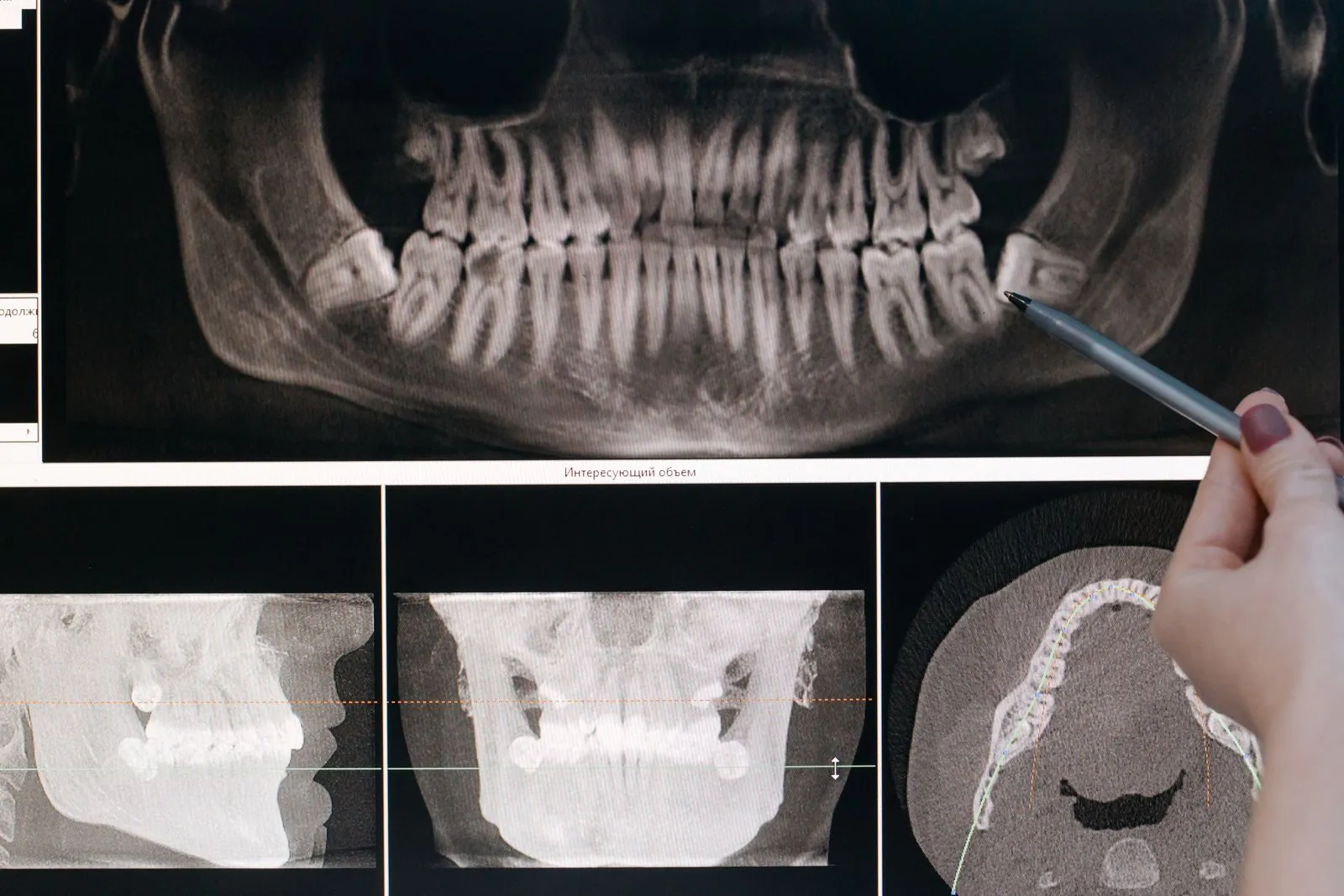
- A tumor in the ovary called a dermoid cyst can hold skin, hair, fat and even teeth. It grows from a single germ cell, a cell on its way to becoming an egg, that starts dividing with no sperm.
- Topics
- Tumors, ovaries, eggs, sperm, cell differentiation, body plans, genetics. In the video, Raven says she has a dermoid cyst. The lesson stays on the science.
- Health questions
- The lesson teaches biology and gives no medical advice. Send students with health questions to a doctor or the school nurse.
Preview the video before sharing it with your class.
Video and transcripts
- 1
I have a tumor in my ovary that grows TEETH!! It’s called a dermoid cyst and it came from one of my own eggs!
Introduces dermoid cysts, the word teratoma, and why a mammal egg that starts dividing alone makes a tumor instead of a baby. The video is on YouTube as a public Short.
Watch on YouTubeTranscript
Transcribed from the posted video on YouTube.
Do we actually need a father’s DNA to make a baby, and why am I currently growing teeth in my ovary? Let’s talk about it. This is my little, I have a tumor in my ovary dance.
I have a dermoid cyst. That’s a type of teratoma. And actually, teratoma is your word of the day. Say it with me, teratoma. And let me tell you right now, that’s something you’re going to have to look up on your own. I can’t show no pictures of that in here. Oh my god, what is that?
Teratomas are tumors that can make different kinds of body tissue, skin, cartilage, even gut lining. When you look inside of these teratomas, you can see teeth growing with roots, hair strands with follicles.
So why did my egg turn into a tumor with teeth instead of a baby? The egg starts dividing on its own. And in some species, that’s how asexual reproduction starts. Not in mammals. In mammals, you need an egg and you need swimmer. And those swimmers do two things, handing over DNA. The other is starting the egg dividing process.
There are certain things that father DNA brings that are required to actually make the baby. And that is the organization part. Our eggs can start dividing and doing things. But without that information from those swimmers, it doesn’t organize into like an actual body plan. It’s kind of like just body salad.
So how close are mammals to doing a virgin birth? Scientists have hacked around this in mice, and they made a live mouse from two eggs and no father DNA. Her name was Kaguya. And if you want to check that story out, look at my last science video.
Have you ever heard of a teratoma? Do you have one? Like I have one. If you looked it up yourself, let me know in the comments. Guys, and I’m already sorry in advance. It’s disgusting. I’m Dr. Raven Baxter. Follow me for more science. Bye. Bye.
Your word of the day is
ter-uh-TOH-muh
Teratoma. A tumor made up of different types of tissue. A dermoid cyst is a teratoma, and doctors also call it a mature cystic teratoma.
| Word part | Comes from | Meaning |
|---|---|---|
| terat- | Greek téras, stem terat- | monster, marvel |
| -oma | Greek, as in karkínōma | tumor, swelling |
| derm- (bonus word, dermoid) | Greek dérma | skin |
| -oid (bonus word, dermoid) | Greek -oeidēs | like, having the form of |
Same roots, other subjects
- HistoryDoctors described ovarian teratomas in the 1600s. Early explanations for these cysts blamed an invading demon, according to the 1990 paper on the college worksheet.
- BiologyA teratogen is a drug or other substance able to interfere with a fetus’s development and cause birth defects. It pairs the terat- root with -gen, the root from parthenogenesis in the Coquita lesson.
- ChemistryA metalloid, like silicon or boron, is an element with both metallic and nonmetallic properties. Its name means “metal-like.”
- MathThe prefix tera-, as in terabyte and terahertz, comes from the same Greek téras. In units of measure, tera- means one trillion.
- Earth and spaceAsteroid comes from the Greek for “starlike,” with the same -oid ending as dermoid.
- World languagesSpanish says teratoma and French says tératome.
Word hunt. Ask students to find three more words ending in -oid and say what each one resembles.
The worksheets carry a short version. Use these for discussion or a word hunt. Parthenogenesis, the word of the day in the Coquita lesson, and imprinting, the word of the day in the Kaguya lesson, both connect to this video.
Lesson flow
- 3 minPredictStudents answer the question and write one sentence.
- About 2 minVideo
- 4 minWord of the dayBreak the word into its parts together.
- 8 minQuestionsStudents answer on their own, then share out. With partners, pairs discuss first.
- 5 minExit ticket
- 3 minPredictStudents answer the question and write one sentence.
- About 2 minVideo
- 4 minWord of the dayBreak the word into its parts together.
- 8 minQuestionsStudents answer on their own, then share out. With partners, pairs discuss first.
- About 15 minClaim, evidence, reasoning and Going furtherStudents use chromosome markers from Surti’s study to back Raven’s claim in the video that a dermoid cyst starts from the patient’s own developing egg cell. The Going further question names genomic imprinting, the scientists’ word for why a mammal body plan needs DNA from both parents.
- 5 minExit ticket
- About 2 minVideo
- 4 minWord of the dayBreak the word into its parts together.
- 3 minPredict
- Read the paperStudents work out percents from the centromere counts in a 1990 genetics paper, connect them to the video’s claim and read how the authors explain the cysts’ disorganized tissues. The paper reading works as homework or a discussion section.
- 5 minExit ticket
Video simplifications
- Share of cysts with teeth
- “When you look inside of these teratomas, you can see teeth growing with roots.” The video gives no share of cysts with teeth. A 2023 review gives 31%, citing studies from 1961 and 1971. The New Delhi series found teeth in 10 of 223 cysts, about 4%. The number varies by study. High school Questions 4 compares the two numbers and credits both studies.
- Starting cell
- “The egg starts dividing on its own.” About 65% of the cysts in Surti’s study came from a germ cell after meiosis I. About 35% fit a cell that failed meiosis I or divided before meiosis. The paper sorts these cases into five possible origins. The worksheets skip the five types and use the markers to show that the cysts come from developing egg cells. Scientists still debate the exact starting cell.
- Two separate jobs
- “Those swimmers do two things, handing over DNA. The other is starting the egg dividing process.” Without father DNA, Raven says, a dividing egg “doesn’t organize into like an actual body plan.” This matches Surti’s team, who describe differentiation that begins without input from a father’s genome.
- Organization and imprinting
- “There are certain things that father DNA brings that are required to actually make the baby. And that is the organization part.” The posted video never says imprinting. The middle school worksheet stays with the video’s idea, that without father DNA the cells don’t organize into a body plan. The high school Going further and college question 4 name genomic imprinting as the scientists’ word for it, credited to the Barlow and Bartolomei review. Imprinting runs in both directions. Some genes are expressed only from the father’s copy and others only from the mother’s. About 150 imprinted genes have been mapped in mice.
- Kaguya’s two eggs
- “They made a live mouse from two eggs and no father DNA.” The middle and high school worksheets stop where the video does, with a workaround in mice. One of the two chromosome sets came from an immature egg with a 13,000-letter deletion at the H19 gene, which only the college worksheet names. Mouse embryos from two unchanged maternal genomes die by day 10 of pregnancy. The Kaguya lesson covers the details.
Worksheet
Predict
Your body has many kinds of cells, like skin cells, bone cells and nerve cells. Some tumors grow in an ovary, the organ where eggs form. Could a tumor in an ovary grow a tooth?
Circle one. Yes / No
Watch
- My ovary tumor grows teethyoutube.com/shorts/zf0GQxCVDcI
Word of the day
Teratoma (ter-uh-TOH-muh). A tumor made up of different types of tissue.
| Word part | Comes from | Meaning |
|---|---|---|
| terat- | Greek téras | monster, marvel |
| -oma | Greek | tumor, swelling |
- Terabyte starts with tera-, from the same Greek word, téras. In units of measure, tera- means one trillion.
- Doctors use -oma in many tumor names, like melanoma and carcinoma.
Bonus word. Dermoid (DUR-moid). Derm- comes from the Greek word for skin, and -oid means like. Dermoid means skinlike. An asteroid is “starlike,” with the same -oid ending.
Questions
In the video, Raven calls sperm swimmers. She says sperm do two jobs. One job is adding the dad’s DNA. The other job is starting the egg dividing. A dermoid cyst starts when an egg cell, or a cell on its way to becoming an egg, starts dividing with no sperm. Which sperm job happens in a dermoid cyst, even with no sperm?
Circle one. Adding the dad’s DNA / Starting the egg dividing
Hint. Does a dermoid cyst have any DNA from a dad?
You started as one cell. That cell divided again and again, and the new cells turned into skin, bone, muscle and more. A dermoid cyst also starts as one cell, and it can grow skin, hair, fat and sometimes teeth. How can one starting cell make so many kinds of tissue?
Hint. As one cell keeps dividing, do all the new cells stay the same? Or do some change into new kinds of cells?
In the video, Raven says that in some species, an egg that starts dividing on its own can grow into a baby. That doesn’t happen in mammals, like people and mice. Raven says dad’s DNA brings “the organization part.” Without dad’s DNA, the cells don’t organize into a body plan. A body plan is the layout of a body, like where the head, heart and legs go. Why does a human egg cell that starts dividing alone make a dermoid cyst instead of a baby?
Hint. A dermoid cyst has no DNA from a dad. What does Raven say dad’s DNA brings?
In the video, Raven asks how close mammals are to a “virgin birth,” a baby with no dad. Scientists found a way around the need for dad’s DNA in mice. They made a live mouse named Kaguya from two eggs and no dad’s DNA. Kaguya and a dermoid cyst both have no dad’s DNA. Why did Kaguya grow into a whole mouse when a dermoid cyst grows into “body salad”?
Hint. Kaguya came from a lab. What did the scientists find a way around?
Exit ticket
A dermoid cyst can hold skin, hair, fat and teeth. A baby has all of those tissues too. What makes a baby different from a dermoid cyst?
Hint. In a body, cells form tissues, tissues form organs, and organs work together in systems. Does a dermoid cyst follow all of those steps?
Predict
Your body has many kinds of cells, like skin cells, bone cells and nerve cells. Some tumors grow in an ovary, the organ where eggs form. Could a tumor in an ovary grow a tooth?
Circle one. Yes / No
Watch
- My ovary tumor grows teethyoutube.com/shorts/zf0GQxCVDcI
Word of the day
Teratoma (ter-uh-TOH-muh). A tumor made up of different types of tissue.
| Word part | Comes from | Meaning |
|---|---|---|
| terat- | Greek téras | monster, marvel |
| -oma | Greek | tumor, swelling |
- Terabyte starts with tera-, from the same Greek word, téras. In units of measure, tera- means one trillion.
- Doctors use -oma in many tumor names, like melanoma and carcinoma.
Bonus words. Dermoid (DUR-moid) means skinlike, from derm-, “skin,” and -oid, “like.” Homozygous (ho-mo-ZY-gus) describes a matching pair, from homo-, “same.” Heterozygous (het-er-oh-ZY-gus) describes a mixed pair, from hetero-, “different.”
Questions
In the video, Raven says a sperm does two separate jobs at fertilization. It delivers the father’s chromosomes, and it activates the egg to start dividing. A dermoid cyst grows from a single germ cell, a cell on its way to becoming an egg. When a dermoid cyst starts, there’s no sperm at all. Which sperm job still happens, and which one never does?
Hint. Think about whose chromosomes end up in the dermoid cyst’s cells.
The cells of a dermoid cyst all come from one starting cell, and they carry the same chromosomes. Yet one cyst can hold skin, fat, cartilage and teeth. How can cells that carry the same DNA become such different tissues?
Hint. Think about what cells do after they divide. Do skin cells and fat cells use the same genes?
Your body is organized in levels. Cells form tissues, tissues form organs, and organs work together in organ systems. Scientists who study dermoid cysts describe the tissues inside as a disorganized mix. Which levels of organization can a dermoid cyst reach? Which level does a dermoid cyst never reach?
Hint. A tooth forms like a small organ. Do the parts of a dermoid cyst work together, the way your heart and blood vessels do?
A 2023 review of dermoid cyst studies reports teeth in 31% of cysts. Doctors at one hospital in New Delhi, India, found teeth in 10 of 223 dermoid cysts, about 4%. Why could two studies report such different numbers for teeth? Give two reasons.
Hint. Think about how each study found and counted teeth, and which patients each study included.
Claim, evidence, reasoning
In the video, Raven says a dermoid cyst starts when an egg cell starts dividing on its own. In a 1990 study, Urvashi Surti’s team tested where dermoid cysts start. They compared chromosome markers in 89 dermoid cysts with the same markers in each patient’s healthy tissue. At these markers, each patient carried a heterozygous pair, two different versions. In 58 cysts, the pair had become homozygous, two matching versions. In 31 cysts, the pair stayed heterozygous. Mitosis, the division that copies body cells, keeps both chromosomes of a pair. Meiosis, the division on the way to an egg, separates the two chromosomes of each pair. Did dermoid cysts start from the patient’s own developing egg cells or from ordinary body cells? Make a claim, back it up with evidence, and explain your reasoning.
Hint. Ask which kind of cell division could turn a heterozygous pair into a homozygous pair.
Going further: why a body plan needs both parents
In the video, Raven says an egg that starts dividing on its own is how some species reproduce, but not mammals. Coquita the crocodile laid an egg holding a fully formed baby with no father’s DNA. Mouse embryos made only from a mother’s chromosomes don’t survive past day 10 of pregnancy. Raven says father DNA brings “the organization part.” Scientists call the reason genomic imprinting. In mammals like mice and people, some genes are switched on only in the copy from the father, and others only in the copy from the mother, according to a review by Denise Barlow and Marisa Bartolomei. Why does a mammal body plan need DNA from both parents? Use genomic imprinting in your answer.
Hint. A mother’s chromosomes carry the same genes as a father’s. Think about which copies are switched on.
Exit ticket
A dermoid cyst can hold tissues from all three germ layers. What does a dermoid cyst show about how many kinds of cells one cell can make? And why is a dermoid cyst still not a body?
Hint. For the first part, think about how many kinds of tissue one cyst can hold. For the second part, think about levels of organization.
Watch
- My ovary tumor grows teethyoutube.com/shorts/zf0GQxCVDcI
Word of the day
Teratoma (ter-uh-TOH-muh). A tumor made up of different types of tissue. A dermoid cyst is a mature cystic teratoma.
| Word part | Comes from | Meaning |
|---|---|---|
| terat- | Greek téras | monster, marvel |
| -oma | Greek | tumor, swelling |
- Terabyte starts with tera-, from the same Greek word, téras. In units of measure, tera- means one trillion.
- Doctors use -oma in many tumor names, like melanoma and carcinoma.
Bonus words. Dermoid (from derm-, “skin,” and -oid, “like”) means skinlike. Homozygous (from homo-, “same”) describes a matching pair of alleles or markers. Heterozygous (from hetero-, “different”) describes a mixed pair.
Predict
In 1990, Urvashi Surti’s team compared chromosome markers near the centromere in dermoid cysts with the same markers in each patient’s healthy tissue. They counted only markers where the patient carried a heterozygous pair. A cyst grown from an ordinary body cell by mitosis would keep that pair heterozygous. Make a guess before you read the paper. What percent of these dermoid cysts do you think carried a homozygous pair at those markers? Give your reason in one sentence.
Hint. In the video, Raven says a dermoid cyst starts from an egg that begins dividing on its own. Think about what meiosis does to each chromosome pair.
Read the paper
Surti, Hoffner, Chakravarti and Ferrell, “Genetics and biology of human ovarian teratomas. I. Cytogenetic analysis and mechanism of origin,” American Journal of Human Genetics, 1990. The paper is free to read as scanned pages.
The team studied 102 mature ovarian teratomas, the tumors also called dermoid cysts, from patients at Magee-Womens Hospital in Pittsburgh. Of the 102, 95 had a 46,XX karyotype. For each cyst, the team scored chromosome heteromorphisms, visible differences in size and staining near the centromeres, in the cyst and in the patient’s own normal tissue. A marker is informative when the patient’s two copies differ, and 13 cysts had no informative marker. The table gives the counts from the paper’s Results.
Counts from the paper’s Results
| Centromere markers in the cyst | Number of cysts | Percent of informative cysts |
|---|---|---|
| Homozygous where the patient is heterozygous | 58 | |
| Heterozygous, like the patient | 31 | |
| Total informative cysts | 89 | 100% |
The counts table gives 58 homozygous and 31 heterozygous cysts out of 89 informative cysts. What percent of informative dermoid cysts were homozygous at the centromere markers? And why does that percent use 89 cysts instead of all 102?
Hint. Fill in the last column first. A marker can only reveal a change when the patient’s two copies differ.
Mitosis, the division that copies body cells, keeps both chromosomes of each pair. Meiosis I, the first division on the way to an egg, separates the two chromosomes of each pair. What do the 58 homozygous cysts tell you about the cell each cyst started from, and how does that fit Raven’s claim in the video that the egg “starts dividing on its own”?
Hint. Ask which kind of division could leave a cell with two matching copies where the patient carries two different ones.
The other 31 informative cysts stayed heterozygous at the centromere, like the patient. Surti’s team concluded that these cysts also came from germ cells, ones whose chromosome pairs never separated. Do the 31 heterozygous cysts weaken the germ cell explanation? What can centromere markers alone tell you about these cysts, and what can’t they tell you?
Hint. Compare the centromere result you would expect from an ordinary body cell and from a germ cell whose pairs never separated.
Surti’s team ends the paper by describing ovarian teratomas as germ cells that begin embryonic differentiation without input from a father’s genome, giving a disorganized mix of mature tissues. In 2004, Tomohiro Kono’s team made Kaguya, a mouse with two sets of maternal chromosomes, one from an immature egg and one from a fully grown egg. The immature egg came from a mouse with a deletion in the H19 gene. Why does differentiation without a father’s genome make tissues but not an organized embryo? What does Kaguya the mouse add to that explanation?
Hint. Think about genomic imprinting, and about which genes the H19 deletion helped express at the right levels.
Exit ticket
In the video, Raven says a dermoid cyst starts when an egg starts dividing on its own. Surti’s team compared each cyst’s centromere markers with the same markers in the patient. How do the zygosity data back Raven’s claim that a dermoid cyst starts from an egg cell dividing on its own? Use your percents.
Hint. Start with your percents. Then ask which kind of cell could turn a heterozygous pair homozygous.
Standards
The lesson builds toward three Next Generation Science Standards (NGSS), the most widely used US science standards. Some states, like Texas and Virginia, write their own. NGSS covers kindergarten through grade 12. The college worksheet uses the AAAS Vision and Change framework for undergraduate biology.
| Level | Standard | Lesson part | Practice | Crosscutting concept |
|---|---|---|---|---|
| Middle school | MS-LS1-3. Argue from evidence that the body is a system of interacting subsystems made of groups of cells (core idea LS1.A) | Middle and high school worksheets, exit ticket, and high school Questions 3 | Engaging in Argument from Evidence | Systems and System Models |
| High school | HS-LS1-4. Use a model to show how cell division and differentiation produce and maintain a complex organism (core idea LS1.B) | High school worksheet, Questions 2 and the exit ticket | Developing and Using Models | Systems and System Models |
| High school | HS-LS3-2. Make and defend a claim about where genetic variation comes from, including meiosis (core idea LS3.B) | High school worksheet, claim, evidence, reasoning | Engaging in Argument from Evidence | Cause and Effect |
| College | Information flow, exchange, and storage; systems. AAAS Vision and Change core concepts | College worksheet. Question 1 covers quantitative reasoning, question 2 information flow, exchange, and storage, question 3 process of science and question 4 systems. | Core competencies: quantitative reasoning; process of science | Core concept: systems |
Sources
The lesson draws on several research teams, credited below.
| Topic | Who found it | Where it was published |
|---|---|---|
| Origin of dermoid cysts, from chromosome markers in 102 cysts | Urvashi Surti, Lori Hoffner, Aravinda Chakravarti and Robert Ferrell, Magee-Womens Hospital and the University of Pittsburgh | American Journal of Human Genetics, 1990 |
| Tissues found in 223 dermoid cysts | Ruchi Rathore, Sonal Sharma and Deepshikha Arora, University College of Medical Sciences, New Delhi | Journal of Clinical and Diagnostic Research, 2017 |
| Review of dermoid cysts, including teeth in 31% and the debate over the starting cell | Luping Cong, David Yiu Leung Chan and colleagues, The Chinese University of Hong Kong | International Journal of Molecular Sciences, 2023 |
| Kaguya, the mouse from two maternal genomes | Tomohiro Kono and colleagues, Tokyo University of Agriculture | Nature, 2004 |
| Genomic imprinting in mammals | D. P. Barlow and M. S. Bartolomei | Cold Spring Harbor Perspectives in Biology, 2014 |
| Coquita’s fully formed fetus | Warren Booth and colleagues | Biology Letters, 2023 |
All of these are free to read except the 2004 Nature paper. The 1990 paper is scanned pages.
- Research papers and the review, linked in the table above
- Vision and Change core concepts and competencies, as summarized in Brownell and others, CBE Life Sciences Education, 2014
- Word origins from Dictionary.com: teratoma, terato-, -oma, carcinoma, dermoid, derm-, -oid, tera-, teratogen, metalloid, asteroid, homozygous, heterozygous
- “Swelling” for -oma and the 1600s history of ovarian teratomas from the Surti paper’s discussion
- Spanish spelling from Wiktionary and French spelling from Wiktionnaire
- NGSS MS-LS1-3, HS-LS1-4, HS-LS3-2