Teacher guide
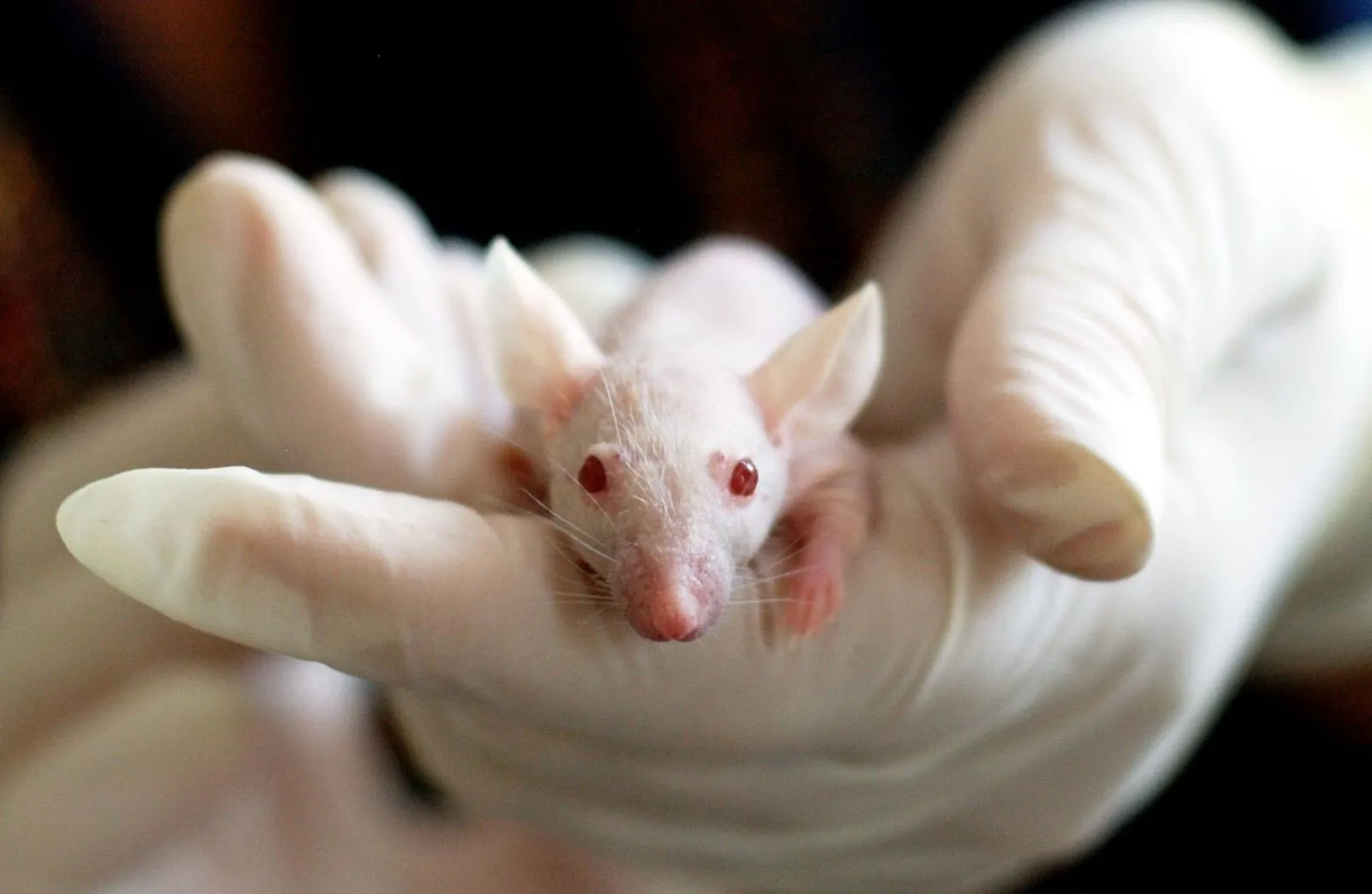
Kaguya the mouse came from the DNA of two eggs and no sperm. Students watch Raven’s video and use gene tags to work out why two ordinary eggs fail and why Kaguya took about 460 tries. Teach this one after the Coquita lesson. Coquita the crocodile made a baby from one egg, and Kaguya shows why a mouse can’t do that without lab help.
At a glance
- Middle school
- Grades 8 to 8 · About 22 minutes
- High school
- Grades 9 to 12 · About 32 minutes
- College
- College · About 35 minutes
- Materials
- The worksheet for your level, a screen for the video.
- Grouping
- Students work alone. For partners, pair students for Questions.
- The phenomenon
- In 2004, a team in Tokyo reported a mouse named Kaguya, made from the DNA of two eggs and no sperm. She grew up and even had babies of her own.
- Topics covered
- Reproduction, eggs, sperm, DNA, gene tags, lab mice, embryos that did not survive, human genetic conditions.
Preview the video before sharing it with your class.
Video and transcripts
- 1
2 eggs can make a mouse, with some help
Introduces Kaguya, the word imprinting, and the two changes that let two eggs make a mouse. The same video is on Instagram as “A mouse was born with TWO mothers and zero DNA from a father!”
Watch on YouTubeTranscript
Transcribed from the posted video on YouTube.
Can you make a baby with two eggs and no father DNA? Turns out, you can! Scientists figured out how to do this in mice.
Meet Kaguya from Tokyo University of Agriculture. In 2004, it was reported that she was made from two eggs. How?
Your word of the day is imprinting. Say it with me. Imprinting.
Imprinting means that some of your genes carry a tag that says which parent they come from. One from mom, one from dad. For a small number of genes, only one copy is supposed to switch on, mom’s or dad’s.
These tags often pull in separate directions. Dad tags often push growth up. Mom tags often hold it back. Two eggs shouldn’t make a whole mouse. Unless we manipulate some genes.
Egg number one came from a newborn mouse, taken before its imprinting tags got put on. The newborn mouse that that egg was taken from came from a line of mice that was bred years earlier to study imprinting. Those mice are born missing the piece of DNA that holds the switch for a growth gene.
Egg number two came from an adult mouse, with all of the tags in place. They took the DNA from both eggs and rebuilt a single egg cell with all of that DNA combined. That egg became an embryo and Kaguya was born. She even had babies of her own.
In 2022, researchers continued to ask, can we make babies without those swimmers? This time, they only used one egg. They rewrote seven imprinting marks with engineered enzymes. Dad tags added in two spots. Mom tags removed in five. Of 192 embryos, they got three babies and only one survived.
In humans, when a child is missing the copy that has to come from one parent, you get conditions like Prader-Willi, Angelman, and Beckwith-Wiedemann. The more that we learn about these tags, the more we learn about early development, pregnancy, and fertility.
Let me know what you guys think in the comments. My name is Dr. Raven Baxter. Follow me for more science. Bye.
Your word of the day is
im-PRIN-ting
Imprinting. In genetics, a tag on a gene that marks which parent the gene came from. The tag controls whether that copy of the gene switches on.
| Word part | Comes from | Meaning |
|---|---|---|
| im- | Latin in- | in, into, on |
| Latin premere, through Old French preindre | to press | |
| -ing | Old English -ing | the action or process of a verb |
| genome (bonus word, from “genomic imprinting”) | German Genom, from Gen (gene) + (Chromos)om (chromosome) | a full set of an organism’s genetic material |
Same roots, other subjects
- HistoryA printing press presses inked letters onto paper. Print comes from the Old French preindre, “to press,” from Latin premere.
- Animal behaviorDucklings imprint on the first large moving object they see, usually their mother. English took the word imprinting in 1937 to translate Konrad Lorenz’s German term Prägung.
- Physics and chemistryPressure, the force per unit area, comes from Latin pressūra, from the same press root.
- ArtImpressionism, the painting style Monet, Renoir, Pissarro and Sisley started in the late 1800s, takes its name from the word impression, another press word.
- World languagesSpanish imprimir and French imprimer both mean “to print,” and both come from Latin imprimere. A printer in French is une imprimante.
- FoodEspresso is Italian for “pressed,” from a verb meaning “to press out.” The coffee is made by forcing hot water through ground beans under pressure.
Word hunt. Ask students to find three more words with press inside and say what gets pressed in each one.
The level worksheets carry a short version. Use these for discussion or a word hunt.
Lesson flow
- 3 minPredictStudents answer the question and write one sentence.
- About 3 minVideo
- 3 minWord of the dayBreak the word into its parts together.
- 8 minQuestionsStudents answer on their own, then share out. With partners, pairs discuss the questions first.
- 5 minExit ticket
- 3 minPredictStudents answer the question and write one sentence.
- About 3 minVideo
- 3 minWord of the dayBreak the word into its parts together.
- 8 minQuestionsStudents answer on their own, then share out. With partners, pairs discuss the questions first.
- About 10 minClaim, evidence, reasoning
- HomeworkGoing further
- 5 minExit ticket
- About 3 minVideo
- 3 minWord of the dayBreak the word into its parts together.
- 3 minPredict
- Read the paperThe paper reading works as homework or a discussion section.
- 5 minExit ticket
Video simplifications
- The growth gene switch
- About the switch, Raven says only that the newborn egg came from mice “born missing the piece of DNA that holds the switch for a growth gene.” The rule that the switch blocks the growth gene unless the switch carries a dad tag comes from the lesson and its sources, such as Leighton and colleagues (1995) and the Barlow and Bartolomei review (2014), not from the posted video. The high school exit ticket and Going further state the rule in the question, and students have the rule in front of them.
Worksheet
Predict
A baby mouse usually comes from one egg and one sperm. Scientists in Tokyo tried to grow a mouse from the DNA of two mouse eggs and no sperm. Could two eggs and no sperm ever make a living mouse?
Circle one. Yes / No
Watch
- 2 eggs can make a mouse, with some helpyoutube.com/shorts/1ymhrjaj6e0
Word of the day
Imprinting (im-PRIN-ting). In genetics, a tag on a gene that marks which parent the gene came from. The tag controls whether that copy of the gene switches on.
| Word part | Comes from | Meaning |
|---|---|---|
| im- | Latin in- | in, into, on |
| Latin premere | to press | |
| -ing | Old English -ing | the action or process |
- A printing press presses inked letters onto paper. Print comes from an Old French word that means “to press.”
- Baby ducks imprint on the first big moving thing they see, and that’s usually their mom. English picked up the word imprinting in 1937 for this kind of fast learning.
Questions
An embryo is a baby animal at its earliest stage. Eggs and sperm carry the same genes. But put the DNA of two ordinary eggs together, and the embryo stops growing. If the genes are the same, why does a two-egg embryo stop growing?
Hint. In the video, Raven says dad tags often push growth up. Where do dad tags come from?
A clone is an exact copy of one animal’s DNA. Kaguya had no dad. Her DNA came from the eggs of two different female mice, a newborn and an adult. Is Kaguya a clone of either mouse that gave her DNA?
Circle one. Yes, of the newborn mouse / Yes, of the adult mouse / No, of neither mouse
Hint. A clone gets all of its DNA from one animal. How many mice gave Kaguya DNA?
Raven names Prader-Willi syndrome in the video. Many kids born with this health condition are missing a few genes from dad’s chromosome 15. A chromosome is a long strand of DNA that holds many genes. These kids still have mom’s copy of those genes. Why can’t mom’s copy of those genes fill in for dad’s missing copy?
Hint. In the video, Raven says only one parent’s copy of some genes is supposed to switch on. What happens to the other copy?
It took about 460 tries to make one adult mouse, Kaguya. In 2004, scientists said this method was far from being used in people. Why was a two-egg baby still far from use in people in 2004? Give two reasons.
Hint. First, count the tries the scientists needed. Then think about the two changes the eggs needed.
Exit ticket
Eggs and sperm carry the same genes. Why does a mouse still need DNA from both an egg and a sperm?
Hint. In the video, Raven says dad tags push growth up. Which tags come only from sperm? Which come only from eggs?
Predict
A baby mouse usually comes from one egg and one sperm. Scientists in Tokyo tried to grow a mouse from the DNA of two mouse eggs and no sperm. Could two eggs and no sperm ever make a living mouse?
Circle one. Yes / No
Watch
- 2 eggs can make a mouse, with some helpyoutube.com/shorts/1ymhrjaj6e0
Word of the day
Imprinting (im-PRIN-ting). In genetics, a tag on a gene that marks which parent the gene came from. The tag controls whether that copy of the gene switches on.
| Word part | Comes from | Meaning |
|---|---|---|
| im- | Latin in- | in, into, on |
| Latin premere | to press | |
| -ing | Old English -ing | the action or process |
- A printing press presses inked letters onto paper. Print comes from an Old French word meaning “to press.”
- In animal behavior, ducklings imprint on the first large moving object they see, usually their mother. English took the word imprinting in 1937 for this kind of fast learning.
Bonus word. Genome (JEE-nohm) means a full set of an organism’s chromosomes. It comes from German Genom, a blend of Gen, “gene,” and Chromosom, “chromosome.” Scientists call this lesson’s word genomic imprinting.
Questions
Eggs and sperm carry the same genes, yet embryos made from two ordinary eggs stop growing. In the video, Raven talks about a growth gene and the piece of DNA that holds its switch. She says dad tags often push growth up. Why does a two-egg embryo stop growing? Go step by step, and use the growth gene as your evidence.
Hint. Which tag can an egg never put on the growth gene’s switch? What does the switch do without that tag?
Kaguya had no dad. Her DNA came from the eggs of two different female mice, a newborn and an adult. Why isn’t Kaguya a clone of either mouse that gave her DNA? Use how much of a full set of chromosomes each egg carried as your evidence. Then say what a clone of the adult mouse would carry instead.
Hint. Count how many mice gave Kaguya chromosomes and how much each mouse gave.
MedlinePlus Genetics reports two main causes of Prader-Willi syndrome. About 70% of cases come from a missing piece of dad’s chromosome 15. About 25% come from two copies of mom’s chromosome 15 and none from dad. One cause is a missing piece of dad’s chromosome 15. The other is two copies of mom’s chromosome 15. How can two different causes lead to the same condition? Use gene tags in your answer.
Hint. For each cause, ask which parent’s copy of the chromosome 15 genes the child is missing.
Kaguya’s team made about 460 tries. Those tries gave 10 live pups, and one pup grew to adulthood. Out of roughly 460 tries to make Kaguya, what percent gave a live pup? What percent gave an adult mouse?
Hint. Divide each count by the number of tries. Then multiply by 100.
About 460 tries gave one adult mouse. Kaguya also needed two changes. One egg came from a newborn mouse, and that same egg was missing the growth gene switch. In 2004, scientists said this method was far from use in people. Why was the two-egg method still far from use in people in 2004? Give two reasons. Use Kaguya’s success rates and the two changes her embryo needed.
Hint. Think about what each change would mean for a human egg.
Claim, evidence, reasoning
Coquita the crocodile had a baby with no father, and her baby lost most of Coquita’s mixed gene pairs. Kaguya had no father either. Did Kaguya get a new mix of gene versions, or did she lose her mix like Coquita’s baby? Make a claim, back it up with evidence about where Kaguya’s DNA came from, and explain your reasoning.
Hint. Count how many different mice gave Kaguya DNA.
Going further: a switch from mom or dad
A switch next to the growth gene blocks it unless the switch carries a dad tag, and only sperm add that tag. In 1995, a team at Princeton bred mice missing the growth gene switch on one copy of their DNA. Mice that got the missing switch from their mother were 27% heavier than mice that got the missing switch from their father. Why were the Princeton mice heavier when the missing growth gene switch came from mom instead of dad?
Hint. Start with dad’s copy of the growth gene. Does its switch block the gene to begin with?
The Princeton mice and Kaguya both come from experiments on gene tags in mice. What’s one question you’d ask next about how gene tags pass from parents to offspring?
Hint. What do these mouse studies leave unanswered?
Exit ticket
Eggs and sperm carry the same genes. Only sperm add the dad tag that lets the growth gene switch on. Why does a mouse need DNA from both an egg and a sperm? Use imprinting of the growth gene in your answer.
Hint. Count the dad tags. How many growth gene copies switch on with two eggs? With two sperm?
Watch
- 2 eggs can make a mouse, with some helpyoutube.com/shorts/1ymhrjaj6e0
Word of the day
Imprinting (im-PRIN-ting). In genetics, marking a gene copy with DNA methylation according to the parent it came from. For an imprinted gene, only the maternal copy or only the paternal copy is expressed.
| Word part | Comes from | Meaning |
|---|---|---|
| im- | Latin in- | in, into, on |
| Latin premere | to press | |
| -ing | Old English -ing | the action or process |
- A printing press presses inked letters onto paper. Print comes from an Old French word meaning “to press.”
- In animal behavior, ducklings imprint on the first large moving object they see, usually their mother. English took the word imprinting in 1937 for this kind of fast learning.
Bonus word. Genome (from German Genom, a blend of Gen, “gene,” and Chromosom, “chromosome”) describes an organism’s full set of chromosomes. Biologists call this lesson’s word genomic imprinting.
Predict
In the video, Raven says 192 transferred embryos gave three pups and one adult mouse. A blastocyst is an early embryo ready for transfer into a foster mother. Make a guess before you open Wei’s 2022 paper. What percent of the edited eggs in Wei’s study do you think grew into blastocysts in the dish? Give your reason in one sentence.
Hint. Think about when embryos made from eggs alone usually fail, in the dish or later in pregnancy.
Read the paper
Wei and others, “Viable offspring derived from single unfertilized mammalian oocytes,” Proceedings of the National Academy of Sciences, 2022. The paper is free to read.
Wei’s paper describes a different experiment from Kaguya’s. Kaguya came from the DNA of two eggs. Wei’s team made a mouse from one unfertilized egg by rewriting DNA methylation tags at seven imprinting control regions. They added a dad tag to one copy of two regions and stripped the mom tag from one copy of five more regions. Table 1 of the paper follows those embryos from the dish to adulthood.
| Step in Table 1 | Count | Percent of the step before |
|---|---|---|
| Rebuilt eggs (an egg plus its own first polar body) | 227 | Starting count |
| Grew to blastocysts in the dish | 192 | |
| Transferred into 14 foster mothers, all 14 pregnant | 192 | |
| Live pups at day 19.5 of pregnancy | 3 | |
| Pups that grew to adulthood | 1 |
Quantitative reasoning Table 1 follows 227 rebuilt eggs from the dish to adulthood. All 14 foster mothers became pregnant. Go down Table 1. What percent of embryos made it through each step, and which step lost the most? All 14 foster mothers got pregnant. What does that tell you about when most embryos were lost? What other counts would you need to know for sure when they were lost?
Hint. Divide each count by the count in the row above. A pregnancy shows that at least one embryo implanted.
Process of science Rewriting only the two dad-tag regions, H19 and Gtl2, let no embryo reach day 13.5 (Figure 1D). Rewriting all seven gave 13 fetuses with heartbeats at day 13.5 from 158 transferred blastocysts. When the team checked tags, 2 of the 6 fetuses they tested and 1 of the 3 newborns carried correct tags at all seven regions. Seven-region editing rarely worked. Which explanation do the tag checks on fetuses and newborns support? What experiment would test that explanation?
Hint. Compare how many embryos carried correct tags at all seven regions with how many survived.
Information flow After birth, the one adult mouse weighed about 19.8% less than controls. The team suspected Rasgrf1, a third dad-tag region they had not rewritten. Adding Rasgrf1 as an eighth region gave 2 pups from 155 transferred blastocysts, and both gained weight like wild-type mice. The adult mouse later mated with a male, and brains from three of her pups made normal amounts of Rasgrf1. How could a missing dad tag at the Rasgrf1 control region slow a mouse’s growth after birth? And why did the pups of Wei’s adult mouse make normal amounts of Rasgrf1?
Hint. Ask which parent’s copy of Rasgrf1 switches on with a dad tag. Then ask where each pup’s two copies came from.
Science and society Wei’s team writes that parthenogenesis in mammals opens opportunities in agriculture, research and medicine. A farmer wants to use single-egg parthenogenesis on livestock next year. What would you tell them? Write a one-paragraph reply with numbers from Wei’s paper and one limit the authors name in their Discussion.
Hint. Compare the success rates from both rounds of editing. Then read the Discussion for what the authors say still needs study.
Exit ticket
Table 1 of Wei’s 2022 paper follows edited eggs from the dish to adulthood. What does Table 1 of Wei’s paper show? What’s one question Table 1 can’t answer?
Hint. Use the counts at each step. Then look for a step where you would want more detail.
Standards
The lesson builds toward four Next Generation Science Standards (NGSS), the most widely used US science standards. Some states, like Texas and Virginia, write their own. NGSS covers kindergarten through grade 12. The college worksheet uses the AAAS Vision and Change framework for undergraduate biology.
| Level | Standard | Lesson part | Practice | Crosscutting concept |
|---|---|---|---|---|
| Middle school | MS-LS3-1. Model how a change to a gene can affect proteins and help, harm or do nothing to an organism (core ideas LS3.A, LS3.B) | Middle and high school worksheets, Questions 3 | Developing and Using Models | Structure and Function |
| Middle school | MS-LS3-2. Model why one parent and two parents give different genetic results (core ideas LS3.A, LS3.B) | Middle school worksheet, Question 2 and exit ticket | Developing and Using Models | Cause and Effect |
| High school | HS-LS3-1. Ask questions about how DNA carries instructions for traits passed from parents to offspring, including DNA that regulates other genes (core idea LS3.A) | High school worksheet, Going further | Asking Questions and Defining Problems | Cause and Effect |
| High school | HS-LS3-2. Make and defend a claim with evidence about where genetic variation comes from, including meiosis (core idea LS3.B) | High school worksheet, claim, evidence, reasoning | Engaging in Argument from Evidence | Cause and Effect |
| College | Information flow, exchange, and storage. AAAS Vision and Change core concept | College worksheet | Core competencies: quantitative reasoning; process of science; science and society | Core concept: systems |
Sources
Tomohiro Kono of Tokyo University of Agriculture led the team that made Kaguya. Their paper, “Birth of parthenogenetic mice that can develop to adulthood”, appeared in the journal Nature on April 22, 2004. Co-authors were Yayoi Obata, Quiong Wu, Katsutoshi Niwa, Yukiko Ono, Yuji Yamamoto, Eun Sung Park, Jeong-Sun Seo and Hidehiko Ogawa. They came from Tokyo University of Agriculture, the Bio-oriented Technology Research Advancement Institution in Tokyo, Macrogen in Seoul and Seoul National University. The team named the mouse after Kaguya, a girl found in a bamboo stalk in a Japanese folk tale.
The paper’s title calls Kaguya parthenogenetic. In 2007 the same group described two-egg mice as bi-maternal, separate from parthenogenetic embryos. Students can compare that word with Coquita’s one-egg baby.
The table credits each research team whose findings appear in this lesson.
| Topic | Who found it | Where it was published |
|---|---|---|
| Kaguya, made from two eggs | Tomohiro Kono and colleagues, Tokyo University of Agriculture | Nature, 2004 |
| Mice missing the growth gene switch, 27% heavier when the missing switch came from mom | Philip Leighton, Shirley Tilghman and colleagues, Princeton University | Nature, 1995 |
| What the missing piece of DNA holds | Andrew Keniry, Wolf Reik and colleagues | Nature Cell Biology, 2012 |
| Newborn-egg embryos reach day 13.5 and switch on dad-only genes | Yayoi Obata, Tomohiro Kono and colleagues | Development, 1998 |
| Two-egg mice at the rate of IVF after a second deletion | Manabu Kawahara, Tomohiro Kono and colleagues | Nature Biotechnology, 2007 |
| A mouse from one egg with seven tags rewritten | Yanchang Wei, Cai-Rong Yang and Zhen-Ao Zhao, Shanghai Jiao Tong University and UC San Francisco | PNAS, 2022 |
| How imprinting works, and why two-egg and two-sperm embryos fail | Review by Denise Barlow and Marisa Bartolomei | Cold Spring Harbor Perspectives in Biology, 2014 |
| Prader-Willi, Angelman and Beckwith-Wiedemann syndromes | MedlinePlus Genetics, US National Library of Medicine | Prader-Willi, Angelman, Beckwith-Wiedemann |
The 2012, 2014 and 2022 papers are free to read. The others show a free abstract on the linked page.
- Research papers and MedlinePlus pages, linked in the table above
- Helen Pearson, “Mouse created without father”, Nature News, April 22, 2004
- John Travis, “Two egg cells make fatherless mouse”, Science News, May 2004
- Vision and Change core concepts and competencies, as summarized in Brownell and others, CBE Life Sciences Education, 2014
- Word origins from Dictionary.com: imprinting, imprint, in-, print, -ing, genome, press, pressure, impression, impressionism, espresso
- Spanish and French words from Wiktionary: imprimir, imprimer
- NGSS MS-LS3-1, MS-LS3-2, HS-LS3-1, HS-LS3-2