Teacher guide
Raven raps that phone cameras, memory foam and a long list of everyday things came out of NASA. Students watch her #NASADidThat video, then check her claims against NASA’s own records, from phone camera chips and memory foam to headsets and the pin on a map app. Middle school students follow the rap’s opening line, “Satellites up, hurricanes spin,” into National Hurricane Center data on how far off hurricane forecasts have been since the 1970s. High school students judge the rap’s mouse line with the 1965 NASA-funded report and weigh the proposed 2025 cut to NASA science against ranked criteria.
At a glance
- Middle school
- Grades 6 to 8 · About 24 minutes · A pencil
- High school
- Grades 9 to 12 · About 37 minutes · A pencil and a calculator
- College
- College · About 35 minutes · A calculator
- Materials
- The worksheet for your level, a pencil, a screen for the video. High school and college students need a calculator.
- Grouping
- Students work alone. For partners, pair students for Questions.
- Phenomenon
- Raven’s rap credits NASA for a long list of everyday things, from phone cameras and memory foam to the computer mouse. NASA’s own records show that NASA labs invented a few of these things, NASA money or NASA experts helped with most of them, and one, Nike Air, has no NASA record behind the credit.
- Topics
- Weather satellites, hurricane forecast data, GPS, spinoffs and technology transfer, phone camera chips, memory foam, the computer mouse, checking claims against evidence, NASA’s budget, judging a budget plan against criteria and trade-offs, a call to contact elected representatives, a bathroom joke.
Preview the video before sharing it with your class.
Video and transcripts
- 1
#NASADidThat
Raven’s rap about everyday technology that came out of NASA research, released July 10, 2025. It ends with a spoken plea against proposed cuts to NASA’s science budget.
Watch on YouTubeTranscript
From the lyrics on the July 2025 version of Raven’s blog post.
Satellites up, hurricanes spin,
Tap your weather app, NASA locked in.
Storm on its way, NASA’s on it
Brought you pics of Mars while you took a _____.
I look good, it look real fat
Gotta snap a pic, NASA did that
NASA did what? NASA did THAT.
The cam in ya hand NASA built THAT
Headsets? NASA. LASIK? NASA.
Memory foam in ya mattress? NASA.
Who predict the weather for your crops? NASA.
CAT scans, swimsuits, Nike Air? NASA.
Okay but like, don’t they just put people in space like what’s the big deal?
Drop a pin, where’s ya house? That’s NASA.
When you click that mouse? That’s NASA.
And that smile on your face? That’s NASA.
They helped your teeth get straight? That’s NASA
Babies need good food?
Wanna fly in high altitude?
Cancer research, cool?
Don’t scratch your glasses, oooo!
Space to the ocean, tech in the game,
Science from NASA, you know the name.
Space to the ocean, tech in the game,
Science from NASA, you know the name.
Space to the ocean, tech in the game,
Science from NASA, you know the name.
Space to the ocean, tech in the game,
Saving lives, finding life? That NASA.
Okay, do aliens exist? What do black holes do? What’s on the other planets in our solar system? What is gravity? What happened at the beginning of the universe? What asteroids are going to hit earth? How are we going to put people on Mars? What about radiation in space?
Spoken outro, in part, as quoted in the current version of her blog post.
Well, we’re trying to figure that out. That’s what we get paid to do.
NASA’s a reason why we’ve been a scientific power in this world since 1958.
But y’all want to cut our budget in half.
We only spend less than a penny on NASA for every federal dollar. And y’all think that’s too much.
Put some respect on everybody. All my people, the NIH, the NSF, the FDA, the CDC, NASA, everybody.
An on-screen note reads “I don’t work for NASA I’m just a concerned taxpayer.” The end card asks viewers to contact their representatives about science funding.
Your word of the day is
SAT-l-ite
Satellite. A natural body that revolves around a planet, such as a moon, or a device designed to be launched into orbit around Earth, another planet or the Sun.
| Word part | Comes from | Meaning |
|---|---|---|
| satellite | Latin satelles, stem satellit- | attendant, member of a bodyguard or retinue |
| aeronautics (bonus word) | Greek āḗr, “air,” and naûs, “ship,” with -ics | the design and operation of aircraft, and the study of flight |
Same roots, other subjects
- History and civicsIn world politics, a satellite is a nation dominated by another. The Warsaw Pact nations, other than the Soviet Union itself, were commonly called satellites of the Soviet Union.
- PhysicsAny object held in orbit by the gravity of a larger body is a satellite. The Moon is Earth’s natural satellite.
- Earth and spaceThe Soviet Union launched the first artificial satellite, Sputnik 1, in October 1957. The first successful American satellite followed in January 1958. Satellites now carry weather information, communications and navigation signals.
- EnglishEnglish still uses satellite for an attendant or follower of another person. A satellite campus or a satellite office depends on a main campus or a main office.
- World languagesFrench says satellite, and Spanish says satélite. Russian says spútnik, a word that means both “satellite” and “traveling companion.” English borrowed sputnik in 1957.
Word hunt. Ask students to find three places the word satellite shows up outside space, such as a satellite campus, a satellite office or a satellite state, and say what each satellite stays close to.
English took satellite in the 1540s from Latin satelles, an attendant or member of a bodyguard. A moon stays close to its planet the way a bodyguard stays close to a person, a picture that helps students remember the meaning. The video’s first line, “Satellites up, hurricanes spin,” points to weather satellites. NASA builds and launches the GOES weather satellites, and NOAA (the National Oceanic and Atmospheric Administration) operates the satellites. The bonus word, aeronautics, is the A in NASA, the National Aeronautics and Space Administration. Memory foam came out of NASA’s aeronautics work on airline seats, and NASA’s Langley Research Center paid for the 1965 mouse test on the high school and college worksheets. The worksheets carry a short version. Use these for discussion or a word hunt.
Lesson flow
- 3 minPredictStudents answer the question and write one sentence.
- About 2 minVideoThe video runs 2 minutes 16 seconds.
- 4 minWord of the dayTrace the word back to its Latin root together. The rap’s first line, “Satellites up, hurricanes spin,” leads into Questions 1 and 5.
- 10 minQuestionsStudents answer on their own, then share out. With partners, pairs discuss first. Question 5 gives the National Hurricane Center’s average two-day forecast error for each decade since the 1970s. Ask students to say the pattern in one sentence before they explain what the pattern means for warnings.
- 5 minExit ticket
- 3 minPredictStudents answer the question and write one sentence.
- About 2 minVideoThe video runs 2 minutes 16 seconds.
- 4 minWord of the dayTrace the word back to its Latin root together.
- 8 minQuestionsStudents answer on their own, then share out. With partners, pairs discuss first.
- About 15 minClaim, evidence, reasoning and Going furtherStudents use the 1965 report to NASA to judge the rap’s mouse line, then work with the budget numbers behind the video’s closing plea. Going further question 3 asks students to rank three criteria, cost, science lost and spinoffs, and evaluate the proposed science cut against their ranking. Answers can fall on either side. Grade the ranking, the trade-off and the use of numbers, not the verdict.
- 5 minExit ticket
- About 2 minVideoThe video runs 2 minutes 16 seconds.
- 4 minWord of the dayTrace the word back to its Latin root together.
- 3 minPredictThe college worksheet swaps the opening question for a prediction.
- About 20 minRead the paperStudents read the results of a 1965 NASA-funded test that compared the mouse with other pointing devices. The report reading works as homework or a discussion section.
- 5 minExit ticket
Video simplifications
- Phone cameras
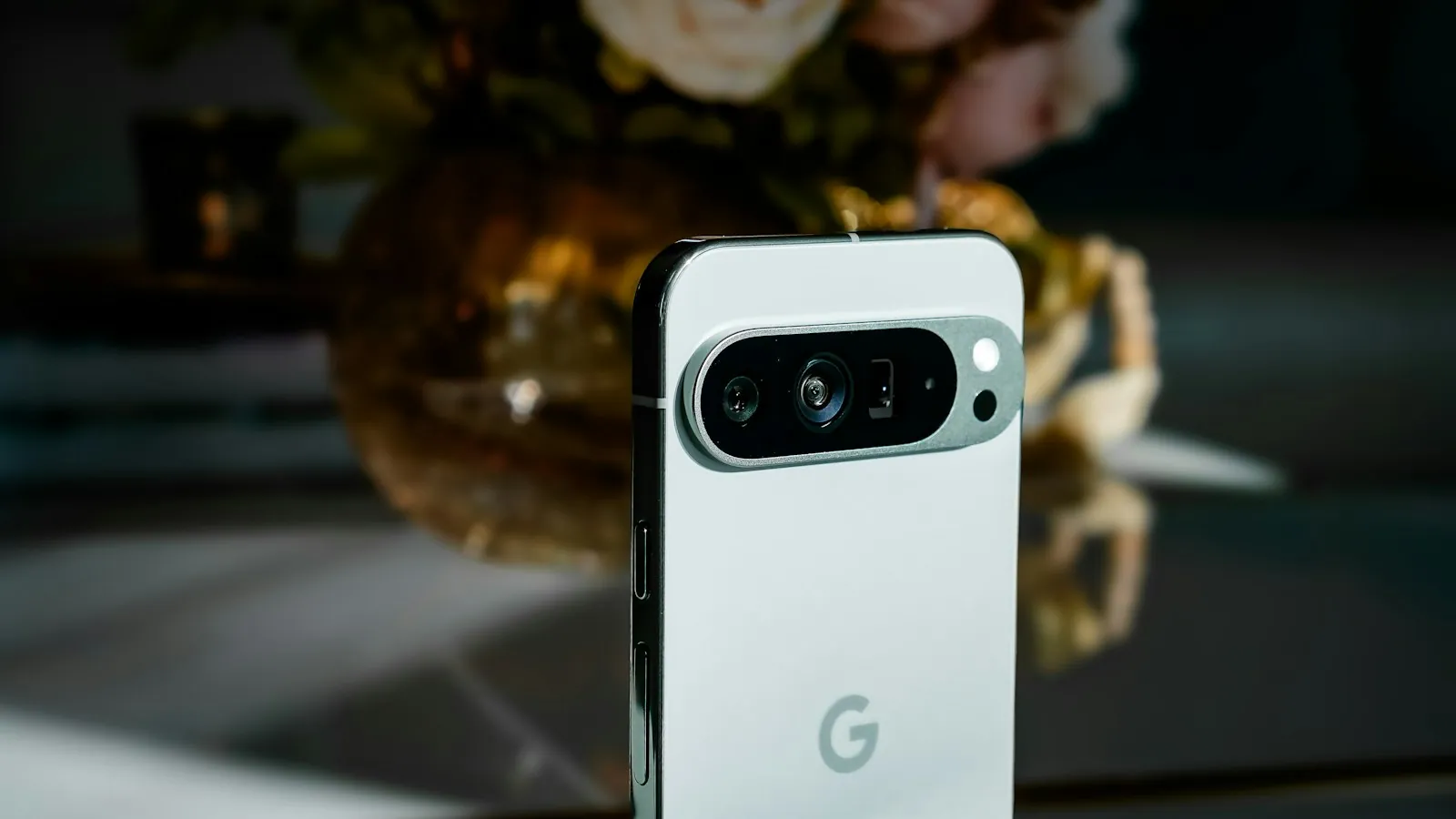
- “The cam in ya hand NASA built THAT.” NASA did not make phone cameras. Eric Fossum invented the CMOS active pixel sensor at JPL, and companies including Photobit, Micron and Aptina turned the sensor into products. NASA’s Spinoff report credits CMOS sensors with enabling phone cameras.
- Memory foam
- “Memory foam in ya mattress? NASA.” Supported. Charles Yost created the foam in 1966 under a NASA contract to improve airline seats, and companies later put the foam in mattresses. A 2016 NASA web page says the foam was for test pilots, while Spinoff 2005 and NASA’s Spinoff FAQ say airline pilots and passengers.
- Nike Air
- “Nike Air? NASA.” NASA’s Spinoff records don’t list Nike Air. They list two other shoe cushions tied to Apollo space suit work. AVIA’s midsole came from Al Gross, a former Apollo space suit engineer (Spinoff 1991), and the KangaROOS Dynacoil used Apollo lunar suit material (Spinoff 1986). The Nike Air story, that Frank Rudy, described as a former NASA engineer, pitched the idea to Nike, appears in a 2008 Irish Independent list reposted on a NASA server. The Instagram caption also names Nike Air Jordans.
- Headsets
- “Headsets? NASA.” Partly. Plantronics introduced its MS-50 lightweight headset for airline pilots in 1962. NASA then contracted the company to build the headset into astronauts’ helmets, and Plantronics and NASA engineers designed a noise-canceling microphone and receiver. NASA’s Spinoff report says the company’s later headsets drew on that design. NASA did not invent the headset. The high school worksheet uses headsets to separate using a product from improving one.
- LASIK
- “LASIK? NASA.” Partly. A tool WaveFront Sciences made with NASA Goddard to measure the Webb telescope’s mirrors led to an eye-mapping system that guides LASIK. NASA did not invent LASIK.
- CT scans
- “CAT scans.” Partly. NASA’s Spinoff 1998 traces the digital image processing in CT scans to NASA work done before the Apollo program. NASA did not invent the CT scanner.
- Swimsuits
- “Swimsuits.” Supported. Wind-tunnel tests at NASA Langley helped Speedo design the LZR Racer, and athletes wearing the suit broke 13 world records in March 2008.
- GPS
- “Drop a pin, where’s ya house? That’s NASA.” Partly. GPS is an Air Force program. JPL software corrects GPS errors, and a company uses JPL’s correction data to locate phones for 911 calls and location apps.
- The computer mouse
- “When you click that mouse? That’s NASA.” Partly. NASA’s Langley Research Center paid for the 1965 study in which Douglas Engelbart’s team at Stanford Research Institute developed and tested the mouse. ARPA and the Air Force paid for other parts of the same computer system. The report says, “The ‘mouse’ was developed by this project.” The high school claim, evidence, reasoning and the college worksheet use this report.
- Braces, baby formula and glasses
- Supported. A company working with NASA invented the clear ceramic in the first clear braces. NASA-funded research for Mars life support found a natural source of an omega-3 fatty acid now in more than nine in ten infant formulas. NASA’s Lewis Research Center developed the diamond-like coating that made Ray-Ban lenses about 10 times more scratch-resistant.
- Weather apps
- “Tap your weather app, NASA locked in.” Partly. NASA builds and launches the GOES weather satellites, and NOAA (the National Oceanic and Atmospheric Administration) operates the satellites.
- Hurricane forecast data
- Middle school Questions 5 uses the 48-hour column of the National Hurricane Center’s table of average official track errors for Atlantic tropical storms and hurricanes, by decade, in nautical miles. The worksheet calls the 48-hour forecast the two-day forecast. The last row covers 2020 to 2025, six years rather than a full decade. The NHC table does not say why the errors fell. NOAA’s satellite office says today’s satellites feed “more sophisticated and accurate forecast models” and that a five-day forecast is now better than a three-day forecast was in 2005. The worksheet says satellites feed better forecasts and stops short of crediting satellites alone.
- Not checked
- “Cancer research, cool?” links to an archived NASA article this lesson could not open. “Wanna fly in high altitude?” has no source on the lyrics page.
- The spoken outro
- “Less than a penny on NASA for every federal dollar” matches the Planetary Society’s figure of about 0.35% of US spending in 2025. “Cut our budget in half” matches the proposed 47% cut to NASA science. The May 2025 proposal would have cut NASA’s total budget about 24%, from $24.8 billion to $18.8 billion. Congress rejected the cuts, and in January 2026 Congress passed $24.4 billion for NASA, with $7.25 billion for science. NASA opened in 1958, as the video says. The count of 41 science projects the plan would cancel, 19 of them missions already at work, comes from a May 30, 2025 press release by The Planetary Society, a group that argues for space science funding. The worksheet names the group, and the screen version of high school Going further question 3 rewards checking who supplied each number. The $10 billion camera chip market is money companies earned, not money paid back to NASA. Strong answers keep the two apart.
- Pronunciation
- Satellite is SAT-l-ite. Aeronautics is air-uh-NAW-tiks.
Worksheet
Predict
Look at the camera on a phone. Inside sits a tiny chip that turns light into a picture. Did a NASA engineer invent the kind of camera chip that’s in phones?
Circle one. Yes / No
Watch
- #NASADidThatyoutube.com/shorts/lYgULUuiJBU
Word of the day
Satellite (SAT-l-ite). An object in space that travels around a bigger object, like a planet. The Moon is Earth’s natural satellite. People launch satellites too, like the weather satellites that watch storms.
| Word part | Comes from | Meaning |
|---|---|---|
| satellite | Latin satelles | attendant, bodyguard |
- The Latin word means bodyguard. A bodyguard sticks close to a person, and a moon sticks close to its planet.
- In 1957, Sputnik 1 became the first satellite people ever launched into space. In Russian, spútnik means “traveling companion.”
Bonus word. Aeronautics (air-uh-NAW-tiks). The science of flight. Aeronautics is the A in NASA, the National Aeronautics and Space Administration. The word joins Greek āḗr, “air,” and naûs, “ship.”
Questions
Raven’s rap opens with “Satellites up, hurricanes spin.” NASA builds and launches the GOES weather satellites, and NOAA, the National Oceanic and Atmospheric Administration, runs the satellites. GOES satellites take pictures and measurements of storms from high above Earth. How do weather satellites help keep people safe from hurricanes?
Hint. What can forecasters see from space that people on the ground can’t?
In 1966, NASA paid an engineer named Charles Yost to make airplane seats safer in a crash. He came up with a soft foam that takes the shape of your body and then slowly springs back. Today the same kind of foam, called memory foam, is in mattresses. Why would foam made for airplane seats also make a good mattress?
Hint. What does the foam do when your body sinks in?
The rap says, “Drop a pin, where’s your house?” A map app drops that pin with GPS, a system of satellites that helps a phone find its location. The US Air Force built GPS. NASA’s Jet Propulsion Laboratory wrote software that fixes small GPS errors. A company uses NASA’s fixes to help 911 operators find people who call for help. What part did NASA play in the pin on your map?
Hint. Who built GPS, and what did NASA’s software do?
In the 1990s, Eric Fossum, an engineer at a NASA lab, invented a new kind of camera chip for cameras in space. His chip used much less power than older camera chips. And it squeezed most of a camera’s parts onto one small chip. Why was Fossum’s camera chip a good fit for phones?
Hint. What powers a phone? How much room does a phone have inside?
Back to the rap’s first line, “Satellites up, hurricanes spin.” For each storm in the Atlantic Ocean, forecasters at the National Hurricane Center (NHC) predict where the storm’s center will be two days later. The forecast error is the distance between that spot and where the center ended up. In the 1970s, the average two-day error was 252.5 nautical miles. The average was 226.4 in the 1980s, 157.2 in the 1990s, 103.7 in the 2000s and 67.7 in the 2010s. From 2020 to 2025, the average was 55.2 nautical miles. A nautical mile is a little longer than a regular mile. What pattern do you see in the hurricane forecast errors? How does that pattern help people in a storm’s path?
Hint. Compare the error in the 1970s with the error from 2020 to 2025. Then think about who gets warned when a forecast comes close to the storm’s path.
Exit ticket
NASA calls a product a spinoff when a company sells something that uses NASA technology or know-how. Pick one NASA spinoff from the video. What job was the spinoff first made to do?
Hint. Think about the camera chip or memory foam. Where was each one used first?
Predict
Look at the camera on a phone. Inside sits a tiny chip that turns light into a picture. Did a NASA engineer invent the kind of camera chip that’s in phones?
Circle one. Yes / No
Watch
- #NASADidThatyoutube.com/shorts/lYgULUuiJBU
Word of the day
Satellite (SAT-l-ite). A natural body that revolves around a planet, such as a moon, or a device launched into orbit around Earth, another planet or the Sun. Raven’s rap opens with “Satellites up, hurricanes spin.”
| Word part | Comes from | Meaning |
|---|---|---|
| satellite | Latin satelles, stem satellit- | attendant, member of a bodyguard or retinue |
- In world politics, a satellite is a nation dominated by another. The Warsaw Pact nations, other than the Soviet Union itself, were called satellites of the Soviet Union.
- Russian spútnik means both “satellite” and “traveling companion.” Sputnik 1, launched in October 1957, was the first artificial satellite.
Bonus word. Aeronautics (air-uh-NAW-tiks) is the design, construction and operation of aircraft, and the study of flight through the air. The word joins Greek āḗr, “air,” and naûs, “ship.” Aeronautics is the A in NASA, the National Aeronautics and Space Administration.
Questions
The rap says, “The cam in your hand, NASA built that.” In the 1990s, Eric Fossum led a team at NASA’s Jet Propulsion Laboratory (JPL) that put a camera on a chip for space missions. It’s called the complementary metal-oxide semiconductor (CMOS) image sensor. The chip needed far less power than the camera chips of the time, and companies later built the chip into phone cameras. NASA’s Spinoff report says video from the older chips would have drained phone batteries and quickly overheated the phones. Which part of the line “The cam in your hand, NASA built that” does NASA’s record back up? And why was a low-power chip such a big deal for phone cameras?
Hint. Separate what NASA’s lab made from what companies made. Then think about what a power-hungry chip does to a small battery.
Charles Yost made memory foam in 1966 under a NASA contract to improve airline seats. The foam absorbed a lot of energy, spread a passenger’s weight evenly over the seat, and slowly returned to its shape once the pressure was gone. Which property of memory foam protected passengers in a crash? Which property made long flights more comfortable?
Hint. A crash is one sudden hit. A long flight is hours of steady pressure.
The rap says, “Headsets? NASA.” In 1962, a company called Plantronics introduced the MS-50, the world’s first lightweight headset, for airline pilots. Astronaut Wally Schirra asked whether the headset could fit inside his space helmet, and NASA gave the company a contract to build one. Plantronics and NASA engineers designed a microphone and receiver that cut out background noise. NASA’s Spinoff report says the company’s later headsets drew on that NASA design. Why do people credit NASA for headsets? And how is NASA’s part different from inventing a product, or from only using one?
Hint. Sort NASA’s possible parts into three kinds. NASA staff can invent a product, NASA money and experts can help others make or improve a product, and NASA can buy and use a product someone else made.
In 1995, Fossum and his colleagues started a company called Photobit and licensed the camera chip technology. By 2013, companies made more than one billion CMOS camera chips a year. Why would NASA want companies to sell technology that NASA paid to develop?
Hint. Who else needs small, low-power cameras? What does the public get from a spinoff?
Claim, evidence, reasoning
Raven’s list of NASA credits includes the line “When you click that mouse.” In 1965, Douglas Engelbart’s team at Stanford Research Institute (SRI) sent a final report to NASA’s Langley Research Center under NASA contract NAS 1-3988. The report says, “The ‘mouse’ was developed by this project.” The report also names the Advanced Research Projects Agency (ARPA) and the Air Force as sponsors of other parts of the same computer system. How true is the rap’s claim that the computer mouse is NASA’s? Make a claim, back the claim with evidence and walk through your reasoning.
Hint. Decide whether NASA invented the mouse, paid for or improved the mouse, only used the mouse, or has no record behind the claim.
Going further: NASA’s budget
At the end of the video, Raven says the US spends less than a penny on NASA for each federal dollar. The Planetary Society reports that NASA got about 0.35% of US federal spending in 2025. About how many cents of each federal dollar went to NASA in 2025?
Circle one. 0.35 cents / 3.5 cents / 35 cents
Hint. One percent of a dollar is one cent.
In May 2025, the administration proposed cutting NASA’s total budget from $24.8 billion to $18.8 billion. The same plan would have cut NASA’s science budget from $7.3 billion to $3.9 billion. Congress rejected the cuts, and in January 2026 Congress passed $24.4 billion for NASA, with $7.25 billion for science. What percent cut did each proposal mean? And which cut matches Raven’s line about cutting the budget in half?
Hint. A percent cut equals the old amount minus the new amount, divided by the old amount, times 100.
Engineers judge a solution by ranking criteria and weighing trade-offs. Your turn. Judge the May 2025 plan to cut NASA’s science budget from $7.3 billion to $3.9 billion with three criteria. Cost. The cut would have saved $3.4 billion in one year, and all of NASA got about 0.35% of US federal spending in 2025. Science lost. The Planetary Society, a group that pushes for space science funding, counted 41 science projects the plan would cancel, including 19 missions already at work. Spinoffs. The rap credits NASA research for things like the phone camera chip, and by 2015 the market for CMOS camera chips reached nearly $10 billion, according to NASA’s Spinoff report. Rank cost, science lost and spinoffs from most to least important to you. Then judge the proposed science cut against your ranking. What trade-off does your decision make? What’s one fact you’d still want to know?
Hint. Compare $3.4 billion with NASA’s share of federal spending. Then ask who earns the $10 billion from camera chips, NASA or the companies that sell the chips.
Exit ticket
The CMOS camera chip started at NASA’s Jet Propulsion Laboratory and ended up in phones. NASA calls a product a spinoff when a company sells something that uses NASA technology or know-how. How does the camera chip’s path from a NASA lab to your phone fit NASA’s meaning of a spinoff?
Hint. List the steps. Who invented the chip, who sold the chip, and who uses the chip today?
Watch
- #NASADidThatyoutube.com/shorts/lYgULUuiJBU
Word of the day
Satellite (SAT-l-ite). A small body in orbit around a larger body, whether natural, like the Moon, or artificial, like a device launched to orbit Earth or another planet.
| Word part | Comes from | Meaning |
|---|---|---|
| satellite | Latin satelles, stem satellit- | attendant, member of a bodyguard or retinue |
- English still uses satellite for an attendant or follower of another person, and for a branch office or off-campus facility that depends on a main campus or office.
- Russian spútnik means both “satellite” and “traveling companion.” English borrowed sputnik in 1957, the year Sputnik 1 became the first artificial satellite.
Bonus word. Aeronautics (from Greek āḗr, “air,” and naûs, “ship”) is the design, construction and operation of aircraft, and the scientific study of flight through the atmosphere. Aeronautics is the A in NASA.
Predict
In 1965, NASA paid engineers at Stanford Research Institute to test devices for pointing at words on a computer screen. One was a brand-new device they called the mouse. Experienced users had to lift a hand from the keyboard, reach the device and select a target one letter wide. Make a guess before you read the report. On average, how many seconds did an experienced user need to select a one-letter target with the mouse? Give your reasoning in one sentence.
Hint. Picture lifting your hand from a keyboard, finding the mouse and clicking on a single letter.
Read the paper
English, Engelbart and Huddart, “Computer-Aided Display Control,” final report to NASA’s Langley Research Center, Stanford Research Institute, 1965. The report is free to read.
Under a NASA contract, Douglas Engelbart’s team at Stanford Research Institute tested five ways to select text on a computer screen, a light pen, a Grafacon, a knee control, a joystick and the mouse. In absolute mode, the cursor’s position followed the joystick’s tilt. In rate mode, the cursor’s speed followed the tilt. When a target appeared, the subject struck the space bar, moved a hand to the device and selected the target, and the computer timed each step and logged each wrong pick. Eight experienced subjects practiced each device for about two minutes before testing. Three inexperienced subjects had never used the system and got no practice period. The table gives the values printed on the bars of Figures 7, 9, 10 and 11 for targets one character wide. The authors also report each device’s time with a 30% penalty for errors. Fixing a wrong pick took about as long as striking the space bar, about 30% of the total time. For each subject, the authors added the subject’s error rate times 30% of the subject’s average time.
| Group | Device | Average time (s) | Error rate | Report’s time with 30% penalty (s) | Your time with 30% penalty (s) |
|---|---|---|---|---|---|
| Experienced | Mouse | 1.93 | 0.095 | 1.99 | |
| Experienced | Light pen | 2.13 | 0.209 | 2.28 | |
| Experienced | Grafacon | 2.43 | 0.208 | 2.57 | |
| Experienced | Joystick (absolute) | 2.87 | 0.278 | 3.14 | |
| Inexperienced | Knee control | 2.36 | 0.211 | 2.52 | |
| Inexperienced | Light pen | 2.43 | 0.250 | 2.64 | |
| Inexperienced | Mouse | 2.62 | 0.099 | 2.71 | |
| Inexperienced | Grafacon | 3.26 | 0.234 | 3.51 | |
| Inexperienced | Joystick (absolute) | 3.29 | 0.213 | 3.54 | |
| Inexperienced | Joystick (rate) | 5.22 | 0.297 | 5.71 |
Experimentation and data, outcome 6 Fill in the last column of the table with average time × (1 + 0.30 × error rate). How close are your penalty times to the report’s? Why would the two differ by a few hundredths of a second?
Hint. Read the framing again. Did the authors add the penalty to each group’s average or to each subject’s results?
Engineering judgment, outcome 6 The mouse ranks first in speed for experienced users and third for inexperienced users. Which device would you recommend for NASA’s text system? How should the group sizes and each group’s practice limit your recommendation?
Hint. Count the subjects in each group, and compare how much practice each group got before testing.
Engineering problem solving, outcome 1 The 30% penalty is the authors’ estimate of what one error costs. Write each device’s time with a penalty p as average time × (1 + p × error rate). For inexperienced users, how large would p need to be for the mouse to beat the light pen?
Hint. Set the mouse’s expression equal to the light pen’s expression and solve for p.
Ethics and impact, outcome 4 NASA’s contract paid for the display-control work in this report. The Advanced Research Projects Agency (ARPA) and the Air Force paid for other parts of the same computer system. Raven’s rap says the mouse is “NASA.” Write one fair sentence about NASA’s part in the computer mouse. Then, why does accurate credit carry so much weight when people argue for science funding?
Hint. Separate who paid for the work from who did the work.
Exit ticket
The 1965 report compares pointing devices by time and by errors. What do the report’s results show about the mouse? And what’s one question the results can’t answer?
Hint. Who got tested? How many people? What task did they do?
Standards
The lesson builds toward two Next Generation Science Standards (NGSS), the most widely used US science standards. Some states, like Texas and Virginia, write their own. NGSS covers kindergarten through grade 12. The middle school worksheet builds toward MS-ESS3-2 through the rap’s opening line, “Satellites up, hurricanes spin.” Students learn what weather satellites do for hurricane warnings, then find the pattern in National Hurricane Center forecast data. The MS-ESS3-2 clarification statement names “satellite systems to monitor hurricanes” as an example technology. The high school worksheet builds toward HS-ETS1-3 when students evaluate the proposed 2025 cut to NASA science against ranked criteria. Two more threads match no performance expectation. High school students check the rap’s claims against NASA’s records, and both worksheets trace how NASA research reaches everyday products. The table lists the NGSS practice and connections those questions use, quoted from the NGSS pages where each appears. The college worksheet uses the student outcomes in ABET’s Criteria for Accrediting Engineering Programs. ABET accredits college engineering programs. Criterion 3 of its 2026-2027 criteria lists seven student outcomes for accredited bachelor’s programs. The college worksheet asks students to analyze test data from a 1965 engineering report, solve a design problem with the data and judge a public claim about credit. Those tasks match outcomes 6, 1 and 4. AAAS Vision and Change, the framework in the biology lessons, covers undergraduate biology and leaves out engineering design.
| Level | Standard | Lesson part | Practice | Crosscutting concept |
|---|---|---|---|---|
| Middle school | MS-ESS3-2. Analyze and interpret data on natural hazards to forecast future catastrophic events and inform the development of technologies to mitigate their effects (core idea ESS3.B) | Middle school worksheet, Questions 1 and 5 | Analyzing and Interpreting Data. “Analyze and interpret data to determine similarities and differences in findings.” | Patterns. “Graphs, charts, and images can be used to identify patterns in data.” |
| Middle school | NGSS connection | Middle school worksheet, Questions 2 and 4 and the exit ticket | None listed for this connection | Interdependence of Science, Engineering, and Technology. “Engineering advances have led to important discoveries in virtually every field of science, and scientific discoveries have led to the development of entire industries and engineered systems.” This connection appears with MS-PS1-3. |
| High school | HS-ETS1-3. Evaluate a solution to a complex real-world problem based on prioritized criteria and trade-offs that account for a range of constraints, including cost, safety, reliability, and aesthetics as well as possible social, cultural, and environmental impacts (core idea ETS1.B) | High school worksheet, Going further questions 2 and 3 | Constructing Explanations and Designing Solutions. “Evaluate a solution to a complex real-world problem, based on scientific knowledge, student-generated sources of evidence, prioritized criteria, and tradeoff considerations.” | Influence of Science, Engineering, and Technology on Society and the Natural World. “Analysis of costs and benefits is a critical aspect of decisions about technology.” |
| High school | NGSS practice and connection | High school worksheet. Questions 3 and claim, evidence, reasoning use the practice. Questions 1, 3 and 4 and the exit ticket use the research and development connection. | Obtaining, Evaluating, and Communicating Information. “Evaluate the validity and reliability of multiple claims that appear in scientific and technical texts or media reports, verifying the data when possible.” This element appears with HS-PS4-4. | Interdependence of Science, Engineering, and Technology. “Science and engineering complement each other in the cycle known as research and development (R&D).” This connection appears with HS-PS4-5. |
| College | ABET Criterion 3, student outcomes 1, 4 and 6 | College worksheet. Questions 1 and 2 cover outcome 6, question 3 outcome 1 and question 4 outcome 4. | Outcome 6: develop and conduct appropriate experimentation, analyze and interpret data, and use engineering judgment to draw conclusions. Outcome 1: solve complex engineering problems by applying principles of engineering, science, and mathematics | Outcome 4: make informed judgments that consider the impact of engineering solutions in global, economic, environmental, and societal contexts |
Sources
This video draws on many NASA programs and research teams. The lesson credits each team the worksheets use, plus the NOAA offices behind the hurricane forecast data and the group behind the count of canceled projects.
| Topic | Who found it | Where it was published |
|---|---|---|
| The CMOS active pixel sensor in phone cameras, and its license to Photobit | Eric Fossum and colleagues at NASA’s Jet Propulsion Laboratory | NASA Spinoff 2017 and a JPL news release, June 20, 1995 |
| Memory foam for airline seats | Charles Yost, under a NASA contract through Stencel Aero Engineering, with NASA’s Ames Research Center | NASA Spinoff 2005, “Forty-Year-Old Foam Springs Back With New Benefits” |
| Shoe cushions from Apollo space suit work, and no Spinoff record for Nike Air | Al Gross for AVIA, and KangaROOS USA | NASA Spinoff 1991 and NASA Spinoff 1986 |
| The 1965 test of the mouse and other pointing devices (the high school claim, evidence, reasoning and the college paper) | William English, Douglas Engelbart and Bonnie Huddart, Stanford Research Institute, for NASA’s Langley Research Center | Final report, “Computer-Aided Display Control,” 1965 |
| Diamond-hard lens coating | NASA’s Lewis Research Center, licensed to Air Products and Chemicals | NASA Spinoff 1996 |
| Swimsuit drag tests | NASA’s Langley Research Center, with Speedo | “Space-Age Swimsuit Reduces Drag, Breaks Records,” NASA |
| An omega-3 nutrient for baby formula | NASA-funded researchers working on life support for Mars missions | “Enriched Baby Formula,” NASA |
| Weather satellites (middle school Questions 1) | NASA, which builds and launches the GOES satellites, and NOAA, which runs them | NASA’s GOES mission page |
| Average two-day hurricane track forecast errors by decade, 1970 to 2025 (middle school Questions 5) | NOAA’s National Hurricane Center (NHC) | “Official error trends,” NHC Forecast Verification, updated July 8, 2026, and its table “Average NHC Atlantic Track Forecast Errors (n mi), Tropical Storms and Hurricanes” (verification as of May 12, 2026) |
| How newer weather satellites feed hurricane forecast models (middle school Questions 5) | NOAA’s satellite and information service (NESDIS) | “Twenty Years After Katrina: NOAA Satellite Advancements for Hurricane Forecasts and Tracking,” August 28, 2025 |
| Science projects the May 2025 budget plan would cancel (high school Going further question 3) | The Planetary Society, a group that argues for space science funding | Press release, May 30, 2025 |
| GPS error corrections (middle school Questions 3) | NASA’s Jet Propulsion Laboratory | NASA Spinoff 2019 |
| Lightweight headsets for astronauts (high school Questions 3) | Plantronics, with NASA engineers | NASA Spinoff 2005, “Crystal-Clear Communication a Sweet-Sounding Success” |
| The meaning of a spinoff | NASA’s Spinoff office | Spinoff FAQ |
All of these NASA reports are free to read. The 1965 report’s foreword says the authors produced the report, apart from its front matter, on the same on-line computer system the report describes.
- Research reports, NASA Spinoff articles and NASA pages, linked in the table above
- NASA Spinoff articles on the video’s other claims: CT scans, eye surgery
- NASA pages: memory foam, clear braces, NASA history
- Rob Sharp, “50 years, 50 giant leaps: How NASA rocked our world”, The Irish Independent, July 29, 2008, the source of the Nike Air story
- NASA budget: SpacePolicyOnline, July 10, 2025, The Planetary Society and its May 30, 2025 press release, and Roohi Dalal, “Congress Passes Fiscal Year 2026 Spending Bills for NSF, NASA, and DOE,” American Astronomical Society, January 15, 2026, for the final 2026 budget (H.R. 6938, signed January 23, 2026)
- NGSS pages for the practice and connection elements, linked in the standards table: MS-PS1-3, HS-PS4-4, HS-PS4-5
- ABET, Criteria for Accrediting Engineering Programs, 2026-2027, Criterion 3, Student Outcomes
- Word origins from Dictionary.com: satellite, sputnik, aeronautics, aero-, nautical
- Transcript from the lyrics on the July 2025 version of Raven’s blog post, and outro quotes from the current post
- Instagram original, not linked because Instagram needs a login
- NGSS MS-ESS3-2, HS-ETS1-3